





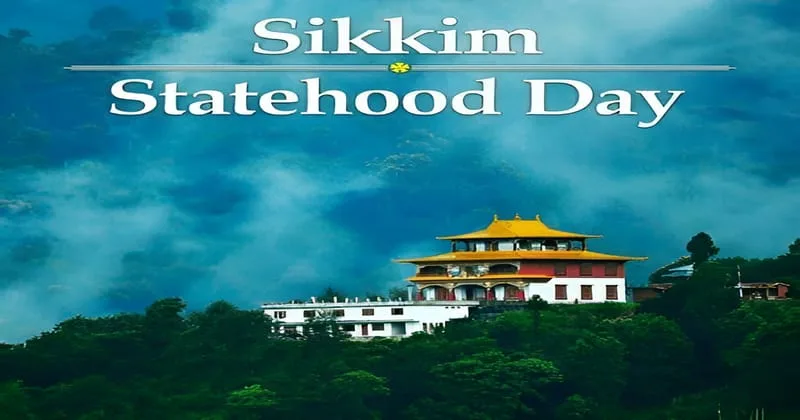
The picturesque Himalayan state of Sikkim marked a historic milestone today, celebrating the 50th anniversary of its statehood with a renewed commitment to inclusive growth, sustainable development, and cultural preservation. On this day in 1975, Sikkim formally joined the Indian Union as its 22nd state, embarking on a democratic journey rooted in unity and aspiration.
Chief Minister Prem Singh Tamang, addressing the people of Sikkim on this golden jubilee occasion, extended heartfelt greetings and reflected on the transformative journey of the last five decades. “May 16, 1975, marked a momentous turning point in our history,” he said. “As we commemorate this golden jubilee, we reflect with reverence on a journey marked by resilience, inclusive growth, and the collective spirit of our people.”
Highlighting the government’s vision for the future, CM Tamang reiterated the state’s commitment to “Sunaulo Sikkim, Samriddha Sikkim, ani Samarth Sikkim”—a Golden, Prosperous, and Capable Sikkim. He emphasised that this vision aligns with Prime Minister Narendra Modi’s mission of Viksit Bharat, aiming to create a future that is forward-looking, environmentally conscious, and rooted in local values.
The Chief Minister paid homage to the legacy of the former Kingdom of Sikkim, acknowledging its role in shaping the state’s identity and social fabric. He reaffirmed the importance of Article 371F, which protects Sikkim’s unique constitutional status and safeguards its land, traditions, and autonomy.
Over the years, Sikkim has emerged as a model state in multiple sectors, earning national and global recognition. From becoming India’s first organic state to leading in climate action, sustainable tourism, and per capita income, Sikkim stands out as a beacon of progressive development. The state has also excelled in education, healthcare, women’s empowerment, and social welfare, building a society that values human dignity and ecological balance.
“Our strength lies in our people,” said CM Tamang, highlighting the harmonious coexistence of the Bhutia, Lepcha, Nepali, and other communities. He praised the people of Sikkim for their resilience, particularly during testing times such as the 2011 earthquake, the COVID-19 pandemic, and the devastating GLOF disaster of 2023.
Tamang expressed deep gratitude to the government of India for its consistent support of Sikkim’s developmental journey. As a strategic border state, he affirmed Sikkim’s unwavering role in upholding national security and peace.
The golden jubilee celebration also saw greetings pour in from national leaders. Prime Minister Narendra Modi, in a post on X, extended warm wishes: “This year, the occasion is even more special as we mark the 50th anniversary of Sikkim’s statehood. Sikkim is associated with serene beauty, rich cultural traditions, and industrious people. May the people of this beautiful state continue to prosper.”
Warm greetings to the people of Sikkim on their Statehood Day! This year, the occasion is even more special as we mark the 50th anniversary of Sikkim’s statehood!
Sikkim is associated with serene beauty, rich cultural traditions and industrious people. It has made strides in…
— Narendra Modi (@narendramodi) May 16, 2025
President Droupadi Murmu also conveyed her wishes, acknowledging Sikkim’s environmental leadership and cultural vibrancy. “Sikkim has set remarkable examples of sustainable development, showcasing harmonious coexistence with nature,” she said.
Warm greetings to the people of Sikkim on Statehood Day. Sikkim is widely admired for its boundless natural beauty, rich cultural heritage, and warmth of its people. As one of India's most environmentally conscious states, Sikkim has set remarkable examples of sustainable…
— President of India (@rashtrapatibhvn) May 16, 2025
As Sikkim enters the next phase of its journey, the call from the Chief Minister was clear—to unite with renewed energy, protect the environment, empower youth, and build a Sikkim that contributes meaningfully to a Viksit Bharat.
The golden jubilee celebrations across the state featured cultural programs, exhibitions, public addresses, and community gatherings—honouring the past while embracing the promise of the next 50 years.














Comments