Operation Sindoor: How India’s indigenous strike crushed Pakistan
December 6, 2025
  • Read Ecopy
  • Circulation
  • Advertise
  • Careers
  • About Us
  • Contact Us
Android AppiPhone AppArattai
Organiser
  • ‌
  • Bharat
    • Assam
    • Bihar
    • Chhattisgarh
    • Jharkhand
    • Maharashtra
    • View All States
  • World
    • Asia
    • Europe
    • North America
    • South America
    • Africa
    • Australia
  • Editorial
  • International
  • Opinion
  • RSS @ 100
  • More
    • Op Sindoor
    • Analysis
    • Sports
    • Defence
    • Politics
    • Business
    • Economy
    • Culture
    • Special Report
    • Sci & Tech
    • Entertainment
    • G20
    • Azadi Ka Amrit Mahotsav
    • Vocal4Local
    • Web Stories
    • Education
    • Employment
    • Books
    • Interviews
    • Travel
    • Law
    • Health
    • Obituary
  • Subscribe
    • Subscribe Print Edition
    • Subscribe Ecopy
    • Read Ecopy
  • ‌
  • Bharat
    • Assam
    • Bihar
    • Chhattisgarh
    • Jharkhand
    • Maharashtra
    • View All States
  • World
    • Asia
    • Europe
    • North America
    • South America
    • Africa
    • Australia
  • Editorial
  • International
  • Opinion
  • RSS @ 100
  • More
    • Op Sindoor
    • Analysis
    • Sports
    • Defence
    • Politics
    • Business
    • Economy
    • Culture
    • Special Report
    • Sci & Tech
    • Entertainment
    • G20
    • Azadi Ka Amrit Mahotsav
    • Vocal4Local
    • Web Stories
    • Education
    • Employment
    • Books
    • Interviews
    • Travel
    • Law
    • Health
    • Obituary
  • Subscribe
    • Subscribe Print Edition
    • Subscribe Ecopy
    • Read Ecopy
Organiser
  • Home
  • Bharat
  • World
  • Operation Sindoor
  • Editorial
  • Analysis
  • Opinion
  • Culture
  • Defence
  • International Edition
  • RSS @ 100
  • Magazine
  • Read Ecopy
Home Bharat

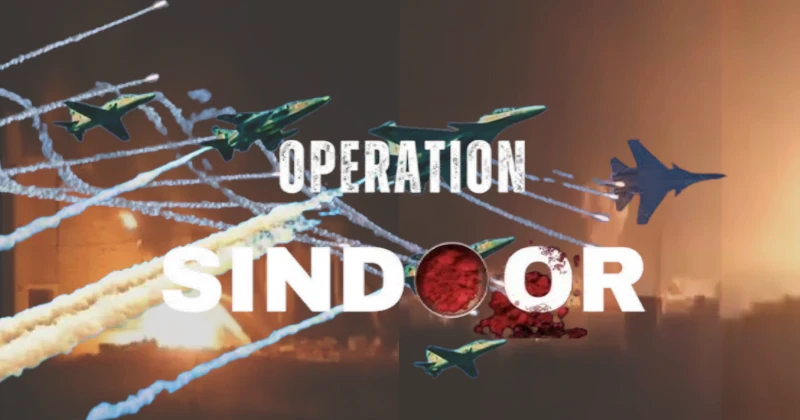
From Pahalgam to Payback: How India’s indigenous strike system ‘Operation Sindoor’ crushed Pakistan

Operation Sindoor marked India’s first fully indigenous tech-powered retaliation, where not a single soldier crossed the border, yet Pakistan’s military infrastructure was decimated. Fueled by Aatmanirbhar innovation from Akash missiles to AI-driven drones India showcased a new era of warfare driven by precision, restraint, and homegrown might

WEBDESKWEBDESK
May 16, 2025, 01:00 pm IST
in Bharat, Defence
Follow on Google News
FacebookTwitterWhatsAppTelegramEmail

Operation Sindoor has emerged as India’s coming-of-age moment in technological warfare. It wasn’t merely a military operation it was a strategic exhibition of Bharat’s Aatmanirbhar prowess, where every strike, interception, and disruption was powered by homegrown innovation.

Triggered by the Pahalgam terrorist attack in April 2025, which saw unarmed civilians targeted in a cowardly escalation of asymmetric warfare, India’s response was swift, clinical, and most notably indigenous. Without moving a single soldier across the Line of Control, India showcased how deeply integrated indigenous systems can decisively neutralise foreign-sponsored aggression.

Aatmanirbhar Bharat in action

India’s real warhead in Operation Sindoor was not explosive it was self-reliance. Behind every radar signal, missile launch, satellite feed, or drone strike lay years of indigenous research, development, and policy shaping.

From Bharat Electronics Limited (BEL) to DRDO labs, from nimble drone startups to battlefield-tested missile systems, Operation Sindoor demonstrated a full-spectrum military response driven by domestic capability — a feat few nations can claim.

This operation was not just defence it was demonstrative diplomacy, underlining that India no longer imports its strategic edge. It builds it.

The Tech-First Doctrine

What made Operation Sindoor remarkable was not just what was done, but how it was done. The operation marked the first seamless integration of India’s indigenously developed warfare ecosystem, a convergence of:

  • IACCS (Integrated Air Command and Control System) – India’s proprietary net-centric battlefield architecture
  • Akash Missile Batteries – homegrown SAM systems developed by DRDO and produced by BDL
  • Swarm drones and loitering munitions – designed and manufactured in Indian startup hubs
  • ISRO satellite grid – delivering real-time strategic mapping and surveillance
  • AI-based threat analysis systems – tested in DRDO’s smart command simulations

Together, these formed India’s first full-spectrum indigenous war doctrine, operated entirely within national boundaries.

India’s refusal to be baited into crossing borders showed strategic restraint — but it was restraint backed by technological superiority. The enemy’s anticipation of a cross-border air or land strike was met instead with a tech-led vertical escalation: electronic jamming, satellite surveillance, autonomous drone strikes, and airspace denial.

On the night of May 7-8, when Pakistan launched its ill-fated retaliatory offensive using a mix of PL-15 Chinese missiles, Yiha Turkish drones, and commercial UAVs, they were met by a wall of indigenous steel and silicon.

India’s multi-tier air defence shield, led by the Akash missile system, shot down a large number of threats before they could breach critical zones. LLAD guns and automated counter-UAV systems — developed by DRDO and Bharat Forge — activated auto-lock kill protocols. Not a single missile landed on its intended target.

What made this defence revolutionary was the absence of foreign OEMs (Original Equipment Manufacturers) in core components. The command centres, kill chains, and communication systems were all designed and operated indigenously, ensuring no external kill-switches or intelligence leaks.

Akash Missile System

The Akash SAM stood as the operational poster child for Aatmanirbhar Bharat. Developed with ECCM capabilities and capable of engaging multiple targets at once, Akash batteries:

  • Intercepted mid-range aerial threats at altitudes up to 18 km
  • Deployed within 30 minutes, thanks to their mobile configuration
  • Integrated smoothly with IACCS for predictive threat interception

Each successful interception was a validation of India’s missile design philosophy — rugged, reliable, and ready.

Drones of Destruction

While the enemy awaited a conventional air raid, Indian drones — many built by homegrown defence-tech firms like IdeaForge, NewSpace, Garuda Aerospace, and Alpha Design — slipped silently across enemy skies.

Armed with autonomous loitering munitions, these drones:

  • Destroyed two key airbases — Noor Khan and Rahimyar Khan
  • Neutralised missile batteries and radar stations
  • Bypassed Chinese air defences using ECM payloads and AI-driven flight paths

In less than 30 minutes, India’s indigenous drone fleet had crippled Pakistan’s retaliatory backbone — without putting a single pilot at risk.

While drones soared and missiles flew, it was ISRO’s network of 10 defence-mapped satellites that ensured nothing moved unseen.

The Cartosat and RISAT constellations provided thermal, radar, and electro-optical imagery of enemy installations and cross-border troop movement. Data from these feeds were processed by indigenous AI-based fusion platforms, giving command centres real-time predictive maps.

In modern war, seeing is surviving. And India’s eyes in the sky were entirely her own.

India’s Army wasn’t passive. Its deployment of Bharat Forge’s anti-drone systems, BEL mobile radar units, and shoulder-fired SAMs developed in-house ensured complete coverage from cities to border hamlets. Legacy Russian systems were no longer the first line of defence they were backup. India’s own weapons had taken the frontline.

  • 2021 Import Ban on Foreign Drones: Forced the growth of an indigenous drone manufacturing ecosystem
  • PLI Scheme for Drones and Defence Electronics: Allocated Rs 120 crore, leading to over 400 per cent growth in domestic drone production
  • Defence Corridor Projects in Uttar Pradesh and Tamil Nadu: Became incubators for innovation, job creation, and defence exports

From bureaucratic inertia to battlefield innovation, India’s defence policy became the oxygen for its war-winning tools.

India’s Defence Economy

  • Rs 1.27 lakh crore in indigenous production (FY 2023-24)
  • Rs 23,622 crore in defence exports (FY 2024-25)
  • 12.2 per cent projected share in global drone market by 2030

Goal: Rs 50,000 crore in exports by 2029

These are not projections—they’re the fuel behind India’s strategic autonomy.

Operation Sindoor is now being studied not just in India’s war colleges, but in NATO, ASEAN, and West Asian think tanks. It’s not just about defeating Pakistan’s offensive—it’s about announcing the arrival of India as a tech-first, borderless-war capable superpower.


 

Topics: ISROBELOperation SindoorAkash Missile SystemIndian ArmyAatmanirbhar BharatDRDO
ShareTweetSendShareSend
✮ Subscribe Organiser YouTube Channel. ✮
✮ Join Organiser's WhatsApp channel for Nationalist views beyond the news. ✮
Previous News

Chhattisgarh: Illegal Bangladeshi infiltrator Panna Biwi posing as Hindu woman nabbed from Durg

Next News

Karnataka: Honnavar farmers impose voluntary ban on betel leaf exports to Pakistan, after Pahalgam attack

Related News

Retired Subedar held for leaking Army details to Pak handlers posing as Indians

Gujarat ATS dismantles spy network involving Ex-Army personnel and woman for sharing information with Pakistan

INS Vikrant delivering relief provisions to Sri Lanka (Photo/X@indiannavy)

Sagar Bandhu: Indian Army, NDRF teams work round the clock for HADR ops in Sri Lanka

Indian Army performs successful combat launch of BrahMos over Bay of Bengal, reaffirms long-range precision strike capability

Indian Army performs successful combat launch of BrahMos over Bay of Bengal, reaffirms long-range strike capability

Representative Image

NISAR 12-Metre radar reflector will transform global climate, agriculture and forest monitoring

Representative image

BSF Raising Day: PM Modi extends greetings & commends the force for unwavering resolve and professionalism

IG BSF Jammu Frontier Shashank Anand

‘Pakistan treated it as war’: BSF reveals intense cross-border clash during Operation Sindoor

Load More

Comments

The comments posted here/below/in the given space are not on behalf of Organiser. The person posting the comment will be in sole ownership of its responsibility. According to the central government's IT rules, obscene or offensive statement made against a person, religion, community or nation is a punishable offense, and legal action would be taken against people who indulge in such activities.

Latest News

PM Modi presents Putin with Bhagavad Gita, chess set, and silver horse

Cultural ties strengthened: PM Modi presents Putin with Bhagavad Gita, chess set, and silver horse

Image for representational purpose only, Courtesy Vocal Media

Bihar to get ‘Special Economic Zones’ in Buxar and West Champaran

Thirupparankundram Karthigai Deepam utsav

Andhra Pradesh: AP Dy CM Pawan Kalyan reacts to Thirupparankundram row, flags concern over religious rights of Hindus

23rd India-Russia Annual Summit

India-Russia Summit heralds new chapter in time-tested ties: Inks MoUs in economic, defence, tourism & education

DGCA orders probe into IndiGo flight disruptions; Committee to report in 15 days

BJYM leader Shyamraj with Janaki

Kerala: Widow of BJP worker murdered in 1995 steps into electoral battle after three decades at Valancherry

Russian Sber bank has unveiled access to its retail investors to the Indian stock market by etching its mutual fund to Nifty50

Scripting economic bonhomie: Russian investors gain access to Indian stocks, Sber unveils Nifty50 pegged mutual funds

Petitioner S Vignesh Shishir speaking to the reporters about the Rahul Gandhi UK citizenship case outside the Raebareli court

Rahul Gandhi UK Citizenship Case: Congress supporters create ruckus in court; Foreign visit details shared with judge

(L) Kerala High Court (R) Bouncers in Trippoonithura temple

Kerala: HC slams CPM-controlled Kochi Devaswom Board for deploying bouncers for crowd management during festival

Fact Check: Rahul Gandhi false claim about govt blocking his meet with Russian President Putin exposed; MEA clears air

Load More
  • Privacy
  • Terms
  • Cookie Policy
  • Refund and Cancellation
  • Delivery and Shipping

© Bharat Prakashan (Delhi) Limited.
Tech-enabled by Ananthapuri Technologies

  • Home
  • Search Organiser
  • Bharat
    • Assam
    • Bihar
    • Chhattisgarh
    • Jharkhand
    • Maharashtra
    • View All States
  • World
    • Asia
    • Africa
    • North America
    • South America
    • Europe
    • Australia
  • Editorial
  • Operation Sindoor
  • Opinion
  • Analysis
  • Defence
  • Culture
  • Sports
  • Business
  • RSS @ 100
  • Entertainment
  • More ..
    • Sci & Tech
    • Vocal4Local
    • Special Report
    • Education
    • Employment
    • Books
    • Interviews
    • Travel
    • Health
    • Politics
    • Law
    • Economy
    • Obituary
  • Subscribe Magazine
  • Read Ecopy
  • Advertise
  • Circulation
  • Careers
  • About Us
  • Contact Us
  • Policies & Terms
    • Privacy Policy
    • Cookie Policy
    • Refund and Cancellation
    • Terms of Use

© Bharat Prakashan (Delhi) Limited.
Tech-enabled by Ananthapuri Technologies