





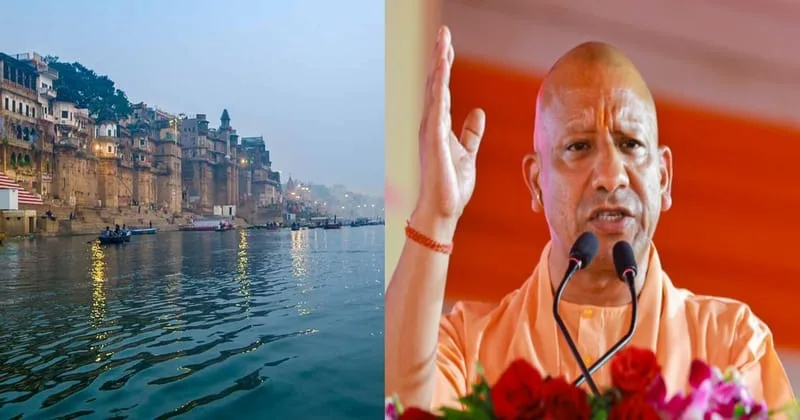
Uttar Pradesh Chief Minister Yogi Adityanath on May 14 underscored the importance of turning the revival of endangered and polluted rivers into a mass movement, according to an official statement. He emphasised that the effort should transcend the boundaries of a routine government project and be viewed as a matter of socio-cultural awareness and shared responsibility.
“Whether it’s the Gomti in Lucknow, Hindon in Ghaziabad, Varuna in Kashi, or any other river in the state, we must act in mission mode with a united commitment to restore them,” he said.
During a review meeting of the Namami Gange and Rural Water Supply Department, Chief Minister Yogi Adityanath voiced concern over the deteriorating state of rivers, saying, “It is unfortunate that the rivers which once nurtured our civilisation are now victims of unplanned urbanisation and pollution.”
He stressed that divisional commissioners must be held accountable for the progress of river rejuvenation efforts. The Chief Minister also directed that this year’s plantation drive should prioritise areas along riverbanks, with strong public engagement. “This cannot remain just an administrative task — it must evolve into a people-driven movement,” he said.
Highlighting the Gomti River in Lucknow, the CM instructed officials to prepare a Detailed Project Report (DPR) within a month to realise the goal of an ‘Aviral-Nirmal Gomti’ — a river that flows uninterrupted and remains clean.
Regarding the Gomti River cleanliness initiative, Chief Minister Yogi Adityanath directed officials to ensure that sewage and stormwater drainage systems are managed separately and that no untreated liquid waste is discharged into the river. He further instructed that similar action plans be prepared for other rivers across the state, including the Hindon and Varuna, and stressed the importance of regular monitoring to track their progress.
During a review meeting on the Jal Jeevan Mission and the ‘Har Ghar Nal’ scheme, Uttar Pradesh Chief Minister Yogi Adityanath was informed that regular drinking water supply is being provided to 37,730 villages across the state, with 25,166 villages already certified. In the Bundelkhand region, clean drinking water is now supplied daily to 3,016 villages, while 2,051 villages in the Vindhya region have also been covered.
The Chief Minister stressed the need to clearly assign responsibility for ensuring water quality, timely supply, and the operation and maintenance of water systems, especially in remote areas.
Officials reported that 42,810 complaints related to drinking water have been registered so far, with 38,161 marked as resolved.
Given the peak summer conditions, Adityanath instructed all district-level administration units to remain on 24×7 alert, and directed that control rooms in every district should actively track and respond to water shortage issues in villages. He also called for the appointment of nodal officers and urged widespread public awareness about these control rooms.
To ensure the smooth rollout of the ‘Har Ghar Nal’ scheme, the CM ordered that any roads dug up for pipeline installation or related work must be repaired on priority. Public representatives were asked to personally verify the functionality of water supply systems in their areas and submit reports directly to the Chief Minister’s Office. Additionally, Yogi Adityanath directed that the areas around all water head tanks be beautified and developed aesthetically to enhance public infrastructure.















Comments