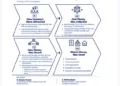
India has become a world leader in the lowering of maternal and child mortality, with official statistics verifying that India’s performance not only matches but far exceeds world standards. India’s maternal and child care indicators have seen impressive gains in the last ten years, puts the country far ahead of its goal to achieve the Sustainable Development Goals (SDG) that it had promised for 2030, says a recent Sample Registration System (SRS) Report 2021 backed by data from United Nations.
The numbers published by the Ministry of Health and Family Welfare are heartening as well as historic. India’s Maternal Mortality Ratio (MMR), one of the strongest indicators of women’s health and access to treatment, fell from 130 per lakh live births in 2014-16 to 93 in 2019-21. That represents a 28.5 per cent fall in a mere five years. More dramatically, the UN Maternal Mortality Estimation Inter-agency Group (UN-MMEIG) documented that between 1990 and 2023 India’s MMR fell by an overall 86 per cent. This well exceeds the global average decline of 48 per cent between the same time period.
This record fall is not an isolated success. It is a reflection of overall achievement in child health too. The Infant Mortality Rate (IMR) dropped from 39 per 1,000 live births in 2014 to 27 in 2021, and the Neonatal Mortality Rate (NMR) dropped from 26 to 19 per 1,000 live births. The Under-Five Mortality Rate (U5MR), which is a key measure of child survival, also fell sharply from 45 to 31 per 1,000 live births over the same period.
The international comparisons lend additional strength to India’s achievement. The United Nations Inter-agency Group for Child Mortality Estimation (UN IGME) Report 2024, published in March this year, indicates that India’s reduction in child mortality rates exceeds global trends by a wide margin. The U5MR declined by 78 per cent in India against the global decline of 61 per cent between 1990 and 2023. The NMR declined 70 per cent in India against 54 per cent globally. The IMR went down 71 per cent in India, and the global average decline was at 58 per cent.
A Pan-India Commitment Bearing Results
Behind the remarkable figures is a sustained and concerted government initiative to change maternal and child health infrastructure throughout the country. Top interventions, such as the world’s largest health assurance program Ayushman Bharat, have institutionalised widespread and free-of-cost healthcare to millions.
Ayushman Bharat gives up to Rs 5 lakh family health coverage on an annual basis, which provides access to key secondary and tertiary healthcare services to particularly vulnerable population groups. It has decreased the out-of-pocket expenses, one of the chief impediments to access to care in the earlier days.
The government has also guaranteed free institutional delivery for all pregnant women, including complicated procedures such as cesarean sections. This is backed up by provision of free transport, diagnostics, medication and nutritional support in public health facilities. All these interventions have not only boosted maternal survival but have guaranteed healthier births among newborns.
Infrastructure That Saves Lives
One of the highlights of India’s public health strategy is the investment in maternal and child health infrastructure. In the last ten years, the Ministry of Health and Family Welfare has upgraded and increased facilities to specifically address maternal and neonatal care. They encompass Maternity Waiting Homes for high-risk obstetric cases, Maternal and Child Health (MCH) Wings in the hospitals, Obstetric HDUs and ICUs for intensive care, Newborn Stabilisation Units (NBSUs) and Sick Newborn Care Units (SNCUs) for neonatal critical care, and Mother-Newborn Care Units for integrated post-natal care.
These institutions provide assurance that life-saving interventions like the administration of antenatal corticosteroids for preterm labour and Continuous Positive Airway Pressure (CPAP) for neonatal respiratory care are accessible and present even in far-flung communities.
Digital Innovation and Workforce Development
Training and technology have also been instrumental in the success of India. India has utilised digital platforms for real-time monitoring of maternal and child health indicators. This not only makes policy-making easier but also aids in the identification of high-risk areas and utilisation of resources accordingly.
In addition, a sharp emphasis on capacity building through the training of skilled birth attendants, community health workers and midwives has bridged the last-mile gap in access to healthcare. Facility-based supervisory mechanisms and quality certifications ensure that the delivery of healthcare is of high quality.
States Leading the Way
A closer examination of state-level data reveals that Indian states are not only keeping pace but are already ahead of the 2030 SDG targets.
Eight states have reached the MMR of 70 or less per lakh live births. These are Kerala (20), Maharashtra (38), Telangana (45), Andhra Pradesh (46), Tamil Nadu (49), Jharkhand (51), Gujarat (53), and Karnataka (63).
Twelve union territories and states have achieved the U5MR of 25 or less per 1,000 live births. They are Kerala (8), Delhi (14), Tamil Nadu (14), Jammu and Kashmir (16), Maharashtra (16), West Bengal (20), Karnataka (21), Punjab (22), Telangana (22), Himachal Pradesh (23), Andhra Pradesh (24), and Gujarat (24).
Six union territories and states have achieved the NMR target of 12 or below per 1,000 live births. Kerala (4), Delhi (8), Tamil Nadu (9), Maharashtra (11), Jammu and Kashmir (12), and Himachal Pradesh (12) are some of them.
These figures highlight not only national policy effectiveness but also state-level implementation importance in achieving healthcare objectives.
Shifting Gender Norms
Sex Ratio at Birth (SRB), which is also a sensitive indicator susceptible to rooted gender biases, has also experienced considerable improvement. In 2014, the SRB for India was as low as 899 females for every 1,000 males, indicating serious gender imbalance. It improved to 913 in 2021, an indicator that focused interventions, awareness efforts and legal policies may be taking hold and beginning to shape social behaviour.
Fertility and Family Planning Success
India’s Total Fertility Rate (TFR) is now 2.0, down from 2.3 in 2014. This is now below the replacement level of 2.1. It reflects effective family planning measures and greater public awareness regarding reproductive health, with far-reaching consequences for population stabilisation and maternal health.
A Global Beacon
India’s rapid advancement is being seen across the world. With a decrease of 86 per cent in maternal mortality and 78 per cent in under-five mortality since 1990, the nation has become a low and middle-income country model to reorganise its health system.
The nation’s capacity to provide this type of progress at scale across a heterogeneous population of more than 1.4 billion human beings is a tribute to the potential of combined policy, political will and people’s involvement.
Although the findings are encouraging, challenges continue. Disparities between rural and urban areas, ongoing undernutrition and reduced care accessibility in far-flung areas still require redressal. Nevertheless, the firm ground established by the Indian healthcare system presents a solid platform for subsequent action.
The sustained focus of the government on inclusive, quality and dignified healthcare, along with focused technological and infrastructural interventions, puts India firmly on the path to not only achieve but possibly surpass its 2030 SDG goals.
In the battle against preventable maternal and child mortality across the world, India is no longer playing catch-up. It is leading from the front.