





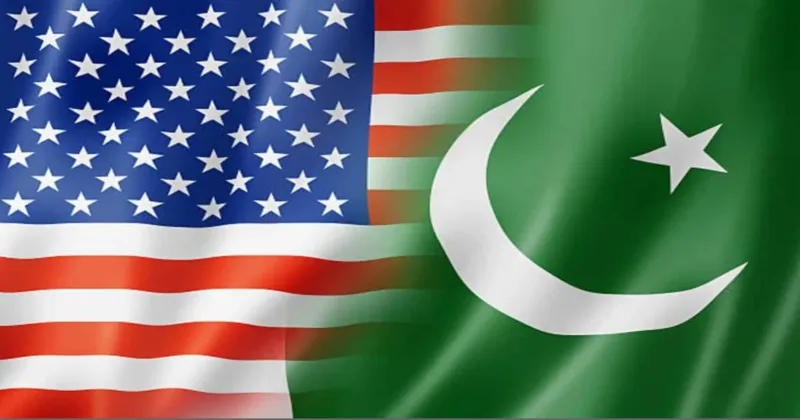
In the annals of global diplomacy, few bilateral equations are as lopsided and strategically hypocritical as the one between the Western world—particularly the United States—and the Islamic Republic of Pakistan. Despite its unenviable distinction as the world’s largest exporter of terrorism, Pakistan continues to receive military aid, diplomatic cover, and international indulgence that defy all logic, especially when contrasted with the treatment meted out to India. This paradox puzzles the average Indian: why does the self-proclaimed bastion of freedom and democracy continue to shield a nation that has repeatedly undermined both values?
The answer lies in a complex matrix of historical baggage, economic imperatives, military-industrial collusion, ego-boosting servility, and the West’s deeply ingrained instinct to retain control over the global narrative—even at the cost of long-term global stability.
Economic Interests and the Cult of the F-16
At the center of the West’s support for Pakistan lies one cold, irrefutable truth: self-interest. The Pakistani Air Force (PAF) flies American-made F-16 fighter jets, a platform that is not just a military asset but a multibillion-dollar symbol of U.S. defense supremacy. Were a full-scale Indo-Pak war to erupt, Indian superiority in both training and technology would likely lead to catastrophic losses for the PAF—particularly its prized F-16 fleet. If a two-week conflict results in Pakistan losing half its F-16s, global clients will think twice before investing in what could be perceived as an obsolete or ineffective platform.
The United States cannot afford such an outcome. The Lockheed Martin plant in Greenville, South Carolina employs thousands of Americans who depend on the continued global prestige and sale of the F-16. Any degradation in the platform’s image would not just hurt defense sales but undermine America’s status as a leading arms exporter. Compare this with India’s adept use of Russian S-400 missile systems, which have sparked renewed interest in Russian air defense tech. On the other hand, China’s HQ-9—a knockoff of the S-300—has suffered reputational damage following its dismal performance in regional theatres. America has every reason to ensure that its military hardware does not suffer the same fate at the hands of the Indian Air Force.
A Colonial Legacy Repackaged
Pakistan was never meant to be a natural nation-state. Created in haste during the twilight of British colonialism, it was a geopolitical orphan quickly adopted by the United States during the Cold War. In this transactional adoption, Pakistan offered its territory, bases, and loyalty in exchange for military aid and international relevance. The West, particularly Anglo-American strategic circles, have always viewed Pakistan as a manageable client state—a malleable buffer that served its larger game against Russia and now, increasingly, China.
Though Pakistan’s utility has diminished in the 21st century, the personal and institutional connections forged during those decades of Cold War camaraderie have endured. The Pakistani military elite, particularly among Punjabi Muslims and Mohajirs, are seen in Western policy circles as reliable operatives—willing to sell national pride for dollars, and eager to echo Western positions to remain geopolitically relevant.
The Psychology of Servility: Pakistan as the Sycophant State
Human psychology, especially among global elites, cannot be overlooked in diplomacy. Just as a corporate boss prefers subordinates who flatter rather than challenge, so too do global powers gravitate toward nations that massage their egos. In this, Pakistan excels.
Western dignitaries visiting India encounter a nation that upholds protocol and pride. Indian diplomacy operates within the boundaries of mutual respect—a senior US official will be received by a diplomat of matching stature. But in Pakistan, even a mid-ranking official from the Pentagon might find himself fawned over by a full Corps Commander. There are no limits to Pakistan’s diplomatic sycophancy.
This tradition dates back to Ayub Khan, the Pakistani Army Chief who later ruled as a dictator. In the 1950s, seeking to tie Pakistan’s fortunes to America’s Cold War strategy, he declared to a U.S. general, “The Pakistan Army is your army.” That one statement encapsulated decades of Pakistani foreign policy—one driven by patronage, not pride.
India: The Assertive Upstart
In stark contrast, Indian diplomacy is defined by self-respect and national interest. Whether it’s the External Affairs Ministry or the defense establishment, India treats foreign partners as equals, not masters. This rattles the Western establishment, which prefers supplicants over sovereigns. While Pakistan remains a client state, India seeks to become a pole in the multipolar world order. And that, in Western eyes, makes India a competitor.
India does not ask for aid; it demands partnerships. It does not parrot Western talking points; it articulates its own worldview rooted in dharma, sovereignty, and strategic autonomy. This ideological independence is not just inconvenient to the West—it is threatening.
The Diaspora Divide: Respect vs. Resentment
Perhaps the most visible contrast lies in the diasporas of both nations. The Indian diaspora in the West is overwhelmingly high-achieving. Engineers, doctors, professors, technocrats, CEOs—Indians have carved out niches of excellence in every imaginable sector. This has brought pride, but also resentment. Indians are increasingly seen not just as a model minority but as economic and intellectual competitors.
Contrast this with the Pakistani diaspora, which often resides in working-class neighborhoods and is frequently linked with welfare dependence, radicalization, or blue-collar employment. While they may draw scrutiny, they rarely evoke envy. Thus, while the Indian in Silicon Valley becomes a source of unease, the Pakistani in Bradford or Mississauga remains a manageable social element.
Indians, like Jews before them, have become the targets of quiet but potent socio-economic resentment. Hate crimes, visa restrictions, and media caricatures stem from this growing discomfort with Indian success.
Western Media and Institutional Bias
This systemic bias is not limited to foreign ministries and defense departments. It permeates think tanks, academia, and the media. During the 1971 war, the U.S. openly supported Pakistan, even as evidence of genocide in East Pakistan mounted. In the 1999 Kargil conflict, American pressure prevented India from exploiting its hard-earned battlefield advantage. More recently, after India’s Balakot strike in 2019, there were coordinated calls for “de-escalation”—a thinly veiled effort to prevent Pakistan from facing the full consequences of its terrorist adventurism.
Even the judicial system is not immune. When Ghulam Nabi Fai, an ISI operative, was convicted in the U.S. for illegally lobbying on Kashmir, the presiding judge expressed sympathy, saying he would like to “learn more about Pakistan and Islam.” Such indulgence would be unthinkable if the convict were lobbying on behalf of any Hindu nationalist cause.
Western media routinely regurgitates the Pakistani narrative in times of crisis, giving platform to ISI-friendly voices, while casting aspersions on India’s democratic institutions and military.
The Cold Comfort of Familiarity
At its core, supporting Pakistan is easy for the West. It requires no real moral or strategic rethink. Pakistan is the known devil—familiar, servile, and manipulable. Supporting India, on the other hand, means embracing a future global leader with its own ideas, ambitions, and worldview. That is a far more complicated task.
But the West must realize that the old playbook is wearing thin. The global South is awakening. Bharat is not merely a regional power; it is a civilizational force. It cannot be bracketed with the likes of Pakistan, nor will it tolerate being treated as an inferior.
Bharat Shall Prevail Alone If Needed
India’s path forward is clear. We must continue to engage with the West—but without illusions. We are not their junior partners. We are an independent, rising civilization-state with a unique destiny. And when it comes to Pakistan, we must prepare to act alone, for we have always stood alone in moments of crisis.
But today, Bharat stands not in isolation, but in confidence. Militarily stronger, economically dynamic, diplomatically assertive, and spiritually awakened. Let the world understand:
Bharat will no longer seek approval. Bharat will lead.
And no amount of Western indulgence for Pakistan—or condescension towards India—can halt that march.
Jai Hind. Jai Hind ki Sena













Comments