





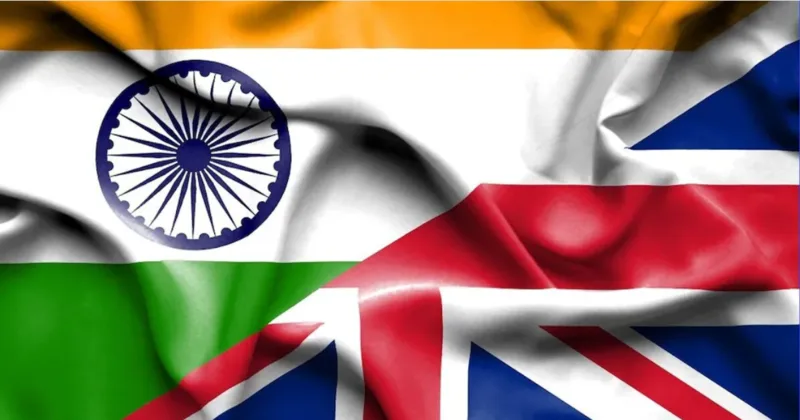
The news that Britain and India have agreed to a landmark free trade deal comes as a monumental development in a turbulent year for global trade. After three years of discussions and a reset since February, negotiators on both sides worked around the clock to secure alignment. It has resulted in the biggest and most economically significant bilateral trade deal the UK has done since leaving the EU, and the most far-reaching deal India has ever agreed to. By the standards of negotiating timelines, the FTA has been rather swift. The one with the EU, in particular, has been languishing for almost two decades, although it seems to have picked up momentum of late. The other vital trade pact on the government’s anvil, with the US, was not in serious contention until earlier this year. Governments across the globe should draw inspiration from this milestone and redouble their efforts to reduce barriers to free trade and promote consumer choice.
Timing, after all, is everything. The UK formally exited the EU in December 2020 and has been seeking new trade relationships to compensate for the loss of EU market access. Since then, it has struck deals with Japan, Singapore, Vietnam and even entered the Comprehensive and Progressive Agreement for Trans-Pacific Partnership or CPTPP — a mega trade bloc of 12 countries. In many ways, the FTA with India is its most significant trade deal since leaving the EU because India is one of the world’s fastest-growing major economies. It will facilitate India’s middle class improved access to UK’s high-value exports — automobiles, Scotch whiskey, legal and financial services. India offers a young and digitally savvy consumer base with opportunities for British technology, education, and professional services. The attention towards diversification away from China, coupled with India’s strong economic trajectory, presents the UK with a rare opportunity.
In a year where political brinkmanship has dominated headlines, it is refreshing to witness traditional diplomacy and statesmanship coming together to usher change. The Prime Ministers of the UK and India led the way, but we should also acknowledge Jonathan Reynolds, Piyush Goyal, and their respective officials. From a British perspective, the deal is expected to increase bilateral trade by £25.5 billion, UK GDP by £4.8 billion and domestic wages by £2.2 billion each year in the long run. India stands to gain a potential material boost in its manufacturing and service sectors.
The deal will slash Indian tariffs on key products such as whisky, cosmetics and medical devices, locking in reductions on 90 per cent of tariff lines for UK exports, with 85 per cent of these becoming fully tariff-free within a decade. Whisky and gin tariffs will be halved from 150 per cent to 75 per cent before reducing to 40 per cent by year 10 of the deal, while automotive tariffs will go from over 100 per cent to 10 per cent under a quota. Other goods with reduced tariffs, which can make trade cheaper for businesses and Indian consumers, include cosmetics, aerospace, lamb, medical devices, salmon, electrical machinery, soft drinks, chocolate and biscuits. UK firms would also gain access to India’s vast procurement market covering goods, services and construction.
From an Indian exports-oriented perspective, Britain agreed to virtually eliminate tariffs on clothes, footwear and food products. Practically speaking, nearly all Indian exports to Britain will therefore likely face no duties. In a significant move, both countries agreed to a “double contribution” convention for temporary mobility arrangements up to three years, under which social security contributions will be paid by employers and employees in their home country only, rather than in both places. Thus, an Indian firm sending an employee to the UK on a temporary assignment would pay a contribution in India rather than the UK. This should help labour mobility across both markets — a key point for India.
India recognises the inevitability of engaging more with the outside world to achieve its ambition of a “viksit” India by 2047. This goal could remain unrealised without enhanced global engagement and trade. That is why the FTA with the UK marks only the beginning of a long and hard negotiating period. For now, India will gain better (duty-free or reduced duty) access for its exports — mineral fuels, machinery, precious stones, pharmaceuticals, apparel, iron and steel, and chemicals, to name a few. Significantly, the FTA also includes provisions for easing mobility for Indian professionals and students, facilitating greater access to opportunities in the UK, while addressing their ageing-related constraints.
For a trade economist, the FTA is a manifestation of the Ricardian school of thought based on comparative advantage. For India, this is also the first major FTA outside Asia, and the gains from the deal are likely to be quite significant.
Voluntary trade — unlike the forced colonial exploitative model of the past that deindustrialised India by dismantling traditional industries, especially textiles, and converting them into raw material suppliers for British factories — is exactly that, voluntary. Nations engage with each other via trade because it is beneficial to do so. The India-UK FTA is beneficial to both countries. It aims to enhance trade, investment, economic growth, job creation, and innovation in both nations. Safeguards are also in place to prevent immediate disruptions. The tariff reductions on goods such as whiskey, automobiles, and agricultural products have been phased and subjected to a quota in case there is a flood of imports from the UK. The UK, in turn, will eliminate tariffs on Indian textiles. This, in turn, is anticipated to boost manufacturing in India.
The total bilateral trade between India and the UK touched approximately £42 billion by mid-2024 with India maintaining a trade surplus of about £8 billion. The FTA aims to double trade by 2030. The UK ranks as the sixth-largest investor in India, with cumulative investments exceeding £38 billion over the past three years in sectors like financial services and manufacturing was the second largest source of FDI in the UK in 2023.
While the India–UK FTA lays the groundwork for a more integrated economic partnership, conversation and cooperation will be essential to reduce divergence in standards and to fully realise the agreement’s potential benefits. The growing importance of e-commerce, digital trade and climate change necessitates an innovative approach to trade rules — this includes setting standards not only for finished products but also for processes underlying their production. For now, India has been cautious about committing to binding labour and environmental standards within the FTA, preferring non-binding “best endeavour” clauses. The FTA also encourages the development of Mutual Recognition Agreements (MRAs), particularly in professional services, to facilitate the recognition of qualifications and licenses between the two countries. It also endorses initiatives like the UK-India Education and Research Initiative (UKIERI) and promotes mutual recognition of academic qualifications to enhance student mobility and employment opportunities.
What are the broader implications of this deal, though? From a political lens, the deal could not have come at a better time for Sir Keir. Buffeted by a sluggish economy with lagging productivity and scarcely any “Brexit dividend” in sight, he badly needed to offer voters some hope. The deal gives him some credible wiggle room to signal that he is capable of protecting British interests in uncertain times. To be fair, Boris Johnson and Rishi Sunak had pushed hard as well, but it is Sir Keir who got this over the line. What he’d also be wishing for is that this deal galvanises negotiations with other jurisdictions, especially the United States. From a British perspective, the deal seeks to underline that the UK is “open for business”.
In truth, although the deal may have been bilateral in nature, a third party loomed over it: US President Donald Trump. If it wasn’t for his clarion call on US tariff imposition, the UK and India may have continued their dialogue with no end in sight. There is nothing quite like the ticking clock of Trumpian reciprocal tariffs looming to focus the mind on a conclusion rather than endless rhetorical navel-gazing. Whisper it softly: Trump’s methods may be controversial, but he does have an underlying point. Far too many countries have had high barriers to free trade.
Paradoxically, therefore, a protectionist pivot from Washington became the catalyst for a free trade deal between Britain and India. At a time of instability, the deal offers economic hope and highlights the virtue of problem-solving through mutual respect and collaboration. Britain and India have provided a template to inspire others. In these tumultuous times, if we were to see an acceleration of trade deals elsewhere promoting open markets, reducing costs and increasing consumer choice, it would represent a global silver lining after all.
By signing the FTA with the UK, India has finally conveyed its conviction about the utility of trade agreements. Its periodic assertions to integrate into regional and global value chains seemed at odds with the stance it took on such agreements. Hopefully, FTAs with the EU and the US will follow in due course. These agreements will, however, not deliver unless accompanied by domestic reform to remove structural deficiencies. These are well known impediments such as the lack of scale, labour market rigidities, logistics pains and harassment on transactional matters. But the UK FTA — others to follow — can become the preferred instruments for domestic reform, thus easing the political resistance and setting the stage for an economic upgrade. With multilateralism in an indefinite coma, for India, well-negotiated FTAs play a role similar to that played by global markets and the WTO in the upscaling of the Chinese economy.














Comments