How Operation Sindoor exposed Pakistan's fragile economy
December 5, 2025
  • Read Ecopy
  • Circulation
  • Advertise
  • Careers
  • About Us
  • Contact Us
Android AppiPhone AppArattai
Organiser
  • ‌
  • Bharat
    • Assam
    • Bihar
    • Chhattisgarh
    • Jharkhand
    • Maharashtra
    • View All States
  • World
    • Asia
    • Europe
    • North America
    • South America
    • Africa
    • Australia
  • Editorial
  • International
  • Opinion
  • RSS @ 100
  • More
    • Op Sindoor
    • Analysis
    • Sports
    • Defence
    • Politics
    • Business
    • Economy
    • Culture
    • Special Report
    • Sci & Tech
    • Entertainment
    • G20
    • Azadi Ka Amrit Mahotsav
    • Vocal4Local
    • Web Stories
    • Education
    • Employment
    • Books
    • Interviews
    • Travel
    • Law
    • Health
    • Obituary
  • Subscribe
    • Subscribe Print Edition
    • Subscribe Ecopy
    • Read Ecopy
  • ‌
  • Bharat
    • Assam
    • Bihar
    • Chhattisgarh
    • Jharkhand
    • Maharashtra
    • View All States
  • World
    • Asia
    • Europe
    • North America
    • South America
    • Africa
    • Australia
  • Editorial
  • International
  • Opinion
  • RSS @ 100
  • More
    • Op Sindoor
    • Analysis
    • Sports
    • Defence
    • Politics
    • Business
    • Economy
    • Culture
    • Special Report
    • Sci & Tech
    • Entertainment
    • G20
    • Azadi Ka Amrit Mahotsav
    • Vocal4Local
    • Web Stories
    • Education
    • Employment
    • Books
    • Interviews
    • Travel
    • Law
    • Health
    • Obituary
  • Subscribe
    • Subscribe Print Edition
    • Subscribe Ecopy
    • Read Ecopy
Organiser
  • Home
  • Bharat
  • World
  • Operation Sindoor
  • Editorial
  • Analysis
  • Opinion
  • Culture
  • Defence
  • International Edition
  • RSS @ 100
  • Magazine
  • Read Ecopy
Home Bharat

Pakistan’s Economic Downfall: How Operation Sindoor exposed its fragile finances

Pakistan’s reckless military escalation with India is pushing its already crumbling economy to the brink. Drowning in debt and dependent on handouts, it now risks losing global financial lifelines. As India strikes with precision and restraint, Pakistan stands exposed, militarily outmatched and economically broken. Meanwhile, India is gaining global credibility and reinforcing its image as a stable, responsible power

Vishnu AravindVishnu Aravind
May 12, 2025, 07:30 am IST
in Bharat, World, International Edition
Follow on Google News
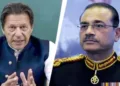
Pakistan's fragile economic condition exposed during Operation Sindoor

Pakistan's fragile economic condition exposed during Operation Sindoor

FacebookTwitterWhatsAppTelegramEmail

The military escalation between India and Pakistan, triggered by the April 22 terrorist attack in Pahalgam, is unfolding at a time when Pakistan’s economy is already on the brink of collapse. As India launched Operation Sindoor to strike back at Pakistan-backed terror camps, the economic aftershocks have further destabilised Pakistan’s fragile financial system. In contrast to India’s economic resilience, Pakistan faces a dangerous convergence of military overreach, foreign debt, and a dwindling ability to meet basic economic obligations.

Military Conflict Amid Economic Fragility

Pakistan’s decision to respond militarily to India’s counter-terror operation through drone attacks and shelling across the Line of Control (LoC) has come at a steep cost. The country’s limited fiscal space is now being consumed by defence-related expenses. According to the Stockholm International Peace Research Institute (SIPRI), Pakistan’s military spending for 2024 was $11 billion, a significant portion of its GDP. This high allocation persists despite a worsening economic environment and increasing dependence on foreign aid.

By contrast, India’s military spending is $86.1 billion, eight times that of Pakistan, but the scale is backed by a robust and growing economy. For Pakistan, matching India militarily is not only unsustainable but economically perilous. The burden of maintaining a credible deterrent against a conventionally superior India continues to divert resources away from essential public services, investment, and growth.

Read More: Operation Sindoor: When credibility erodes, misinformation is the weapon

Soaring Debt and IMF Dependence

Pakistan’s external debt has ballooned to $130 billion as of 2024, and it remains heavily reliant on international financial assistance. The country has borrowed 25 times from the International Monetary Fund (IMF) since joining in 1950, and as of March 31, 2025, it owes $6.2 billion to the Fund.

On May 8, India’s Foreign Secretary Vikram Misri stated that New Delhi would urge the IMF board to reconsider approving fresh funding to Pakistan. The board is currently reviewing Pakistan’s financing facilities, and India’s objection comes in the wake of Pakistan’s drone and missile attacks on Indian civilians and infrastructure. India’s position reflects its strategy to not only counter terrorism militarily but also to pressure Islamabad diplomatically and economically.

This development threatens to derail Pakistan’s modest economic recovery under the ongoing $7 billion IMF programme. Experts believe that further conflict would destabilise Pakistan’s economic position even more severely, making it harder to meet IMF conditions and secure additional aid.

Reliance on Handouts and Multilateral Aid

Over the years, Pakistan has increasingly depended on financial handouts from countries like China, Saudi Arabia, and Qatar, along with multilateral institutions such as the World Bank and the IMF. According to the World Bank, it has provided $48 billion in assistance to Pakistan since its membership began. In January 2025, Islamabad agreed to a 10-year plan for a $20 billion loan from the World Bank, hoping to stabilise its macroeconomic fundamentals.

However, international support alone cannot resolve structural weaknesses. Chronic trade deficits, poor tax revenues, and overspending on defence continue to drag the economy down. With India now actively lobbying against new bailouts, Pakistan’s access to external funding may be curtailed, pushing it closer to default.

Civil-Military Imbalance and Economic Mismanagement

A significant issue underlying Pakistan’s economic dysfunction is the powerful role of the military establishment. General Asim Munir, the current Army chief, played a key role in the ouster of former Prime Minister Imran Khan and installed Shehbaz Sharif in power. Beyond politics, Munir and the military control a vast network of commercial enterprises, such as those under the Fauji Foundation. This militarisation of the economy contributes to inefficiency, poor governance, and corruption, stifling genuine private-sector growth. Rather than focusing on structural reform, Pakistan continues to funnel resources into its military and subsidised enterprises. This deepens the economic crisis, even as ordinary Pakistanis suffer from high inflation, unemployment, and low growth.

Domestic Fallout and Public Despair

The economic toll on the population is becoming increasingly severe. With inflation surging and basic commodity prices rising, Pakistanis are struggling to meet everyday expenses. Unemployment is high, and youth are emigrating in record numbers in search of better opportunities abroad. The situation is exacerbated by energy shortages, depreciating currency, and lack of investor confidence. Adding to the strain is Pakistan’s decision to respond militarily to India’s strikes. Sustained conflict could severely disrupt trade routes, increase insurance and borrowing costs, and drive away foreign investors. It also diverts public spending from healthcare, education, and infrastructure to defence, compounding the economic distress.

Diplomatic Isolation and Loss of Leverage

India has not only maintained international support but also effectively neutralised criticism by clearly distinguishing its military operations from civilian targets. It has emphasised that Operation Sindoor focused solely on terror infrastructure in Pakistan and Pakistan-Occupied Jammu & Kashmir (PoJK), deliberately avoiding military or civilian casualties. Pakistan, however, escalated the conflict by launching attacks on Indian civilian and military areas, resulting in 18 Indian deaths and over 50 injuries in 15 days.

This has undermined Islamabad’s international credibility, especially at a time when the world is growing increasingly intolerant of state-sponsored terrorism. Even the United States Secretary of State has reportedly urged Pakistan’s Prime Minister Shehbaz Sharif to take “concrete steps” to end support for terror groups, further isolating Pakistan diplomatically.


 

Topics: PakistanShehbaz SharifGeneral Asim MunirOperation Sindoor
Share1TweetSendShareSend
✮ Subscribe Organiser YouTube Channel. ✮
✮ Join Organiser's WhatsApp channel for Nationalist views beyond the news. ✮
Previous News

How India’s Navy, with carrier battle group, stood ready to strike Karachi port if needed in Operation Sindoor?

Next News

Know who were Pak military personnel attending terrorists’ funerals with full state honours after Operation Sindoor?

Related News

Retired Subedar held for leaking Army details to Pak handlers posing as Indians

Gujarat ATS dismantles spy network involving Ex-Army personnel and woman for sharing information with Pakistan

Pakistan's Prime Minister Shehbaz Sharif Afganistan's Foreign Minister Amir Muttaqi and India's Foreign Minister S Jaishankar

Afghanistan rebukes Pakistan, defends right to build stronger ties with India

Site of the Delhi Blast that took place on November 10, 2025

Delhi Red Fort Blast: Pakistan signals new phase of Jihad against Bharat

Pakistan's Chief of Army Staff Asim Munir, Aleema Khan and ex-Pak PM Imran Khan

Aleema Khan, sister of Imran Khan, accuses Asim Munir of Islamist hardline driving Pakistan toward conflict with India

From Maqbool Sherwani to Maqbool Butt: Jammu Kashmir dwindles Between Nationalism and Separatism

Former Pakistani Prime Minister Imran Khan (Left) and Field Marshal Asim Munir (Right)

Pakistan: Imran Khan claims severe mental torture in jail, blames Asim Munir for harsh treatment

Load More

Comments

The comments posted here/below/in the given space are not on behalf of Organiser. The person posting the comment will be in sole ownership of its responsibility. According to the central government's IT rules, obscene or offensive statement made against a person, religion, community or nation is a punishable offense, and legal action would be taken against people who indulge in such activities.

Latest News

Thirupparankundram Karthigai Deepam utsav

Andhra Pradesh: AP Dy CM Pawan Kalyan reacts to Thirupparankundram row, flags concern over religious rights of Hindus

23rd India-Russia Annual Summit

India-Russia Summit heralds new chapter in time-tested ties: Inks MoUs in economic, defence, tourism & education

DGCA orders probe into IndiGo flight disruptions; Committee to report in 15 days

BJYM leader Shyamraj with Janaki

Kerala: Widow of BJP worker murdered in 1995 steps into electoral battle after three decades at Valancherry

Russian Sber bank has unveiled access to its retail investors to the Indian stock market by etching its mutual fund to Nifty50

Scripting economic bonhomie: Russian investors gain access to Indian stocks, Sber unveils Nifty50 pegged mutual funds

Petitioner S Vignesh Shishir speaking to the reporters about the Rahul Gandhi UK citizenship case outside the Raebareli court

Rahul Gandhi UK Citizenship Case: Congress supporters create ruckus in court; Foreign visit details shared with judge

(L) Kerala High Court (R) Bouncers in Trippoonithura temple

Kerala: HC slams CPM-controlled Kochi Devaswom Board for deploying bouncers for crowd management during festival

Fact Check: Rahul Gandhi false claim about govt blocking his meet with Russian President Putin exposed; MEA clears air

Union Minister for Road Transport and Highways Nitin Gadkari (Right)

India set for highway overhaul as Union Minister Nitin Gadkari unveils nationwide shift to MLFF electronic tolling

RSS Akhil Bharatiya Prachar Pramukh Shri Sunil Ambekar

When Narrative Wars result in bloodshed, countering them becomes imperative: Sunil Ambekar

Load More
  • Privacy
  • Terms
  • Cookie Policy
  • Refund and Cancellation
  • Delivery and Shipping

© Bharat Prakashan (Delhi) Limited.
Tech-enabled by Ananthapuri Technologies

  • Home
  • Search Organiser
  • Bharat
    • Assam
    • Bihar
    • Chhattisgarh
    • Jharkhand
    • Maharashtra
    • View All States
  • World
    • Asia
    • Africa
    • North America
    • South America
    • Europe
    • Australia
  • Editorial
  • Operation Sindoor
  • Opinion
  • Analysis
  • Defence
  • Culture
  • Sports
  • Business
  • RSS @ 100
  • Entertainment
  • More ..
    • Sci & Tech
    • Vocal4Local
    • Special Report
    • Education
    • Employment
    • Books
    • Interviews
    • Travel
    • Health
    • Politics
    • Law
    • Economy
    • Obituary
  • Subscribe Magazine
  • Read Ecopy
  • Advertise
  • Circulation
  • Careers
  • About Us
  • Contact Us
  • Policies & Terms
    • Privacy Policy
    • Cookie Policy
    • Refund and Cancellation
    • Terms of Use

© Bharat Prakashan (Delhi) Limited.
Tech-enabled by Ananthapuri Technologies