





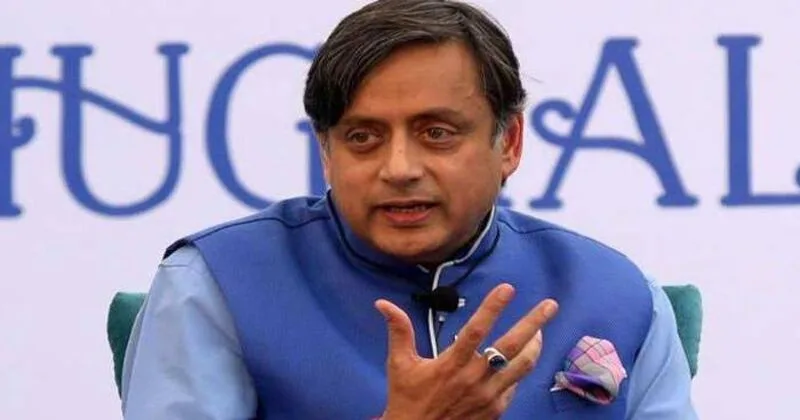
Congress MP Shashi Tharoor welcomed the recent stop firing and military action agreement between India and Pakistan, while urging caution against comparing the current situation to the 1971 war. Speaking to reporters, Tharoor said, “1971 was one of the most decisive achievements in India’s history. But the current situation is completely different. That too should not be compared with it.”
Emphasising the importance of peace, Tharoor stated that India never desired a prolonged conflict. “India wanted to teach the terrorists a lesson, and I believe that lesson has been taught,” he said, adding that he awaits further details on the developments.
The stop firing and military action between India and Pakistan came into effect at 5 PM on May 10. According to Foreign Secretary Vikram Misri, the agreement was reached during diplomatic-level talks between the two countries.
At a press briefing, Misri informed that the Director General of Military Operations (DGMO) of Pakistan contacted his Indian counterpart at 3:35 PM on Saturday. Both sides agreed to halt all firing and military operations by land, air, and sea, starting from 5 PM Indian Standard Time.
Instructions have been issued to ground forces on both sides to implement the stop firing and military action. Misri also noted that another meeting between the two DGMOs is scheduled for Monday, May 12, at 12 noon.
External Affairs Minister S. Jaishankar confirmed the stop firing and military action via a post on X (formerly Twitter), stating that both nations had reached a mutual understanding to halt military operations. He reiterated that India remains firm in its zero-tolerance policy towards terrorism and will continue to uphold that stance.
Tharoor’s statement comes at a time when the Congress party have begun politicising the ongoing developments by irresponsibly invoking the legacy of the 1971 war to question the government’s handling of the present crisis. Such comparisons are not only historically flawed but also reveal a cynical attempt to exploit national security issues for political mileage. Tharoor’s remark, therefore, is being seen as a rebuke to his own party’s misjudged narrative and an effort to reintroduce nuance and realism into the conversation.














Comments