





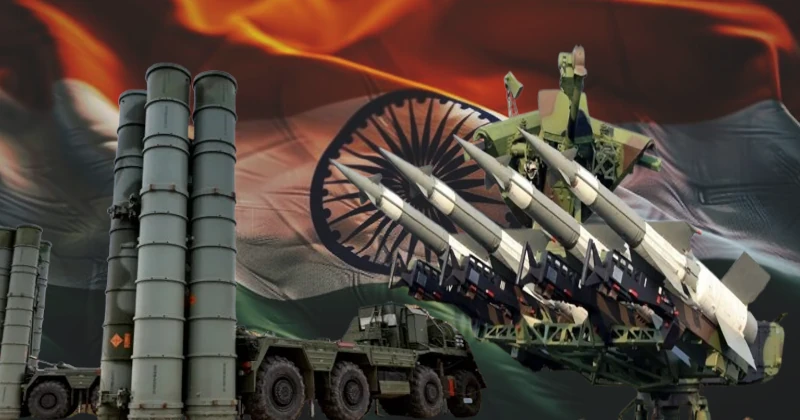
Bharat is no longer just defending its skies—it is commanding them. With a staggering 1,750 military aircraft under its command, including nearly 900 fighter jets primed for combat, Bharat has officially ascended into the league of the world’s top five aerial powers. But behind this rising arsenal lies a much deeper story—one of indigenous innovation, strategic partnerships, and a relentless pursuit of technological supremacy in a region fraught with aerial threats from hostile neighbours.
This is not just about numbers. This is about deterrence, decisive response, and dominance across multiple theatres land, sea, and air.
The $7.4 Billion Rafale Boost
Bharat’s recently inked deal for 26 additional Rafale fighter jets a Rs 61,000 crore agreement with France—is more than just a procurement move. It is a strategic strike aimed at securing Bharat’s maritime and aerial frontiers in a rapidly evolving Indo-Pacific region.
These jets, capable of operating from aircraft carriers, will significantly enhance the Indian Navy’s ability to project power in the Indian Ocean challenging Chinese expansionism and securing Bharat’s vital shipping lanes.
Bharat’s Air Defence Web is Combat-Ready
Bharat’s air defence doctrine has undergone a dramatic evolution, moving away from a reactive structure to a layered, proactive shield against every conceivable aerial threat. At the heart of this transformation is the Ballistic Missile Defence (BMD) Programme a two-tiered fortress designed to intercept threats inside and outside the atmosphere.
I. Prithvi Air Defence (PAD)
- Type: Exo-atmospheric
- Interception Altitude: Up to 80 km
- Speed: Mach 5+
- Radar: Long Range Tracking Radar (LRTR) tracks 200 targets at 600 km
II. Advanced Air Defence (AAD)
- Type: Endo-atmospheric
- Range: 150–200 km
- Speed: Mach 4.5
Designed to kill any target that breaches the PAD layer.
Bharat’s BMD system puts it in an elite club of nations (alongside the US, Russia, and Israel) capable of intercepting ballistic threats in both high- and low-altitude battle scenarios.
The Indigenous Triumph: Akash Air Defence System
The Akash SAM is a symbol of Bharat’s defence renaissance. Developed by the DRDO and produced by BDL and BEL, the Akash is the nation’s first fully indigenous medium-range surface-to-air missile system—and it is already replacing imported equivalents, saving over Rs 34,500 crore in foreign exchange.
Key Specs
- Range: 45 km
- Speed: Mach 3.5
- Altitude Engagement: 4–25 km
- Radar: Rajendra phased-array radar tracks 64 targets and guides 12 missiles at once
- Warhead: 60 kg HE fragmentation, proximity-fused
The Akash system is already deployed along the western and northern frontiers, including the highly sensitive LoC and IB regions. Its ability to simultaneously engage multiple targets—fighter jets, cruise missiles, and drones—makes it indispensable in an era of drone swarms and hybrid warfare.
Variants
- Akash-1S: Hybrid seeker for precision strikes; range: 30 km
- Akash-NG: Extended range up to 80 km, advanced ECCM for jamming resistance
In 2023, during a high-intensity military drill, the Akash system intercepted and neutralised four UAVs simultaneously—a vivid warning to adversaries deploying drone warfare tactics like Pakistan’s use of Turkish TB2s and Chinese-origin UAVs.
Beyond Akash, Bharat’s air defence architecture incorporates several powerful systems across ranges and altitudes:
1. Long-Range Systems
- S-400 Triumph (Russia): Operational; range 400 km
- Barak-8 (Bharat-Israel): Range 0.5–100 km; deployed in Ladakh
- Hypersonic Missiles: Successfully tested, can travel beyond Mach 5 and strike at 1,500+ km
2. Medium- and Short-Range Systems
- SPYDER (Israel): Quick-reaction; Python-5 (20 km), Derby (50 km)
- QRSAM: Designed for Indian Army; range: 30 km, speed: Mach 4.7
- 2K12 Kub: Soviet legacy, range 24 km
3. Legacy Systems Still in Use
- Pechora (S-125): 25 squadrons still active
- Osa-AK and Shilka: Provide mobile, low-altitude cover for mechanised forces
VSHORAD: Plugging the last gaps in Bharat’s sky shield
For ultra-close range aerial threats like drones, helicopters, and low-flying jets, Bharat’s Very Short Range Air Defence (VSHORAD) systems are the final protective layer. Bharat is in the process of procuring 500 VSHORAD launchers and 3,000 missiles, most of which are being indigenised under Atmanirbhar Bharat.
Key systems include
- Strela-10 and Tunguska (tracked systems)
- ZU-23-2 twin autocannons and Bofors 40mm guns for forward posts
- KPV 14.5mm HMGs for troop-level deployment
These systems are being strategically deployed in Jammu and Punjab, where Pakistan continues to exploit border gaps using drone-based narco-terrorism and surveillance.
Bharat’s missile production capacity has reached new highs. Bharat Dynamics Limited (BDL) now rolls out 50–60 Akash missiles per month, and major deals—like the $720 million Akash export contract with Armenia signal a shift from buyer to supplier. This self-reliance is not just strategic it’s economic, industrial, and diplomatic. Every indigenised system replaces an import, sustains readiness, and creates high-skill jobs.














Comments