'Fatwas not binding in Indian legal system': SC Backs Nafeesa, rejects Abdul Samad’s Sharia Court talaq
December 5, 2025
  • Read Ecopy
  • Circulation
  • Advertise
  • Careers
  • About Us
  • Contact Us
Android AppiPhone AppArattai
Organiser
  • ‌
  • Bharat
    • Assam
    • Bihar
    • Chhattisgarh
    • Jharkhand
    • Maharashtra
    • View All States
  • World
    • Asia
    • Europe
    • North America
    • South America
    • Africa
    • Australia
  • Editorial
  • International
  • Opinion
  • RSS @ 100
  • More
    • Op Sindoor
    • Analysis
    • Sports
    • Defence
    • Politics
    • Business
    • Economy
    • Culture
    • Special Report
    • Sci & Tech
    • Entertainment
    • G20
    • Azadi Ka Amrit Mahotsav
    • Vocal4Local
    • Web Stories
    • Education
    • Employment
    • Books
    • Interviews
    • Travel
    • Law
    • Health
    • Obituary
  • Subscribe
    • Subscribe Print Edition
    • Subscribe Ecopy
    • Read Ecopy
  • ‌
  • Bharat
    • Assam
    • Bihar
    • Chhattisgarh
    • Jharkhand
    • Maharashtra
    • View All States
  • World
    • Asia
    • Europe
    • North America
    • South America
    • Africa
    • Australia
  • Editorial
  • International
  • Opinion
  • RSS @ 100
  • More
    • Op Sindoor
    • Analysis
    • Sports
    • Defence
    • Politics
    • Business
    • Economy
    • Culture
    • Special Report
    • Sci & Tech
    • Entertainment
    • G20
    • Azadi Ka Amrit Mahotsav
    • Vocal4Local
    • Web Stories
    • Education
    • Employment
    • Books
    • Interviews
    • Travel
    • Law
    • Health
    • Obituary
  • Subscribe
    • Subscribe Print Edition
    • Subscribe Ecopy
    • Read Ecopy
Organiser
  • Home
  • Bharat
  • World
  • Operation Sindoor
  • Editorial
  • Analysis
  • Opinion
  • Culture
  • Defence
  • International Edition
  • RSS @ 100
  • Magazine
  • Read Ecopy
Home Bharat

‘Fatwas not binding in Indian legal system’: SC Backs Nafeesa, rejects Abdul Samad’s Sharia Court talaq

The Supreme Court of India quashed a Sharia court’s talaq decree in the case of Mohammed Abdul Samad vs Nafeesa, reaffirming that only civil courts can adjudicate matrimonial disputes under Indian law. The Court strongly asserted that bodies like the All India Muslim Personal Law Board (AIMPLB) are not judicial authorities but merely NGOs with no legal standing to dissolve marriages. This ruling has reignited the national debate on parallel judicial systems, gender justice, and the need for a Uniform Civil Code

Shashank Kumar DwivediShashank Kumar Dwivedi
May 6, 2025, 02:30 pm IST
in Bharat, Law, Delhi
Follow on Google News
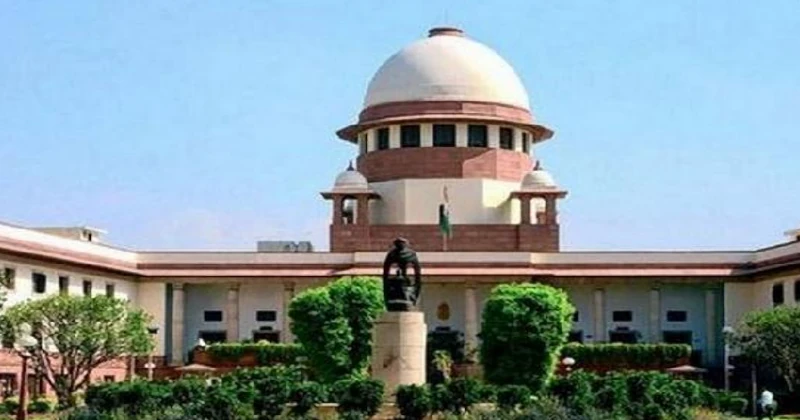
Supreme Court of India

Supreme Court of India

FacebookTwitterWhatsAppTelegramEmail

A judgment that will have far-reaching implications for India’s legal landscape, the Supreme Court of India ruled that so-called Islamic judicial bodies like the Sharia Court, Darul-Qaza, Court of Qazi, or Kajiyat, have no legal standing under Indian law. The verdict came on April 28, 2025, in a case filed by a Muslim woman, Shahjahan, who was denied maintenance by her husband and subsequently by both the Family Court and the Allahabad High Court.

But this was not just about maintenance. The case struck at a much deeper issue: Can an Islamic court operating outside India’s formal judicial structure override rights protected by Indian law?

The Supreme Court’s answer was a firm no.

Woman behind the case: Shahjahan’s struggle

Shahjahan, a Muslim woman from Uttar Pradesh, had a difficult journey. She married Gaffar Khan, a Border Security Force (BSF) personnel, in 2002. Both were in their second marriages. They had two children together, but the relationship soured quickly.

Shahjahan alleged that her husband assaulted her, demanded dowry, including a motorcycle and Rs 50,000 and eventually threw her and their children out of the house in May 2008. Before this, in 2005, Gaffar had already approached a Court of Qazi in Bhopal, seeking divorce. There, the couple had entered into a so-called “compromise” to continue living together.

But things only deteriorated further. In 2008, Gaffar returned to the Darul-Qaza, another Islamic arbitration body and obtained a talaqnama (divorce document). Relying on this Sharia court document, he refused to provide financial support to his wife.

Shahjahan, illiterate and without any source of income, approached the Family Court asking for Rs 5,000 per month for herself and Rs 1,000 each for their children. Shockingly, the Family Court dismissed her plea for personal maintenance, saying she had left the home of her own volition and that her second marriage nullified any dowry demands. The Allahabad High Court upheld this bizarre conclusion, leaving Shahjahan without support.

Supreme Court ruling that went beyond one case

In 2025, the Supreme Court stepped in. A bench comprising Justices Sudhanshu Dhulia and Ahsanuddin Amanullah not only reversed the Allahabad High Court’s decision but also used the case to make an important constitutional declaration.

The apex court granted Shahjahan Rs 4,000 per month as maintenance, effective from the day she first filed her petition. It also ordered that Gaffar continue supporting their children financially until they reach adulthood. But beyond individual relief, the court went on to clarify the legal position of Islamic arbitration bodies in India.

The court made it unequivocally clear: “‘Court of Kazi’, ‘Court of (Darul Kaja) Kajiyat’, ‘Sharia Court’, etcetera, by whatever name styled, have no recognition in law.”

Why this ruling matters: Constitution vs parallel Judicial systems

India is a secular, democratic republic with a well-established judicial system governed by the Constitution. However, in the shadows, Islamic bodies like the Darul-Qaza often function as informal “courts” offering religious arbitration. While people may voluntarily approach such bodies, their rulings have no legal standing and cannot override Indian statutory law, especially in matters like maintenance, marriage, and divorce.

The Supreme Court cited a critical precedent: the 2014 Vishwa Lochan Madan vs Union of India case. In that ruling, the court had observed that fatwas and Darul-Qaza decisions are not enforceable under the law. They have no legal sanction and cannot be imposed on anyone using coercive methods. A fatwa, the court had said, is merely an opinion, “not a decree, not binding on any court or individual, and certainly not on the State.”

This is crucial because despite lacking legal validity, many families, particularly women are pressured into abiding by these religious verdicts. And sometimes, shockingly, even statutory courts end up relying on such non-judicial “settlements,” as the Family Court and the Allahabad High Court did in Shahjahan’s case.

Criticising the lower courts: An eye-opener

The Supreme Court strongly criticised the lower courts. It slammed the Family Court for assuming, without any basis, that Shahjahan left the marital home without reason and for ruling out dowry demands just because it was the couple’s second marriage.

“The observation that dowry demand is unlikely in a second marriage is unknown to the canons of law,” the apex court remarked bluntly.

Furthermore, the bench pointed out that courts cannot rely on religious bodies like Sharia courts to determine someone’s rights under Indian law. Even if parties agree to a religious verdict, it is only valid between them and only if it does not violate any law.

The bigger problem: Normalisation of Sharia Courts in India

This judgment comes at a time when Sharia courts are not just operating, but expanding. In 2023, the All India Muslim Personal Law Board (AIMPLB) publicly stated that there are over 100 Sharia courts in India, with plans to establish one in every Muslim-majority district.

In 2020, political figures from AIMIM openly encouraged Muslims to reject the Indian judiciary and instead resolve disputes through Sharia courts. Former Vice President of India, Hamid Ansari, too, had supported the idea of establishing Sharia courts across districts, citing the community’s right to practice personal law.

As recently as April 14, 2025, Jharkhand minister Hafizul Hasan openly declared that for him, “Sharia comes before the Constitution.” He further added, “Muslims carry the Quran in their hearts and the Constitution in their hands,” a statement critics say exposes a dual loyalty that conflicts with India’s secular legal structure.

A wake-up call for Indian secularism

What this case underlines is the danger of legitimising parallel judicial systems. When lower courts begin to rely on declarations from bodies like the Darul-Qaza, it effectively undermines the authority of the Indian judiciary. The Supreme Court’s firm intervention, therefore, was not only timely, it was necessary.

The ruling reaffirmed that only statutory courts established under the Indian Constitution have the authority to adjudicate legal disputes. Any ruling, compromise, or talaqnama issued by an Islamic body is simply a private agreement unless it’s legally registered and validated under Indian law.

Justice restored, but the fight isn’t over

The Supreme Court’s verdict in Shahjahan vs State of Uttar Pradesh and Others is not just a win for one woman, it’s a reassertion of India’s constitutional values. It reminds us that religious customs, cannot supersede the rights guaranteed by the law of the land.

At its heart, the judgment upholds two key ideas: equal protection under the law, and one nation, one legal system. In doing so, it has sent a powerful message no parallel judiciary can coexist in a democratic republic.

(Copy of the judgment can be accessed here) 

Topics: Supreme CourtAIMPLBFatwasParllel legal system
ShareTweetSendShareSend
✮ Subscribe Organiser YouTube Channel. ✮
✮ Join Organiser's WhatsApp channel for Nationalist views beyond the news. ✮
Previous News

Kerala Govt’s assault on press freedom: Journalist arrested for exposing Vijayan led family rule and Islamist links

Next News

Uttarakhand Government crack down on illegal Madrasas, seal five more

Related News

The Supreme Court of India

Supreme Court allows extra support for overburdened BLOs, says SIR duties are mandatory for government staff

West Bengal Chief Minister Mamata Banerjee

West Bengal: NCBC delists 35 Muslim castes wrongly included in OBC category; Mamata govt’s appeasement politics exposed

Representation image of a Muslim woman (Tribune)

Supreme Court secures property rights of divorced Muslim women in landmark verdict

Supreme Court tears into Rohingya plea, says ‘Illegal entrants cannot claim rights meant for Indian citizens’

Supreme Court questions extending rights to illegal Rohingya entrants amid rising security fears

Supreme Court flags security concerns as Rohingya Habeas plea triggers sharp remarks

SC to Waqf Boards: Fix your own mess; UMEED portal deadline remains December 6

Load More

Comments

The comments posted here/below/in the given space are not on behalf of Organiser. The person posting the comment will be in sole ownership of its responsibility. According to the central government's IT rules, obscene or offensive statement made against a person, religion, community or nation is a punishable offense, and legal action would be taken against people who indulge in such activities.

Latest News

Thirupparankundram Karthigai Deepam utsav

Andhra Pradesh: AP Dy CM Pawan Kalyan reacts to Thirupparankundram row, flags concern over religious rights of Hindus

23rd India-Russia Annual Summit

India-Russia Summit heralds new chapter in time-tested ties: Inks MoUs in economic, defence, tourism & education

DGCA orders probe into IndiGo flight disruptions; Committee to report in 15 days

BJYM leader Shyamraj with Janaki

Kerala: Widow of BJP worker murdered in 1995 steps into electoral battle after three decades at Valancherry

Russian Sber bank has unveiled access to its retail investors to the Indian stock market by etching its mutual fund to Nifty50

Scripting economic bonhomie: Russian investors gain access to Indian stocks, Sber unveils Nifty50 pegged mutual funds

Petitioner S Vignesh Shishir speaking to the reporters about the Rahul Gandhi UK citizenship case outside the Raebareli court

Rahul Gandhi UK Citizenship Case: Congress supporters create ruckus in court; Foreign visit details shared with judge

(L) Kerala High Court (R) Bouncers in Trippoonithura temple

Kerala: HC slams CPM-controlled Kochi Devaswom Board for deploying bouncers for crowd management during festival

Fact Check: Rahul Gandhi false claim about govt blocking his meet with Russian President Putin exposed; MEA clears air

Union Minister for Road Transport and Highways Nitin Gadkari (Right)

India set for highway overhaul as Union Minister Nitin Gadkari unveils nationwide shift to MLFF electronic tolling

RSS Akhil Bharatiya Prachar Pramukh Shri Sunil Ambekar

When Narrative Wars result in bloodshed, countering them becomes imperative: Sunil Ambekar

Load More
  • Privacy
  • Terms
  • Cookie Policy
  • Refund and Cancellation
  • Delivery and Shipping

© Bharat Prakashan (Delhi) Limited.
Tech-enabled by Ananthapuri Technologies

  • Home
  • Search Organiser
  • Bharat
    • Assam
    • Bihar
    • Chhattisgarh
    • Jharkhand
    • Maharashtra
    • View All States
  • World
    • Asia
    • Africa
    • North America
    • South America
    • Europe
    • Australia
  • Editorial
  • Operation Sindoor
  • Opinion
  • Analysis
  • Defence
  • Culture
  • Sports
  • Business
  • RSS @ 100
  • Entertainment
  • More ..
    • Sci & Tech
    • Vocal4Local
    • Special Report
    • Education
    • Employment
    • Books
    • Interviews
    • Travel
    • Health
    • Politics
    • Law
    • Economy
    • Obituary
  • Subscribe Magazine
  • Read Ecopy
  • Advertise
  • Circulation
  • Careers
  • About Us
  • Contact Us
  • Policies & Terms
    • Privacy Policy
    • Cookie Policy
    • Refund and Cancellation
    • Terms of Use

© Bharat Prakashan (Delhi) Limited.
Tech-enabled by Ananthapuri Technologies