





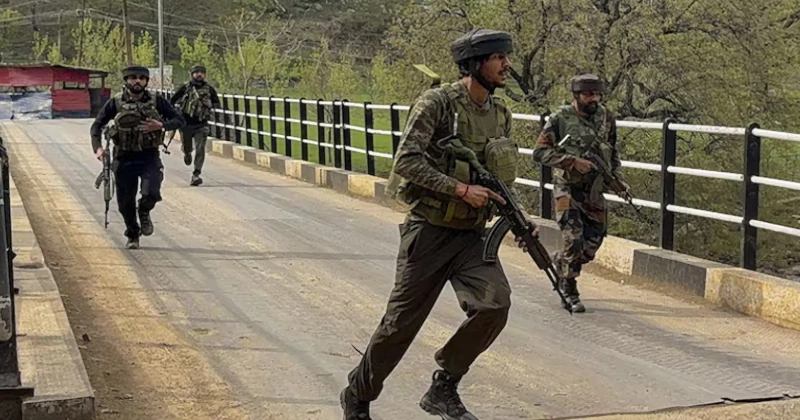
How long will we continue to claim that terrorism has no religion when, in incidents like the Pahalgam attack, terrorists themselves identify and kill victims based on their faith? In Pahalgam, despite the secular narratives often presented, the harsh reality remains: the victims were deliberately segregated based on their religion, and only Hindus were targeted and killed after undergoing brutal religious verification following Islamic practices.
No matter how much we try to mask it with broader generalisations, such incidents expose the deeply rooted religious motivation behind certain acts of terror, which cannot be ignored if we are to confront the full truth.
For over 30 years, Pakistan’s support for terrorism has exposed its ugly face to the world. Yet, terrorism has not only inflicted suffering on J&K but on the entire nation of India. While the Indian Army and paramilitary forces have consistently defeated Pakistan-backed terrorists, the cost has been heavy. Over the past 32 years, on average, India has lost one soldier and two civilians for every four terrorists neutralised.
According to a study by the Institute for Conflict Management based in New Delhi, nine states in India are extremely sensitive to terrorism and insurgency, with J&K being the most affected. Between 1988 and 2019, the region witnessed over 56,000 terror-related incidents. In response, Indian forces eliminated 23,386 terrorists. However, the price was steep — 14,930 civilians lost their lives, and 6,413 security personnel were martyred.
States such as Arunachal Pradesh, Assam, Manipur, Meghalaya, Mizoram, Nagaland, Punjab, and Tripura also experience similar patterns of violence each year, with considerable casualties among both civilians and security forces.
The study further highlights that after a period of relative calm, the targeted killings of civilians in the Rajouri and Udhampur districts of J&K in 2022 indicate that areas once declared terrorism-free are once again within reach of Pakistan-sponsored terror groups. Although tourists were the primary targets in the Pahalgam attack, the report reflects the grim reality over the past 25 years: between March 6, 2000, and April 22, 2025, 4,980 innocent lives were lost in 12,037 terrorist incidents in J&K alone.
41 TRF Terrorists Eliminated in Four Years
According to a senior official from the Ministry of Home Affairs, The Resistance Front (TRF), the group responsible for the Pahalgam attack, emerged following the abrogation of Article 370.
Since its formation, TRF has focused solely on targeting civilians. From 2020 up to the Pahalgam attack, the group carried out 32 assaults, resulting in the deaths of 48 individuals. So far, 41 of its operatives have been eliminated. Last month, the Ministry of Home Affairs officially designated TRF as a terrorist organisation.
Over 9,000 Ceasefire Violations in 16 Years
Between 2001 and 2019, Pakistan violated ceasefire agreements 9,014 times, causing the deaths of 59 Indian civilians. During these attacks, 57 army personnel and 42 members of paramilitary forces also laid down their lives.
Furthermore, during this period, Pakistan attempted 11,000 infiltrations across the J&K border, leading to 12,000 terror-related incidents.
The relationship between India and Pakistan has remained deeply complicated and largely hostile since their independence and the partition of British India in 1947. Several historical and political factors continue to fuel tensions between the two nations:
Partition of British India (1947)
The division of British India into India, with a Hindu majority, and Pakistan, with a Muslim majority, triggered mass violence, displacement, and deep communal hatred.
The hastily drawn Radcliffe Line left countless people stranded across unfamiliar borders, resulting in widespread massacres and refugee crises.
Unresolved issues related to princely states, particularly the contested territory of J&K, immediately set the stage for conflict between the two countries.
The Kashmir Conflict
J&K’s Hindu ruler, despite overseeing a Muslim-majority region, initially chose to remain independent. Following an invasion by tribal forces from Pakistan, the Maharaja sought help from India and agreed to accede to it.
This decision sparked the First Indo-Pakistani War (1947–48), which ended with a United Nations-brokered ceasefire and the establishment of the Line of Control (LoC), dividing Kashmir between India and Pakistan.
Although the UN proposed a plebiscite to decide Kashmir’s future, it was never conducted due to ongoing disagreements, making Kashmir the central point of Indo-Pak tensions for decades.
Major Wars and Military Confrontations
The Indo-Pakistani War of 1965 erupted after Pakistani forces attempted to incite an uprising in Indian-administered Kashmir through “Operation Gibraltar.” The conflict concluded with a ceasefire and the signing of the Tashkent Agreement.
The Bangladesh Liberation War in East Pakistan drove the Indo-Pakistani War of 1971. India’s support for the Mukti Bahini and the resulting humanitarian crisis led to Pakistan’s defeat and the formation of Bangladesh. The
Simla Agreement 1972 emphasised the bilateral resolution of disputes and formally recognised the LoC.The Kargil War of 1999 saw Pakistani soldiers and militants infiltrate Indian territory across the LoC. India’s military operation, Operation Vijay, successfully pushed back the intruders, bringing both nations dangerously close to full-scale war.
Cross-Border Terrorism and Militancy
India has repeatedly accused Pakistan of supporting terrorist groups targeting Indian territory, especially in J&K. Organisations such as Lashkar-e-Taiba (LeT) and Jaish-e-Mohammed (JeM) have been linked to major attacks, including the devastating 2008 Mumbai attacks.
The recent attack in Pahalgam on April 22, 2025, attributed by India to Pakistan-backed militants, has further exacerbated tensions between the two countries.
Nuclear Rivalry
India conducted its first nuclear test in 1974, and Pakistan followed with its tests in 1998.
The presence of nuclear weapons on both sides adds a grave risk to their rivalry, heightening the stakes of any military confrontation.
Diplomatic Relations
Bilateral relations have been marked by cycles of dialogue and breakdown. Terror attacks, ceasefire violations, and political disagreements frequently disrupt diplomatic engagements.
Following the Pahalgam attack, India suspended diplomatic talks and downgraded bilateral relations, reflecting the continued volatility in their interactions.
Water Sharing Disputes
The Indus Waters Treaty, brokered by the World Bank in 1960, regulates the sharing of the Indus River system between India and Pakistan.
Although the treaty has withstood wars and hostilities, growing tensions and India’s recent move to suspend its provisions have made water sharing a potential flashpoint in the future.















Comments