





Imphal: In a landmark development that could reshape the ongoing ethnic discourse in Manipur, key representatives from the Meitei and Thadou communities have come together in a rare show of solidarity to safeguard the unity and territorial integrity of the conflict-ridden state. The convergence of opinions emerged during a joint academic discourse titled “Ethnic Identity and Conflict in Manipur”, held on April 10, 2025, at the India International Centre in New Delhi.
Organised jointly by the Thadou Inpi Manipur and the Thadou Students’ Association alongside Meitei civil society groups such as Meitei Heritage Society, Delhi Manipuri Society, and Ningol United Progressive Initiative, the event brought together community scholars and leaders from both sides. The result was a unified 10-point joint statement—signaling a powerful consensus to restore peace, uphold indigenous identities, and push for immediate policy reforms.
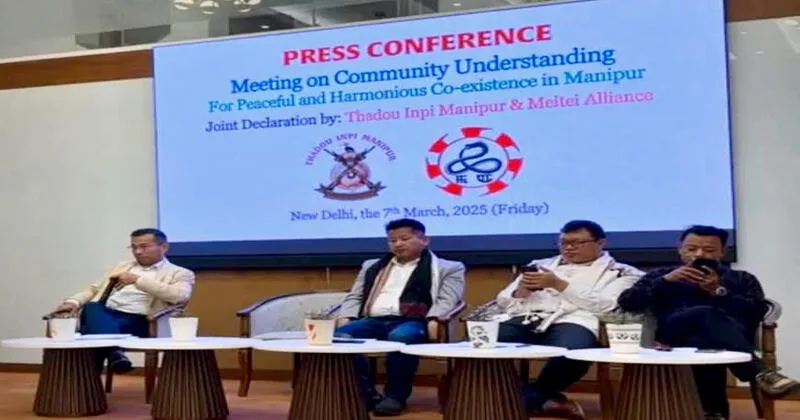
One of the most notable assertions in the joint resolution is the reaffirmation of a previous understanding between Thadou and Meitei groups on March 7, 2025, in New Delhi, which they described as foundational to peaceful coexistence and a collaborative resolution of long-standing inter-community tensions.
Key demands and resolutions
At the heart of the joint statement is a call for preserving the integrity and unity of Manipur, particularly as the state approaches the second anniversary of the ethnic crisis that erupted in May 2023. Both sides pledged to stand together in defending the state’s multi-ethnic fabric and condemned any separatist narratives that undermine this principle.
In a significant political and legal stance, both communities recognised the Thadou as a distinct indigenous tribe separate from the broader “Kuki” classification. They jointly demanded the deletion of the ambiguous term “Any Kuki Tribes” (AKT) from the Scheduled Tribes list, calling it a loophole that has enabled illegal immigrants to falsely claim tribal status. The groups argued that the 2003 inclusion of AKT was politically motivated and continues to fuel illegal immigration and extremist ideologies.
The statement further denounced the term “Kuki” itself as a colonial construct with no cultural or ethnic grounding in Manipur’s tribal landscape. The parties urged academic and government institutions to stop using the term and instead refer to each indigenous group by its constitutionally recognised name to protect their authentic identities.
Condemnation of extremism and demand for NRC
The groups jointly condemned Kuki “supremacist” ideologies and extremist activities, particularly those pushing for a separate administration. They accused militant factions and their frontal organisations of silencing moderate voices and terrorising indigenous communities. In this context, both sides demanded the immediate termination of the Suspension of Operations (SoO) agreement with armed Kuki groups, which they allege has been grossly misused to destabilise the region.
The groups also called for the urgent implementation of the National Register of Citizens (NRC) in Manipur to identify illegal immigrants, restore demographic balance, and preserve the security and interests of indigenous people.
Commitment to peace and rehabilitation
Reaffirming their commitment to peaceful coexistence, both communities backed the free and safe movement of all citizens across Manipur, including on national highways and conflict-prone areas. They also jointly appealed for the rehabilitation of Internally Displaced Persons (IDPs), ensuring their return to ancestral homes with due protection and compensation.
This strategic alignment between Meitei and Thadou representatives marks a potential turning point in Manipur’s fractured socio-political landscape. Observers believe that the rare consensus could pave the way for broader community dialogues and a united front to counter extremism, illegal immigration, and political fragmentation in the northeastern state.
As Manipur continues to grapple with the aftermath of prolonged ethnic unrest, the joint declaration from the Meitei and Thadou groups serves as a compelling message to policymakers in Imphal and New Delhi: that indigenous unity, rooted in mutual respect and constitutional principles, is the only way forward.












Comments