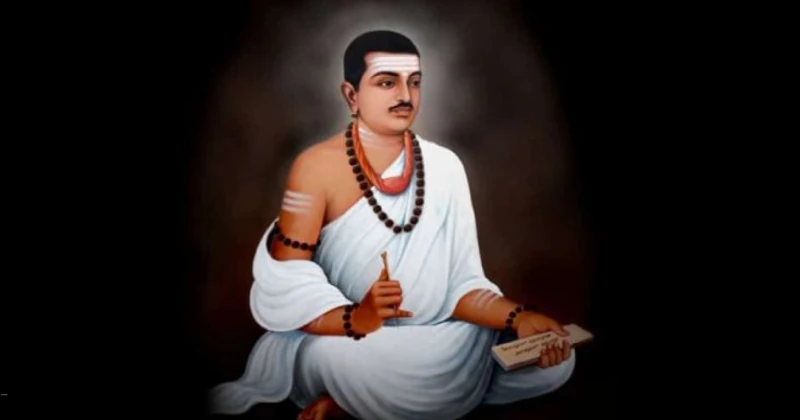
Mahatma Basaveshwara also called Basava was born in Karnataka. After studying various subjects, he became a minister in the court of King Bijjala of Kalyana. At that time, he began commendable efforts towards forming a new society. His greatest and commendable achievement was establishing a democratic organisation called the “Anubhava Mantapa” from the perspective of creating a new society. Any person of any caste could join it, and women could also become members, but it was necessary for members to have good character. The “Anubhava Mantapa” rule was that members should take only the minimum amount of money necessary and invest the rest in social work.
A capable sant and poet named Akka Mahadevi was also a member of the “Anubhava Mantapa.” Some famous members of the “Anubhava Mantapa” were Machideva (washer-man), Chandayya (rope-maker), Muddayya (farmer), Remmavi (weaver), Kannayya (oilman), Basappa (carpenter), Kakkayya (dyer), and Haralayya (leather-worker). In this way, Basaveshwara emphasised the importance of physical labour and engaged in various types of businesses for livelihood. He established the significance of physical labour and glorified it. From this perspective, “Kayakave Kailasa,” meaning “physical labour is Kailasa or God,” was established. No one is inferior or superior due to their Karma (actions) because all Karmas are equal in the eyes of God.
Madivala Machayya is a prominent Shaivite sant among the Veerashaiva community. Although he was born into a family of washermen, his devotion to Bhagwan Shiva has made him extremely famous among the devotees. He used to earn his livelihood by washing the clothes of the Shiva devotees. Machayya wrote verses and gave direct and simple teachings on devotion. Basaveshwara praised Machayya’s devotion, saying, “Machayya is not just a washerman who washes clothes, but he is also a washerman who cleanses the impurities of the mind. He is capable of immersing the body in the water of equality and cleansing the impurities of the senses with the water of knowledge.”(Dakshin Bharat Ki Sant Parampara, Pg 212)
A member of the “Anubhava Mantapa,” Madhuvarsa, married his daughter to the son of Haralayya (leather worker), which was a remarkable event according to the caste system of the time. However, the devotee Basaveshwara and other “Anubhava Mantapa” members agreed to the marriage. The region’s king did not approve of this social arrangement and sentenced Madhuvarsa and Haralayya to death. Devotee Basaveshwara was upset and left the Kalyan Kingdom, abandoning his worldly duties. Even after this, Basaveshwara did not lose hope and continued his efforts to eliminate all forms of discrimination in society. Basaveshwara said:
“Neelavonde holecgeri Shivālayake. Jalavonde shauchāchamnakke.”
“The same land is used for both the Shudra colony and the temple. What is the difference in that land? It is all the same. The water used for purification and ablution is also the same. Similarly, all human beings are equal.” Bhakt Basaveshwar says :
Ivanarava Ivanarava Ivanarava Aindiraiyya
Ivanemmava Ivanemmava Ivanemmava Endenisaiyya.
It means: “Do not ask who someone is. Do not ask who they are. Do not ask who they are. Think only that they belong to ourselves, they belong to ourselves, they do belong to themselves. Mahatma Basaveshwara believed that a person should consider oneself the smallest and consider devotees of Bhagwan Shiva as the greatest, leaving aside the feeling of ego. He expresses this sentiment in the following words:”
“Enginta Kiriyaaricha. Shivabhaktariginta, hiriyrilla.”
“In other statement, while explaining and counselling to those who contemplate on caste, Bhakt Basaveshwara says”.
“Jati pididu sutakavanarasuve, Jyoti pididu kattaleyana rasuve.
Ideko marula manava? Jatiyalli adhikanembe,
vipra shatakoti galiddalli phalavenu? Bhakti shiromani endudu vachana.
Namma koodala sangama sharanara pada parushava nambu, kedabeda manava.”
“They are trying to find impurity while holding the caste, they are trying to catch light and find darkness. Oh foolish humans! Why do you want all this? What is great in caste? Even if a Brahmin, who is immoral and devoid of pure devotion and faith, in spite of being worth of a hundred crore, what is the result? It is said in the scriptures that devotion alone is supreme. Believe in the footsteps of our Koodala Sangama Deva’s devotee, like touching the touchstone. Oh humans! Do not be destroyed. ” Basaveshwara gave more importance to the experiences of the devotees than the teachings or philosophical views presented in any text. Regarding social reform, the Veerashaiva sants associated with the Veerashaiva philosophy gathered occasionally in the “Anubhava Mantapa” to exchange thoughts on spiritual and social problems. Through the members of the “Anubhava Mantapa”, devotee Basaveshwara says, he provides strength to restore moral values in the entire society.
Devlok martyalokavenbudu berilla kaniro.
Satyav nudivude devlok mithyavanudivude martyalok.
Devlok and Martyalok are like two sides of a coin. Devlok represents truth, while Martyalok represents falsehood.
“That is to say, the realm of the gods and the realm of humans are not separate, they are right here. Speaking the truth is what is called the realm of the gods, and falsehood is equivalent to the realm of mortals.”
Basaveshwara made efforts to honour and acknowledge the contributions of women to society. He granted women equality and tried to empower them in society. During the 12th century, Basaveshwara struggled to modernise southern India’s social and religious circumstances. Born into a Brahmin family, he was determined to respect all classes of society and protect their rights. Basavanna was a great social and religious reformer. With immense enthusiasm, he attempted to eradicate the social and religious inequality prevalent in Hindu society. He preached that all humans are brothers, and immorality makes one a low caste, while virtue elevates one to a higher caste, and religion is everyone’s birthright. He glorified labour’s dignity, advocating for equality in all professions. Through the Veerashaiva faith, Bhakti Basaveshwara guided society in numerous ways. Nearly nine hundred years later, his efforts for social harmony are still regarded as ideals.