





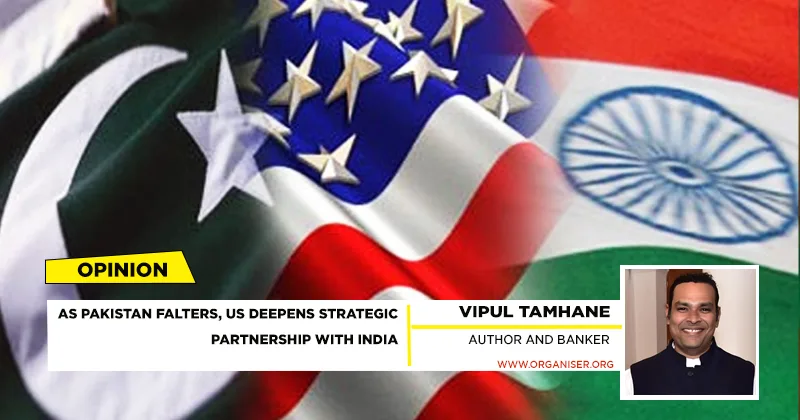
The United States provides funding for relief, security, and counter-terrorism to key nations and regions, including Israel, Egypt, Jordan, Afghanistan, Pakistan, Iraq, Syria, Ukraine, Yemen, Sub-Saharan Africa, Latin America, and NATO allies. This assistance supports defence, stability, and counter-terrorism efforts, aligning with U.S. foreign policy goals to promote global security and strategic partnerships. However, History tells us that funding Pakistan was a big mistake!
For decades, the United States has grappled with a complex and often frustrating relationship with Pakistan, shaped by geopolitical strategy, security interests, and regional stability concerns. Despite investing billions in military and economic aid, Washington has struggled to establish a clear and consistent policy toward Pakistan. A fundamental miscalculation has been the assumption that Pakistan’s interests align with those of the US Instead, Pakistan’s foreign policy is primarily driven by its rivalry with India, influencing its military doctrine and relationships with militant groups. The civil-military divide in Pakistan complicates US engagement, as the military and intelligence services, particularly the Inter-Services Intelligence (ISI), hold significant power. Civilian leaders are often sidelined, making any U.S. strategy that ignores this reality likely to fail. Historically, the US.-Pakistan relationship has been transactional, defined by mutual expediency rather than shared values. Public sentiment in Pakistan is largely anti-American, fueled by perceptions of US interference and drone strikes. This sentiment underscores the challenges of establishing a long-term alliance.
Over the past decade, the United States has provided around $1.1 billion annually to Pakistan, primarily for military and economic assistance aimed at counter-terrorism, regional stability, and development. However, numerous reports have highlighted significant wastage and accountability issues. The Government Accountability Office (GAO) has noted that funds were often mismanaged and not used for their intended purposes. The US Agency for International Development (USAID) reported in 2020 that a lack of oversight led to inefficiencies in fund utilisation. The Special Inspector General for Afghanistan Reconstruction (SIGAR) also noted that security assistance funds were not effectively utilized. The Congressional Research Service (CRS) has emphasized the lack of transparency and accountability in US aid. These findings suggest that while substantial resources have been allocated, their impact has often been undermined by oversight challenges. The overall impact of U.S. aid to Pakistan has been criticized for its inefficiency and lack of transparency.
The Costly Blunder that Kept on Growing
During the 20-year US. involvement in Afghanistan, Pakistan was heavily relied upon for supply routes, intelligence, and counterterrorism support. However, Pakistan’s strategic interests in Afghanistan often clashed with the US., with Islamabad viewing the Taliban as a crucial ally to counter Indian influence. The rapid Taliban takeover of Kabul in 2021 highlighted Pakistan’s long-term strategy, rendering decades of U.S. efforts futile.
US aid to Pakistan over the past decade has faced significant challenges, including economic instability and internal militancy. Economic crises have forced Pakistan to seek bailouts from the IMF, China, and Gulf countries. Internal insurgencies, such as the Tehreek-e-Taliban Pakistan (TTP), pose serious security threats. The U.S. has sometimes overlooked these internal constraints, expecting Islamabad to focus solely on American priorities.
Corruption within Pakistan’s military and government has led to mismanagement and siphoning of funds, raising concerns about accountability and transparency. Despite substantial financial support, Pakistan has struggled to effectively combat militant groups, questioning the impact of U.S. assistance. Critics argue that continuous funding has fostered dependency rather than self-sufficiency, prompting calls for a reevaluation of U.S. assistance strategies in the region.
A History of US Aid and Accountability Concerns with Pakistan
The funding and defunding of Pakistan by the United States have evolved through various administrations and key senators, influenced by geopolitical events. Democratic administrations, such as those of Bill Clinton and George W. Bush, initially supported military and economic aid, particularly during the Afghan-Soviet War and post-9/11, when over $10 billion was allocated to bolster counter-terrorism efforts. Senators like John Kerry and Richard Lugar advocated for continued support, emphasizing regional stability. Conversely, the Trump administration adopted a critical stance, freezing military aid in 2018 due to Pakistan’s perceived lack of cooperation against terrorism. Senators like Rand Paul and Mike Lee have consistently opposed funding, arguing it does not serve U.S. interests. Key historical junctures, including the aftermath of the Osama bin Laden operation in 2011, have led to increased scrutiny and shifts in U.S. policy, reflecting ongoing concerns about Pakistan’s role in regional security.
US should understand Pakistan’s Strategic Misalignment and Regional Context
Pakistan’s foreign policy remains fundamentally shaped by its rivalry with India, driving its reliance on militant proxies and creating inconsistent counter-terrorism efforts. This strategic focus complicates relations with the U.S., as Pakistan’s powerful military and intelligence agencies, not civilian leaders, control key decisions. Widespread anti-American sentiment, fueled by perceived U.S. interference and drone strikes, further strains ties.
The harboring of Osama bin Laden in Abbottabad exposed Pakistan’s contradictory role, simultaneously a U.S. counter-terrorism partner and a haven for militants, has frustrated the USA. Meanwhile, Pakistan has steadily deepened its alliance with China through projects like the China-Pakistan Economic Corridor (CPEC), which has brought billions in infrastructure investment. Unlike the U.S., China offers partnership without political conditions, making it Pakistan’s preferred long-term ally.
This shift has diminished American influence in the region. Pakistan’s internal crises, economic instability and militant threats, compound these challenges. The U.S. experience in Afghanistan demonstrated the risks of depending on Pakistan, whose strategic interests often conflicted with Washington’s. The Taliban’s 2021 takeover of Kabul underscored the need for a reassessment of U.S. policy.
As China strengthens its foothold in South Asia through initiatives like CPEC, the U.S. faces a strategic dilemma: how to engage with a partner that increasingly aligns with its geopolitical rival while pursuing its own regional agenda. The future of U.S.-Pakistan relations hinges on navigating this complex dynamic without compromising counter-terrorism and stability goals.
In Trump’s Administration How US.-Pakistan Relations Changed Dramatically
The Trump administration dramatically transformed U.S.-Pakistan relations by replacing decades of cautious diplomacy with a tough, transactional approach. In August 2017, President Trump unveiled a hardened South Asia strategy that explicitly accused Pakistan of sheltering terrorist groups like the Lashkar-e-Taiba, Afghan Taliban and Haqqani Network while receiving billions in U.S. aid. This public rebuke reflected Washington’s mounting frustration with Pakistan’s contradictory counter-terrorism efforts and its alleged support for militants destabilizing Afghanistan.
The policy shift was immediate and consequential. By January 2018, the administration froze approximately $2 billion in military assistance, including critical Coalition Support Funds. Unlike previous administrations that tolerated Pakistan’s dual game, Trump made aid contingent on verifiable counter-terrorism action. The Department of Government Efficiency (DOGE) reinforced this stance by considering targeted sanctions, marking the first time financial support was directly tied to counter-terrorism performance.
This tougher approach responded to years of failed engagement. Despite receiving over $33 billion in U.S. assistance since 2002, Pakistan continued providing safe havens to militants attacking U.S. forces in Afghanistan. Government watchdog reports repeatedly exposed aid mismanagement, including diverted funds and inflated reimbursement claims. The 2016 attack on Kabul’s American University—linked to Pakistan-based militants, became a tipping point, convincing policymakers that unconditional aid was counterproductive.
The freeze had strategic ripple effects. It accelerated Pakistan’s pivot toward China, evidenced by deepening cooperation on the China-Pakistan Economic Corridor (CPEC). Simultaneously, the U.S. strengthened ties with India, signing pivotal defense agreements that reshaped regional alliances. While Pakistan made limited tactical concessions against militants, the policy succeeded in establishing a new precedent: U.S. assistance requires measurable returns, not empty promises.
Trump’s Pakistan strategy proved that accountability must outweigh diplomatic inertia in foreign partnerships. By replacing blank checks with strict conditions, it forced a reevaluation of how aid serves national security interests, a lesson that continues influencing U.S. foreign policy in South Asia and beyond.
A New Blueprint for U.S.-Pakistan Relations
The United States needs a fundamentally different approach to Pakistan, one that replaces blank-check assistance with strict accountability while maintaining crucial diplomatic channels. This recalibrated strategy should begin by conditioning all security aid on verifiable counter-terrorism results, with quarterly compliance reviews and public reporting to ensure transparency. Financial pressure must intensify through expanded sanctions on militant supporters and coordination with the FATF to monitor suspicious transactions.
Equally critical is strengthening regional intelligence cooperation through a trilateral framework with India and Afghanistan, enabling real-time tracking of cross-border threats. However, lasting stability requires more than security measures; 30 per cent of U.S. assistance should be redirected to support Pakistan’s civil society, independent media, and electoral reforms to address governance weaknesses that enable extremism.
Economic engagement must carry firm conditions, linking international financial institution support to anti-corruption reforms while mandating third-party audits of U.S.-funded projects. Multilaterally, the U.S. should leverage the Quad alliance and UN platforms to build consensus on Pakistan-specific counter-terrorism measures.
Implementation requires an interagency task force to execute a 12-month action plan with clear benchmarks and predetermined “red lines” for policy reassessment. This balanced approach maintains pressure for reform while preserving engagement channels, aligning U.S. security priorities with Pakistan’s long-term stability needs. Regular congressional oversight will prevent policy drift, ensuring consistency across administrations in this strategically vital but challenging relationship.
Strategic Rebalancing: The U.S.-India Partnership as a Cornerstone for Regional Stability
As US policymakers grapple with the complexities of Pakistan’s dual role in counter-terrorism, a complete severance of ties remains neither practical nor prudent given Pakistan’s nuclear capabilities and regional influence. However, Washington’s strategic recalibration must acknowledge that Pakistan’s security paradigm; shaped by its rivalry with India and reliance on militant proxies, fundamentally conflicts with U.S. interests. This reality necessitates a parallel investment in strengthening what has emerged as America’s most consequential Asian partnership: the U.S.-India strategic alliance.
The transformation in U.S.-India relations over the past two decades represents one of the most significant geopolitical realignments of the 21st century. As the world’s largest democracy and a rapidly expanding economic power, India offers the United States a stable partner anchored in shared democratic values, converging security interests, and complementary economic visions. The foundational defense agreements; : Logistics Exchange Memorandum of Agreement (LEMOA, 2016), Communications Compatibility and Security Agreement (COMCASA, 2018), and Basic Exchange and Cooperation Agreement (BECA, 2020), have created unprecedented military interoperability, enabling real-time intelligence sharing and joint operational capabilities. These pacts, reinforced through annual 2+2 Ministerial Dialogues, have transformed what was once a cautious relationship into a comprehensive global strategic partnership.
Economically, bilateral trade has surged from $20 billion in 2000 to over $190 billion in 2023, with collaboration expanding into critical sectors like semiconductors, renewable energy, and advanced defense technologies. The Indo-Pacific Economic Framework (IPEF) and the India-Middle East-Europe Economic Corridor (IMEC) present democratic alternatives to China’s state-led development models, emphasizing transparency, sustainability, and market-driven growth.
The Quad alliance (U.S., India, Japan, Australia) has matured into a substantive platform addressing maritime security, critical technologies, and climate resilience, demonstrating how like-minded democracies can collaboratively shape regional order. India’s leadership in this grouping, combined with its strategic autonomy, makes it uniquely positioned to counterbalance Chinese expansionism while promoting an inclusive Asian security architecture.
This partnership’s strategic value was underscored during recent global crises, from vaccine diplomacy during the pandemic to India’s role as a net security provider in the Indian Ocean. As Washington navigates its Pakistan dilemma, the U.S.-India axis offers a stabilizing counterweight, one built on mutual interests rather than transactional necessity. By deepening this partnership through technology-sharing agreements, co-development of defense systems, and coordination on global governance reforms, the United States can advance a more stable, democratic, and prosperous Indo-Pacific while maintaining pragmatic engagement with Pakistan that safeguards critical counter-terrorism interests. The future of Asian security architecture may well depend on this strategic rebalancing.
A New Chapter in U.S. South Asia Policy
The Trump and Modi administrations ushered in a transformative approach to South Asia, recognizing that regional stability requires both accountability for Pakistan and strengthened ties with India. This dual-track strategy represents a pragmatic shift; conditioning U.S. assistance to Pakistan on verifiable counter-terrorism actions while deepening America’s strategic partnership with the world’s largest democracy.
The U.S.-India relationship has emerged as an anchor for regional security, built on shared democratic values and mutual interests. Landmark defense agreements, intelligence sharing, and economic collaboration have created unprecedented cooperation, positioning both nations to counter terrorism and promote stability. Meanwhile, Washington’s recalibrated Pakistan policy demands greater transparency, with rigorous oversight of aid and consequences for misuse.
This balanced approach acknowledges Pakistan’s strategic importance while refusing to tolerate its support for militant groups. By maintaining diplomatic pressure through targeted sanctions and corruption investigations, the U.S. can incentivize reform without destabilizing the nuclear-armed state. Simultaneously, the growing U.S.-India partnership offers a positive vision for the region; one rooted in democratic resilience, economic prosperity, and collective security.
As America looks ahead, this strategy provides a blueprint for principled engagement: holding partners accountable while investing in relationships that advance shared values. Through sustained diplomacy and strategic patience, the U.S. can help shape a South Asia where terrorism is marginalized, stability prevails, and democratic nations lead the way forward.
A Strategic Reckoning in U.S.-Pakistan Relations
The US-Pakistan relationship has long been a complex interplay of security needs and strategic frustrations. Despite billions in aid, the partnership has faltered over Pakistan’s support for militant groups and its deepening alliance with China. The Trump administration’s pivot to conditional engagement marked a watershed moment; tying aid to verifiable counter-terrorism results rather than empty promises.
This recalibration comes as America strengthens ties with India, a natural democratic partner that shares U.S. security concerns. The contrast between these relationships highlights a fundamental truth: effective foreign policy requires both accountability and aligned interests. While Pakistan remains geopolitically significant, the U.S. must balance engagement with firm conditions, ensuring aid advances shared goals rather than enabling problematic behaviour.
The path forward demands pragmatism, maintaining counter-terrorism cooperation with Pakistan while investing in more reliable regional partnerships. By combining targeted assistance with multilateral pressure, the U.S. can promote stability without repeating past mistakes. The lessons are clear here i.e. in South Asia, as elsewhere, American statecraft must blend strategic patience with unwavering principles, fostering partnerships that deliver real security returns.
















Comments