





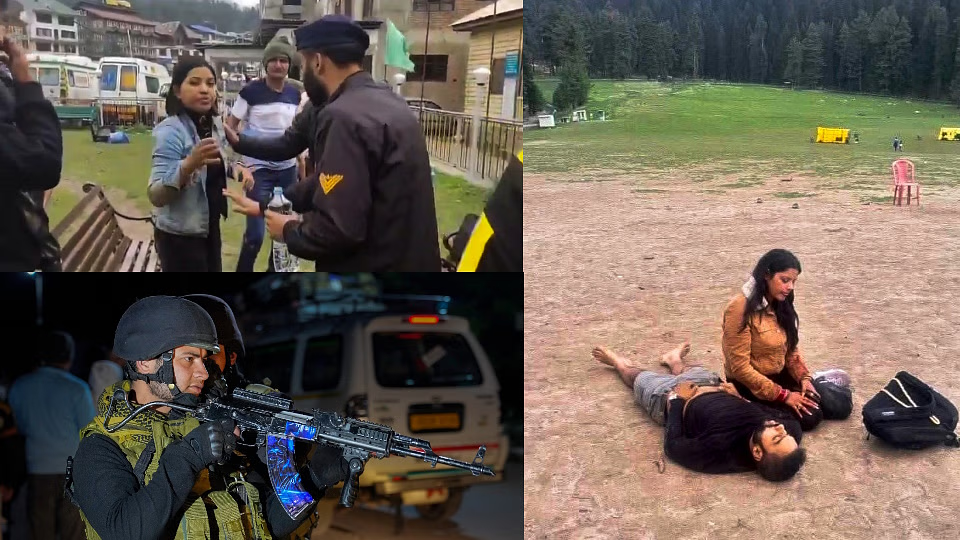
In a devastating terror attack that has sent shockwaves across India, at least 26 people, including two foreign nationals, were killed on Tuesday (April 22) afternoon in the picturesque Baisaran meadow, often referred to as the “Mini Switzerland” of Jammu and Kashmir.
The attack, which unfolded around 2:30 p.m., is one of the deadliest in the region in recent years, targeting tourists in a popular destination accessible only on foot.
According to authorities, the attackers, believed to be members of The Resistance Front (TRF), a proxy of the Pakistan-based Lashkar-e-Taiba (LeT), were disguised in military fatigues and armed with automatic weapons.
They opened fire on tourists, checked their ID cards and shot point-blank if they found them to be Hindu, creating scenes of chaos and panic as people scrambled to escape the open terrain of the meadow. Eyewitnesses described a horrifying ordeal, with families and visitors running for cover as gunfire echoed through the serene landscape.
Intelligence sources suspect the involvement of five to six terrorists, including individuals who recently infiltrated the Kashmir Valley after crossing the border. The attack is believed to have been meticulously planned, with India Today reporting that it was orchestrated under the direction of Saifullah Kasuri, a senior LeT commander and close aide to Hafiz Saeed, a wanted terrorist and mastermind behind the 2008 Mumbai attacks. Two operatives based in Pakistan-occupied Kashmir are also under investigation for their potential role in the attack. Officials revealed that the attackers had surveyed the site days in advance, indicating a premeditated strike aimed at maximising casualties and terror.
The Baisaran meadow, a scenic spot nestled in the lush forests of Pahalgam, has long been a haven for tourists seeking respite in its tranquil beauty. Tuesday’s attack, however, has transformed this idyllic location into a site of tragedy, underscoring the persistent threat of terrorism in the region despite heightened security measures.
Immediate Response and Security Operations
In the aftermath of the attack, security forces launched a large-scale manhunt to apprehend the perpetrators. The surrounding forests and meadows were cordoned off, and joint operations involving the Indian Army, Jammu and Kashmir Police, and Central Reserve Police Force (CRPF) were initiated to track down the terrorists. Drones and surveillance equipment have been deployed to aid the search in the rugged terrain, with authorities vowing to bring the culprits to justice.
Home Minister Amit Shah, who arrived in Srinagar late Tuesday to oversee the response, held a high-level review meeting with top security and intelligence officials in Delhi prior to his departure. Shah is expected to visit the attack site and meet with local authorities to assess the situation on the ground. The Home Minister’s presence in the region signals the government’s determination to address the crisis head-on.
Prime Minister Narendra Modi, who was on an official visit to Saudi Arabia when the attack occurred, cut short his trip and returned to Delhi in the early hours of Wednesday (April 23). Upon landing, he was briefed by National Security Advisor Ajit Doval, External Affairs Minister S. Jaishankar, and Foreign Secretary Vikram Misri. The Prime Minister subsequently chaired an emergency meeting of the Cabinet Committee on Security to discuss the attack and coordinate the government’s response.
In a strongly worded statement, Modi condemned the attack as “heinous” and vowed that those responsible “will not be spared.” He expressed condolences to the victims’ families and assured the nation that the government is committed to ensuring justice and enhancing security in Jammu and Kashmir.
Opposition parties have demanded an all-party meeting to evaluate the security situation in Jammu and Kashmir and formulate a cohesive strategy to counter terrorism. Leaders from various parties emphasised the need for bipartisan cooperation to address the challenges posed by cross-border militancy and ensure the safety of residents and visitors in the region.
Tuesday’s attack comes amid heightened tensions in Jammu and Kashmir, where security forces have been grappling with a resurgence of militant activities in recent months. The targeting of tourists in a popular destination like Pahalgam raises concerns about the potential impact on the region’s tourism industry, a vital source of livelihood for many locals. Authorities have assured the public that additional measures are being implemented to secure tourist spots and prevent future attacks.
As investigations continue, the nation mourns the loss of lives in what has been described as a cowardly act of violence. The government has promised swift action, but the attack serves as a grim reminder of the ongoing challenges in achieving lasting peace in Jammu and Kashmir.
For now, the focus remains on supporting the victims’ families, apprehending the perpetrators, and restoring a sense of security in a region scarred by tragedy.
















Comments