





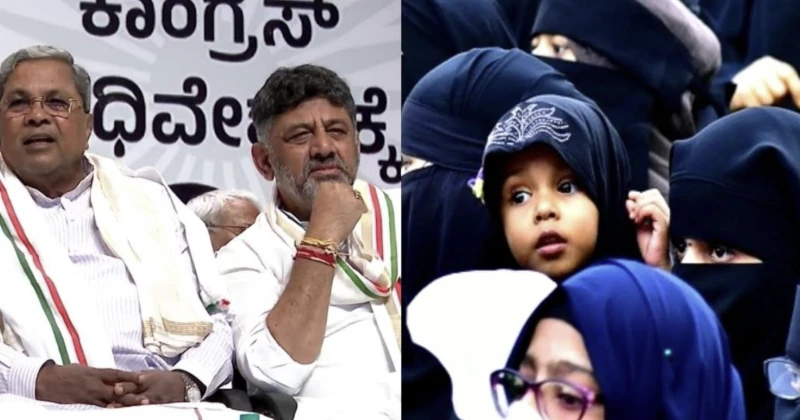
The recent revelations stemming from the Karnataka Caste Census report have sparked intense political conversations and raised questions about the demographic trends within the state, particularly concerning the Muslim population.
The report indicates a staggering 90 per cent increase in the Muslim population over the past 30 years amidst a backdrop of shifting numbers in other communities, most notably the Lingayats, whose population has shown a significant decline. As the political climate heats up in response to these findings, exploring the implications of these changes in demographic patterns and the ensuing socio-political discourse is crucial.
Caste Census: Methodology and Findings
The Caste Census, aimed at understanding the distribution of various communities within Karnataka, provides critical insights into shifts in population over decades. The earlier findings from the Venkataswamy Commission in 1984 and the subsequent Kantharaju Commission report in 2015 offer a comparative context. According to the 1984 survey, the Veerashaiva Lingayats had the largest population, recorded at approximately 61 lakh. By 2015, this number had risen marginally to 66 lakh, positioning the Lingayats in third place, demonstrating a mere 8.5% growth rate.
In contrast, the Scheduled Castes (SC) community data reveal a remarkable ascent from 57 lakh to an impressive one crore over the same period—a 90 per cent surge. The Muslim community, originally at 39 lakh in 1984, now stands at about 76 lakh, marking an increase of nearly 94 per cent. Such figures reflect not only demographic growth but also raise questions about socio-economic factors contributing to such trends.
Implications of Population Shifts
The rise in the Muslim population in Karnataka and the decline of the Lingayat community has stirred significant political and social discourse. The Lingayats, who constituted 17 per cent of the state’s population in 1984, reportedly fell to the third position among communities. This has prompted discussions about representation, resource allocation, and the dynamics of communal relationships within the state.
Some political factions view the abrupt surge in the Muslim population with scepticism, particularly the opposition Bharatiya Janata Party (BJP). Party leaders have challenged the credibility of the census figures, suggesting that the original documents reside within Chief Minister Siddaramaiah’s office and accusing the report of being manipulated to serve political ends. This scepticism raises larger questions about the reliability of census data and its implications for policy-making.
Political Repercussions and Internal Discord
The political fallout from these demographic revelations is palpable, with leaders from different parties exchanging barbs over the interpretation and implications of the census. BJP state president B Y Vijayendra has criticised the Congress government for allegedly stirring caste-based tensions through the census findings. He emphasised the need for accurate representation of all communities and cautioned against policies that may incite communal strife.
Moreover, internal discord within the Congress party itself has begun to surface. Some members have objected to how certain communities’ populations have been represented. For instance, Congress MLC Nagaraj Yadav has raised concerns regarding the reported numbers of the Golla, Kadugolla, and Yadava communities, suggesting that the figures are significantly lower than the actual population. Such dissent hints at the party’s challenges in presenting a united front amid contentious issues.
Broader Socio-Economic Context
The demographic shifts highlighted by the caste census necessitate a broader understanding of the socio-economic context in which these changes are occurring. Factors contributing to the population growth of the Muslim community can include higher birth rates, migration patterns, and socio-economic advancements. Additionally, the challenges the Lingayat community faces, including socio-political representation and economic opportunities, may also play a role in their declining numbers.
The Karnataka Caste Census report provides a revealing glimpse into the state’s changing demographics, particularly concerning the growth of the Muslim population and the decline of the Lingayats. As political discussions intensify and scepticism regarding the data emerges, it is essential for all stakeholders to approach the findings with a commitment to unity and social harmony. Policymakers must strive to ensure that the needs and voices of all communities are recognised and addressed, fostering an inclusive environment as Karnataka navigates its diverse societal landscape. Engaging in constructive dialogue and promoting socio-economic equity will be critical in shaping the future dynamics of the state.
Recommendations of commission
The report, compiled by Jayaprakash Hegde and based on the Kantaraju period data, proposes a significant overhaul of the reservation framework. The recommendations include raising the reservation quota for the Other Backward Classes (OBC) from 32 per cent to a staggering 51 per cent. While aiming to uplift the marginalised, this increase could lead to substantial imbalances and disparities among already established groups.
The reclassification of backward classes into five distinct categories, and further subdividing Category 1 into 1A and 1B—now recognising various tribal, nomadic, and semi-nomadic communities—is another key recommendation. Under this new classification, the existing 4 per cent reservation for Category 1 has been proposed to rise to 5 per cent for 1A and 6 per cent for 1B, alongside a 12 per cent reservation recommendation.
Moreover, the recommendations also entail reducing the current 15 per cent reservation for Category 2A to 10 per cent, which raises valid concerns about fairness. Most notably, while the underprivileged Muslim community currently with a 4 per cent reservation in Category 2B would see a doubling of that figure to 8 per cent, various other categories also see significant increases.
The Impacts of Such Recommendations
While the intent behind increasing reservations for genuinely marginalised communities is often rooted in the necessity for equitable opportunities, the sheer scale of the proposed changes reveals a troubling inclination towards fostering division rather than unity. Here are a few critical concerns arising from these recommendations:
- Imbalance Among Communities: The drastic rise in reservation percentages for some categories at the expense of others could lead to discontent and feelings of alienation among those who feel overlooked. Reducing the reservation for Category 2A from 15 per cent to 10 per cent while simultaneously increasing the Muslim quota from 4 per cent to 8 per cent can create a perception of favouritism rather than a balanced approach to upliftment.
- Marginalisation of Existing Beneficiaries: The historical struggles and the current challenges faced by communities who have long benefited from reservations should not be understated. The proposed changes risk undermining the hard-earned gains made over decades, leading to deprivation and injustice among these groups.
- Social Cohesion at Risk: Reservation policies should not be designed in isolation but must promote social harmony. An increase in the reservation for one community over another can incite resentment and division, which could erode the social fabric of our society. Allowing room for discontent and conflict is neither a progressive nor a just approach to governance.
The Need for a Balanced Approach
Reservations are intended to correct historical injustices and provide opportunities for marginalised communities. However, they should not become tools for political expediency or divisive tactics. An effective policy should strive to foster inclusion and ensure that all communities—regardless of background—have an equal opportunity to succeed without oppressing others.
The state government must reconsider these proposed recommendations with the larger picture in mind, balancing the needs of all communities rather than favouring selected groups. Encouraging dialogue among communities, ensuring transparency in the process, and approaching the issue with compassion and consideration will create a more harmonious society.











Comments