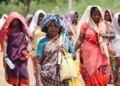
India, a country with a youthful population full of promise, is also grappling with a quiet but serious health emergency—anemia. This condition, marked by a lack of healthy red blood cells or low haemoglobin levels, doesn’t always scream for attention, but it silently chips away at lives. It leaves children too tired to play, girls too weak to attend school regularly, and pregnant women vulnerable to complications. With over 67 per cent of children and nearly 60 per cent of adolescent girls anemic, as per the National Family Health Survey-5, this is not just a statistic—it’s a wake-up call.
The most common cause of anemia is iron deficiency, but it’s not the only one. Poor intake of folate, vitamin B12, and vitamin A, frequent infections, and even parasitic diseases like malaria play a role. In many Indian households, especially in rural or economically disadvantaged settings, meals are filling but not nourishing. Add to that early pregnancies, heavy menstrual bleeding, or repeated infections, and anemia becomes almost inevitable—especially for women and children.
Recognizing the urgency of the situation, the Government of India has mounted an ambitious and multi-pronged response through programs like Anemia Mukt Bharat (AMB), aiming not just to treat but to prevent and eradicate anemia through a life-cycle approach. Integrated with other flagship programs like POSHAN Abhiyaan and the School Health Program, the AMB initiative has become a cornerstone in the country’s journey towards a healthier future.
Launched in 2018, Anemia Mukt Bharat (Anemia-Free India), an initiative, under the Ministry of Health and Family Welfare, works on the belief that treating anemia is not just about giving iron tablets—it’s about transforming lives. The strategy follows a structured model known as the 6x6x6 approach, which stands for six interventions targeting six different population groups, supported by six institutional mechanisms. This structured yet flexible model allows the program to adapt to local needs, whether it’s a tribal village in Chhattisgarh or an urban slum in Delhi.
The six groups the program focuses on are preschool children (6–59 months), school-aged children (5–9 years), adolescents (10–19 years), women of reproductive age (15–49 years), pregnant women, and lactating mothers. These are the groups most vulnerable to anemia and also the most crucial for the country’s future—our children, our young women, and our mothers.
One of the core interventions is iron and folic acid supplementation. Children under five receive IFA syrup, school-going kids get pink tablets once a week, and adolescents get blue and red tablets depending on their gender. Pregnant women are given daily IFA supplements starting from the pre-conception period and continuing through pregnancy and lactation. These tablets, though small, are lifelines. For millions, they are the first step towards strength, better school attendance, and safer pregnancies.
Another powerful intervention is deworming. Many children and even adults suffer from intestinal worms, which quietly rob them of nutrients. That’s why every year, on February 10 and August 10, National Deworming Day is observed. Schools and Anganwadi centres across India distribute deworming tablets. Pregnant women are also provided deworming medicine during their second trimester as part of routine antenatal care.
But supplements and medicines alone can’t win this fight. Changing habits and spreading awareness is equally important. The Behaviour Change Communication (BCC) campaign under AMB, known as “Solid Body, Smart Mind,” focuses on promoting iron-rich diets, dietary diversity, and the importance of regular IFA intake. Through colourful posters, school sessions, and community outreach, families are being encouraged to introduce leafy greens, jaggery, and pulses into daily meals. It’s a cultural shift in the making—bringing nutrition into everyday conversations.
Testing and treating anemia at the community level has also seen innovation. With simple devices that can check haemoglobin levels through a finger prick, ASHA workers and school teachers are now able to identify anemia on the spot. This means quicker referrals and faster treatment. In many parts of the country, these frontline workers are the bridge between policy and the people, delivering care with empathy and persistence.
Another vital strategy is food fortification. Meals provided under government nutrition schemes such as the Mid-Day Meal, Integrated Child Development Services (ICDS), and Public Distribution System (PDS) are now being fortified with iron and folic acid. For millions who depend on these schemes, it’s a way to get essential nutrients without changing what they eat. A child receiving fortified rice at school is unknowingly receiving a shield against anemia.
Not all anemia comes from lack of food. In certain regions, especially in tribal and hilly areas, conditions like sickle cell anemia and thalassemia are common. These are inherited blood disorders. The AMB initiative also takes these into account by conducting screenings and offering specialised care. Similarly, areas with high malaria or fluorosis are being mapped and treated to address the non-nutritional causes of anemia.
The results are beginning to show. In just one quarter of FY 2024–25, over 15.4 crore children and adolescents received IFA supplementation. That’s more than the entire population of countries like Japan or Russia. Digital tools are also helping. With dashboards tracking every dose given and every region covered, the government can now monitor the program in real time and ensure there are no gaps.
The success of AMB hinges on intersectoral convergence:
• The Ministry of Education ensures school-based outreach through the School Health Program.
• The Ministry of Women and Child Development incorporates AMB through Anganwadi centers under POSHAN Abhiyaan.
• The Ministry of Health and Family Welfare provides leadership, funding, and monitoring.
• Partnerships with state governments ensure last-mile delivery through Village Health and Nutrition Days (VHNDs) and ASHA workers.
What makes Anemia Mukt Bharat particularly unique is its convergence with other national missions. It is closely tied with the POSHAN Abhiyaan, which focuses on improving overall nutrition, and the School Health Program, which ensures that children are not just educated but also healthy. Ministries of Education, Women and Child Development, and Health and Family Welfare work hand in hand. States, too, have taken ownership, tailoring the program to local needs with the help of ASHAs, Anganwadi workers, school teachers, and community health officers.
Ultimately, this is more than a health program. It is a national movement—a quiet revolution to build a generation of children who don’t just survive but thrive. When a teenage girl no longer faints during her exams, when a mother carries her pregnancy full term without complications, or when a child plays in the sun without getting tired—these are the real markers of success.
India’s fight against anemia is far from over, but the journey so far reflects a powerful message: when science, government, and community come together, even the most widespread health challenge can be tackled. In the hands of our frontline workers, iron tablets are no less than hope, and fortified food is a promise of a better tomorrow. An Anemia Mukt Bharat isn’t just a goal—it’s a vision of a stronger, healthier, and more resilient India.