





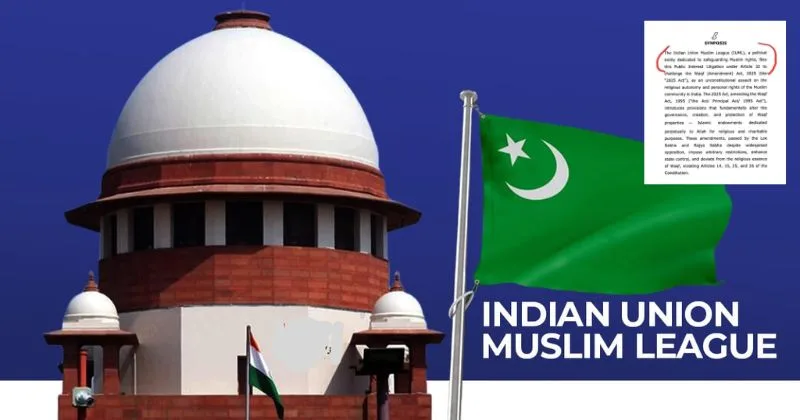
The Indian Union Muslim League (IUML) has come under renewed scrutiny after a line in its Supreme Court Waqf affidavit described it as “a political entity dedicated to safeguarding Muslim rights,” raising questions over the party’s longstanding assertion of being secular.
The affidavit, part of a Public Interest Litigation challenging the Waqf (Amendment) Act, 2025, terms the Act “an unconstitutional assault on the religious autonomy and personal rights of the Muslim community in India.” It alleges that the law imposes arbitrary restrictions, enhances state control over Waqf properties, and violates Articles 14, 15, 25, and 26 of the Constitution.
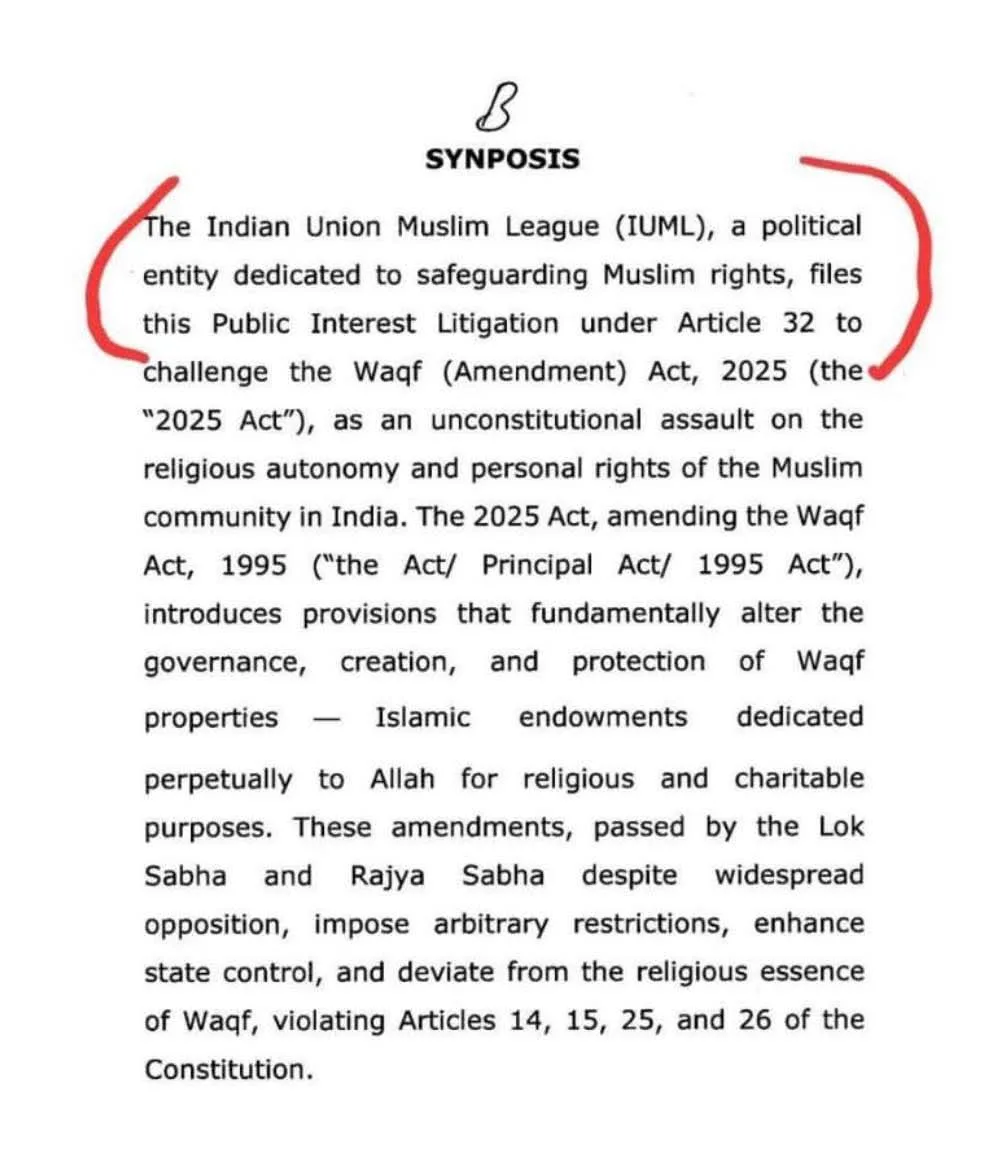
While the legal challenge centers on the constitutional validity of the amendments, the specific phrasing in the affidavit has triggered a wider political conversation. The IUML’s self-description as a party focused on Muslim rights is seen as contradicting its claim of being secular.
However, this language directly aligns with the IUML’s official constitution filed with the Election Commission of India. Section 1.A of the document states that the party will uphold “the religious and cultural identities of the Muslims and other minorities.” It further adds that IUML will “strive to preserve and promote… the religious and cultural identities of the Muslims” as part of its primary objectives.
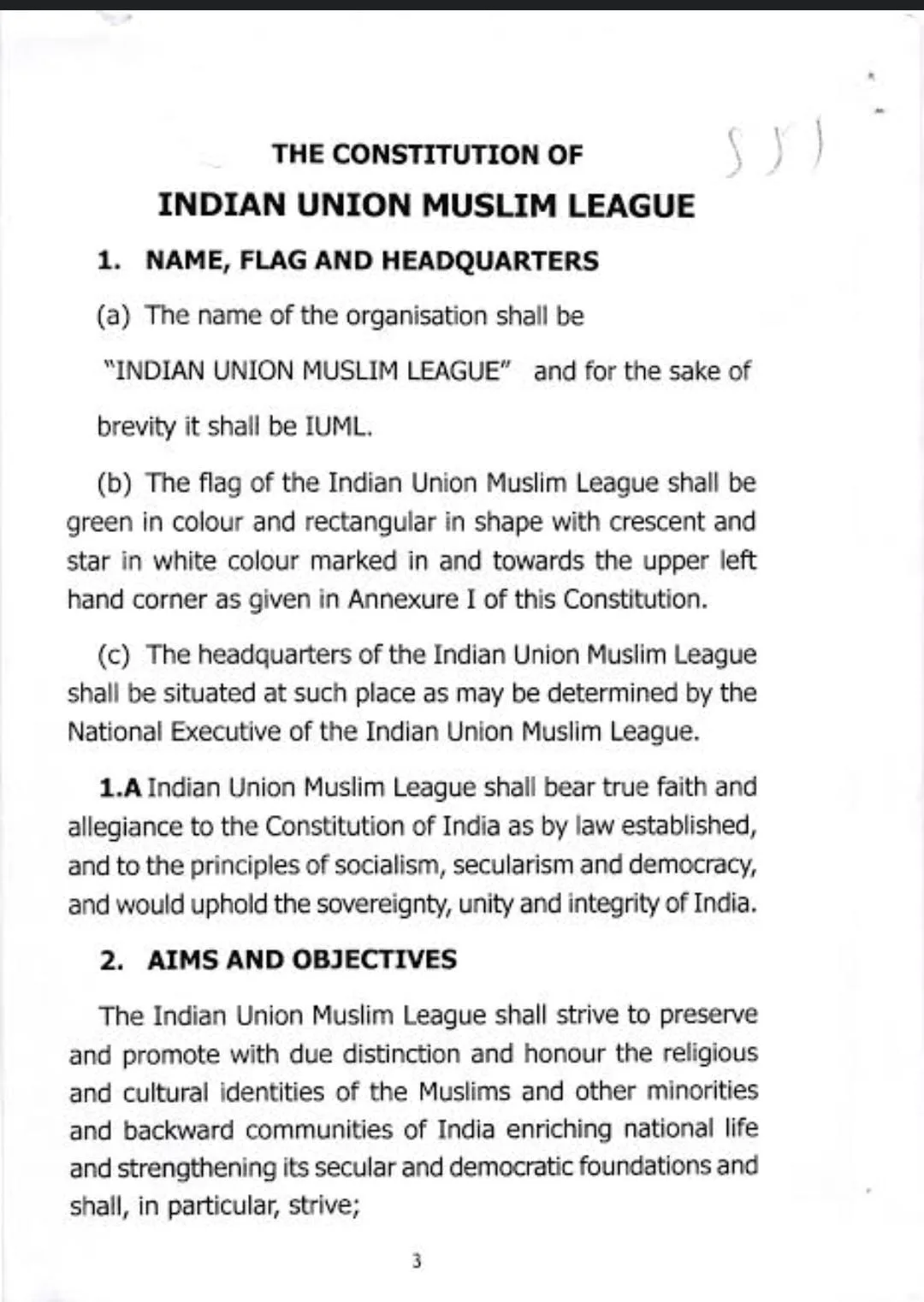
Although the constitution also includes commitments to secularism and democracy, the emphasis on Muslim identity in both the affidavit and the party’s foundational document makes clear that IUML defines itself by its role in representing the Muslim community’s interests.
While speaking to the Organiser, Yuvraj Gokul, Kerala BJP State Intellectual Cell Co-convenor, said, “The Indian Union Muslim League’s opposition to the Waqf Act Amendment, cloaked in secular rhetoric, exposes its true intent of promoting political Islam and advancing a hidden agenda of land jihad. Their recent agitation, featuring images of terrorist leaders like Hamas, further confirms that they will resort to religious fanaticism when convenient. The Muslim League, which claims to be secular, has shown time and again that it will ignite division and violence to further its goals”.
In response, a growing section of the public has called on the Election Commission to cancel IUML’s registration, citing its open identification as a religious party. The demand has sparked a public row, intensifying debates around political legitimacy and secularism in Bharat.
Senior Advocate Kapil Sibal represented Jamiat Ulama-i-Hind President Maulana Arshad Madani. Abhishek Manu Singhvi, along with Advocate Zulfiqar Ali P.S., appeared for Samastha Kerala Jamiyyathul Ulama. The legal representation by top Congress-linked lawyers has sparked outrage among sections of the public, who view this as a betrayal by the Congress party towards Hindus and Christians. By opposing the new Waqf Amendment Act 2025 and supporting what is seen as the imposition of Sharia law and Waqf control, the party is enabling a parallel system that threatens the rights of non-Muslim communities across Bharat.
The Supreme Court of India has granted the Union government one week to respond to petitions challenging the constitutional validity of the Waqf (Amendment) Act, 2025, refusing to grant an interim stay on the Waqf amendment act. The Court expressed concern over the violence associated with protests against the Act.














Comments