Amidst Waqf Amendment Bill debate in Rajya Sabha, know if Taj Mahal is owned by Waqf or not
December 5, 2025
  • Read Ecopy
  • Circulation
  • Advertise
  • Careers
  • About Us
  • Contact Us
Android AppiPhone AppArattai
Organiser
  • ‌
  • Bharat
    • Assam
    • Bihar
    • Chhattisgarh
    • Jharkhand
    • Maharashtra
    • View All States
  • World
    • Asia
    • Europe
    • North America
    • South America
    • Africa
    • Australia
  • Editorial
  • International
  • Opinion
  • RSS @ 100
  • More
    • Op Sindoor
    • Analysis
    • Sports
    • Defence
    • Politics
    • Business
    • Economy
    • Culture
    • Special Report
    • Sci & Tech
    • Entertainment
    • G20
    • Azadi Ka Amrit Mahotsav
    • Vocal4Local
    • Web Stories
    • Education
    • Employment
    • Books
    • Interviews
    • Travel
    • Law
    • Health
    • Obituary
  • Subscribe
    • Subscribe Print Edition
    • Subscribe Ecopy
    • Read Ecopy
  • ‌
  • Bharat
    • Assam
    • Bihar
    • Chhattisgarh
    • Jharkhand
    • Maharashtra
    • View All States
  • World
    • Asia
    • Europe
    • North America
    • South America
    • Africa
    • Australia
  • Editorial
  • International
  • Opinion
  • RSS @ 100
  • More
    • Op Sindoor
    • Analysis
    • Sports
    • Defence
    • Politics
    • Business
    • Economy
    • Culture
    • Special Report
    • Sci & Tech
    • Entertainment
    • G20
    • Azadi Ka Amrit Mahotsav
    • Vocal4Local
    • Web Stories
    • Education
    • Employment
    • Books
    • Interviews
    • Travel
    • Law
    • Health
    • Obituary
  • Subscribe
    • Subscribe Print Edition
    • Subscribe Ecopy
    • Read Ecopy
Organiser
  • Home
  • Bharat
  • World
  • Operation Sindoor
  • Editorial
  • Analysis
  • Opinion
  • Culture
  • Defence
  • International Edition
  • RSS @ 100
  • Magazine
  • Read Ecopy
Home Bharat

Amidst Waqf Amendment Bill debate in Rajya Sabha, know if Taj Mahal is owned by Waqf or not

The origins of the controversy can be traced back to 1998 when a businessman from Firozabad, Irfan Bedar, approached the Uttar Pradesh Sunni Waqf Board with a request to declare the Taj Mahal as Waqf property

Shashank Kumar DwivediShashank Kumar Dwivedi
Apr 3, 2025, 11:15 pm IST
in Bharat, Uttar Pradesh
Follow on Google News
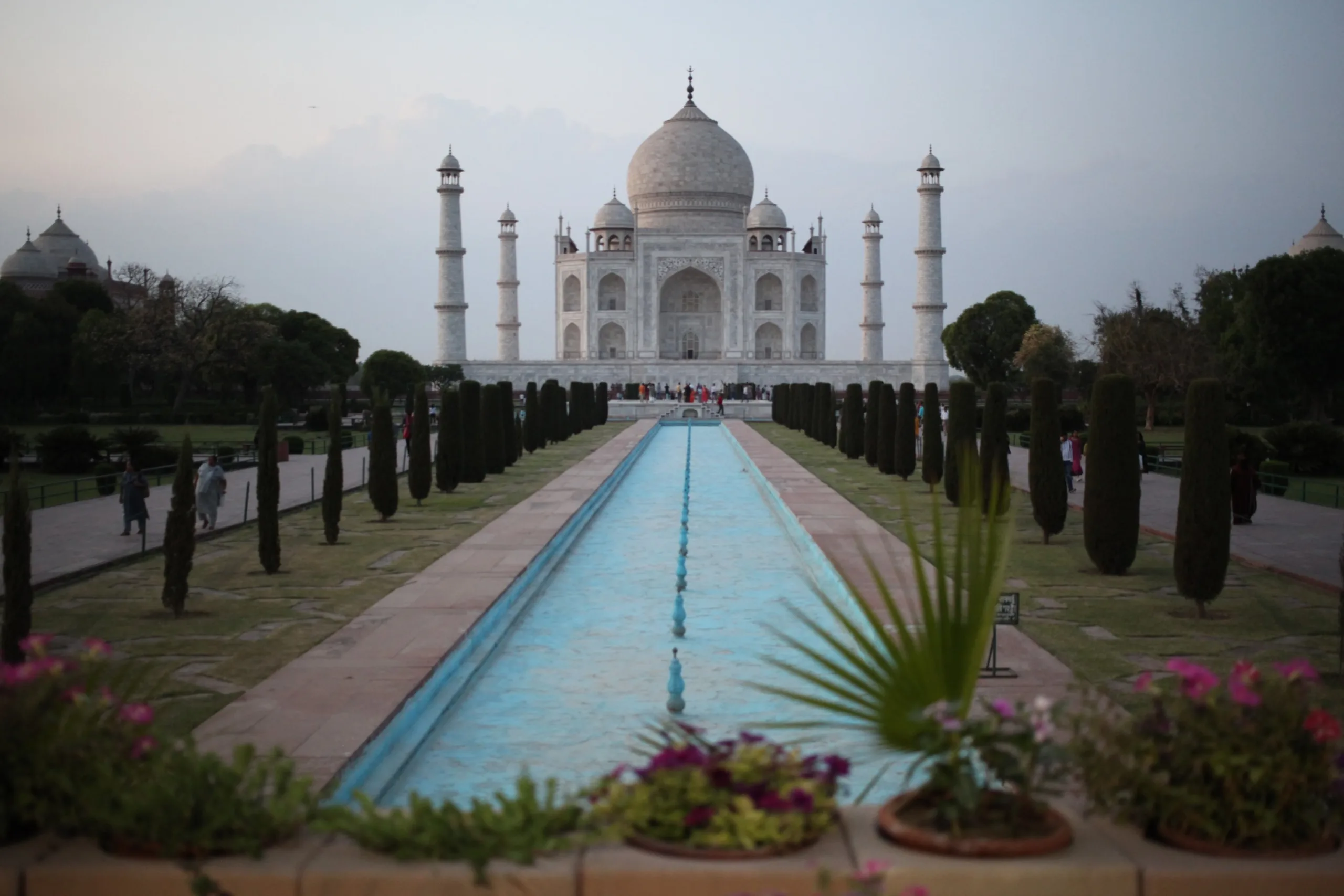
The Taj Mahal located in Agra, Uttar Pradesh

The Taj Mahal located in Agra, Uttar Pradesh

FacebookTwitterWhatsAppTelegramEmail

The Taj Mahal, one of the celebrated monuments in India, has long been revered as a symbol of love and architecture. However, in recent years, its ownership has been the subject of intense debate, leading to legal disputes, political controversies, and religious claims. This issue gained traction when the Uttar Pradesh Sunni Waqf Board laid claim to the monument, sparking a legal battle over whether it should remain under the control of the Indian government or be recognised as a Waqf property. This report delves into the debate, analysing the legal, political, and historical dimensions of the controversy.

Waqf Board’s claim

The origins of the controversy can be traced back to 1998 when a businessman from Firozabad, Irfan Bedar, approached the Uttar Pradesh Sunni Waqf Board with a request to declare the Taj Mahal as Waqf property. Bedar argued that the monument should be maintained by the Waqf Board due to its historical and religious significance. This request prompted the Waqf Board to issue a notice to the Archaeological Survey of India (ASI), the central agency responsible for managing the Taj Mahal. Instead of resolving the matter, this notice triggered a prolonged legal battle that spanned decades.

Supreme Court intervention and legal proceedings

In 2004, Bedar took the matter to the Allahabad High Court, seeking legal backing for his demand to be recognised as the caretaker of the Taj Mahal. The High Court advised the Waqf Board to treat the issue with seriousness, prompting the Board to register the Taj Mahal as a Waqf property in 2005. However, the ASI challenged this decision, escalating the matter to the Supreme Court of India.

The Supreme Court took cognisance of the case and demanded substantial proof from the Waqf Board to support its claim. The court, as reported by India Today Hindi, asked for documented evidence demonstrating that Mughal Emperor Shah Jahan himself had declared the Taj Mahal as Waqf property. The proceedings took a decisive turn in 2010 when the Supreme Court stayed the Waqf Board’s decision and ordered a thorough investigation into the ownership claims.

Political Dimensions

As the legal battle unfolded, political figures began to engage in the discourse, adding complexity to the ownership debate. In 2014, Samajwadi Party leader Azam Khan, who was then the Minister for Urban Development in Uttar Pradesh, advocated for the Taj Mahal to be officially recognised as Waqf property. He contended that since the monument housed the tombs of Shah Jahan and Mumtaz Mahal, it rightfully belonged under Waqf jurisdiction. His statements ignited significant controversy, with critics questioning his motivations and arguing that the Taj Mahal, as a national heritage site, should not be controlled by any single religious entity.

The controversy took another turn when Shia leaders also entered the debate, asserting that because Mumtaz Mahal was a Shia Muslim, the Taj Mahal held a distinct connection to Shia traditions. A Shia leader was quoted as saying, “Mumtaz was a Shia, whose real name was Arjuman Bano. The architecture of the Taj is proof of its Shia connection.”

Supreme Court’s verdict

The case reached a pivotal juncture in April 2018 when the Supreme Court questioned the Waqf Board’s claim, emphasising the absence of documentary proof. The Court demanded that the Waqf Board produce original documents signed by Shah Jahan that explicitly transferred ownership of the Taj Mahal to the Waqf Board.

During the hearings, the then Chief Justice of India, Deepak Mishra, made a notable remark: “Who in India will accept that the Taj Mahal belongs to the Waqf Board?” He further stated, “When was it given to you? It was in the possession of the East India Company for more than 250 years. After that, it went to the central government. ASI has been in charge of its management, and it had the right to administer it.”

Despite counterarguments from the Waqf Board’s legal team, the Supreme Court maintained that without conclusive proof, the Taj Mahal could not be classified as Waqf property. The Waqf Board’s counsel, led by senior advocate VV Giri, insisted that the monument qualified as Waqf property by virtue of housing the graves of two prominent Muslims. However, the Court remained firm in its stance that mere religious significance did not equate to legal ownership.

Waqf Board withdraws its claim

By mid-2018, it became apparent that the Waqf Board’s claim would not hold in court without documentary evidence. The Board ultimately conceded that the Taj Mahal could not be officially registered as Waqf property. The Board’s representatives instead argued that while ownership could not be proven, the monument “belongs to Allah” and should ideally be managed by the Waqf Board for practical purposes.

The Board’s legal counsel explained, “We don’t have the documents to show Taj Mahal is Waqf property. But by virtue of continuous use, it is a Waqf property, and the Sunni Waqf Board is entitled to manage the Taj Mahal.” This statement implied that the Waqf Board was more interested in administrative control rather than outright ownership.

Despite these arguments, the ASI strongly opposed the idea of Waqf administration, cautioning that such a precedent could lead to similar claims over other national monuments, including the Red Fort and Fatehpur Sikri.

Waqf (Amendment) Bill 2024

As the debate over Waqf properties continued, the Lok Sabha passed the Waqf (Amendment) Bill on April 3, 2025, after a marathon 12-hour discussion. The bill saw 288 members voting in favor and 232 against, with opposition parties labeling it as “anti-Muslim.” The ruling NDA defended the legislation as a necessary step to ensure transparency in Waqf-related matters. Union Minority Affairs Minister Kiren Rijiju stated, “There is no place in the world safer than India for minorities, and they are safe because the majority is entirely secular.”

The bill, which incorporated recommendations from the Joint Parliamentary Committee, will now move to the Rajya Sabha, where another extensive debate is expected in the Rajya Sabha has allocated eight hours for its discussion.

Topics: Waqf BoardWaqf propertyRajya Sabha DebateWaqf amendment bill 2024
ShareTweetSendShareSend
✮ Subscribe Organiser YouTube Channel. ✮
✮ Join Organiser's WhatsApp channel for Nationalist views beyond the news. ✮
Previous News

New study in breast cancer progression, drug resistance

Next News

Waqf Amendment Bill 2025: BJP MP Sudhanshu Trivedi says, “This fight is between Samvidhan vs Farmans”

Related News

SC to Waqf Boards: Fix your own mess; UMEED portal deadline remains December 6

Baba Ghulam Shah Badshah University

J&K: Rajouri University’s planning failures trigger financial turmoil; Too many courses, few takers

Shimla Court orders demolition of Sanjauli Mosque

Sanjauli Mosque Case: Shimla Court orders complete demolition of all five floors, terming structure unauthorised

Representative image

Chhattisgarh: Hindu families face Waqf Board notices on 60 years old homes despite holding documents since 1948 & 1965

Representative image

Kerala High Court slams Waqf Board in Munambam case, questions if even Taj Mahal could be declared Waqf property

Supreme Court stays certain provisions of Waqf Amendment Act; 5-year Islam practice condition on hold

Load More

Comments

The comments posted here/below/in the given space are not on behalf of Organiser. The person posting the comment will be in sole ownership of its responsibility. According to the central government's IT rules, obscene or offensive statement made against a person, religion, community or nation is a punishable offense, and legal action would be taken against people who indulge in such activities.

Latest News

BJYM leader Shyamraj with Janaki

Kerala: Widow of BJP worker murdered in 1995 steps into electoral battle after three decades at Valancherry

Russian Sber bank has unveiled access to its retail investors to the Indian stock market by etching its mutual fund to Nifty50

Scripting economic bonhomie: Russian investors gain access to Indian stocks, Sber unveils Nifty50 pegged mutual funds

Petitioner S Vignesh Shishir speaking to the reporters about the Rahul Gandhi UK citizenship case outside the Raebareli court

Rahul Gandhi UK Citizenship Case: Congress supporters create ruckus in court; Foreign visit details shared with judge

(L) Kerala High Court (R) Bouncers in Trippoonithura temple

Kerala: HC slams CPM-controlled Kochi Devaswom Board for deploying bouncers for crowd management during festival

Fact Check: Rahul Gandhi false claim about govt blocking his meet with Russian President Putin exposed; MEA clears air

Union Minister for Road Transport and Highways Nitin Gadkari (Right)

India set for highway overhaul as Union Minister Nitin Gadkari unveils nationwide shift to MLFF electronic tolling

RSS Akhil Bharatiya Prachar Pramukh Shri Sunil Ambekar

When Narrative Wars result in bloodshed, countering them becomes imperative: Sunil Ambekar

Ministry of Civil Aviation mandates emergency action: IndiGo ordered to stabilise flight operations by midnight

Chhattisgarh CM Vishnu Deo Sai at Panchjanya Conclave, Nava Raipur, Image Courtesy - Chhattisgarh govt

Panchjanya Conclave: Chhattisgarh CM Sai shares views on development projects in Maoist hotbed, women empowerment

Union Finance Minister Nirmala Sitharaman

‘TMC is holding Bengal back’: Sitharaman slams Mamata govt over industrial & healthcare setbacks

Load More
  • Privacy
  • Terms
  • Cookie Policy
  • Refund and Cancellation
  • Delivery and Shipping

© Bharat Prakashan (Delhi) Limited.
Tech-enabled by Ananthapuri Technologies

  • Home
  • Search Organiser
  • Bharat
    • Assam
    • Bihar
    • Chhattisgarh
    • Jharkhand
    • Maharashtra
    • View All States
  • World
    • Asia
    • Africa
    • North America
    • South America
    • Europe
    • Australia
  • Editorial
  • Operation Sindoor
  • Opinion
  • Analysis
  • Defence
  • Culture
  • Sports
  • Business
  • RSS @ 100
  • Entertainment
  • More ..
    • Sci & Tech
    • Vocal4Local
    • Special Report
    • Education
    • Employment
    • Books
    • Interviews
    • Travel
    • Health
    • Politics
    • Law
    • Economy
    • Obituary
  • Subscribe Magazine
  • Read Ecopy
  • Advertise
  • Circulation
  • Careers
  • About Us
  • Contact Us
  • Policies & Terms
    • Privacy Policy
    • Cookie Policy
    • Refund and Cancellation
    • Terms of Use

© Bharat Prakashan (Delhi) Limited.
Tech-enabled by Ananthapuri Technologies