





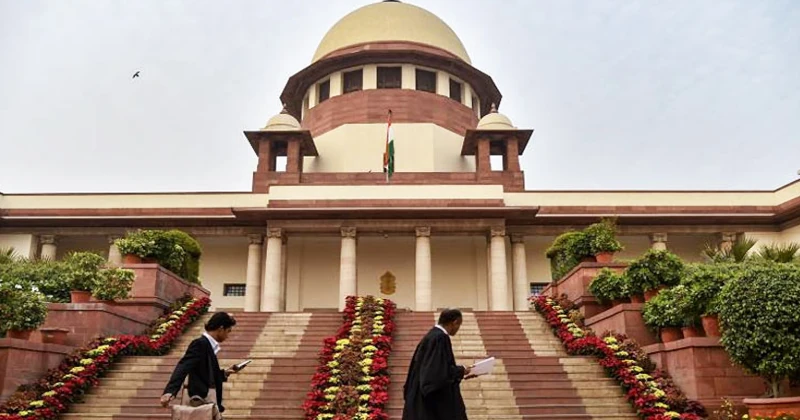
The Supreme Court on March 26, stayed an Allahabad High Court order dated March 17, which controversially ruled that the act of grabbing a minor victim’s breasts and attempting to pull down her lower garment was not sufficient to constitute an offence of attempt to rape.
A day after taking suo motu cognisance of the case, a Bench led by Justice B.R. Gavai expressed strong disapproval of the High Court’s reasoning, calling it “totally insensitive, inhuman” and “unknown to the tenets of law.”
The Bench criticised the judgment delivered by Justice Ram Manohar Narayan Mishra, stating that certain paragraphs of the ruling displayed a “complete lack of sensitivity” and failed to uphold the legal protections afforded to minor victims of sexual violence.
Justice Gavai highlighted that the High Court’s decision, which had graphically described the trauma suffered by the minor, paradoxically concluded that the actions of the accused did not demonstrate an intent to commit rape. The Supreme Court found this assessment troubling, particularly since the order was not delivered spontaneously but was the product of prolonged deliberation. The case had been reserved for judgment in November 2024, and the order was pronounced nearly four months later, with Justice Mishra himself stating that the decision had been reached after “thoughtful consideration and meticulous examination of the facts.”
The Supreme Court Bench, also comprising Justices Sanjay Karol and Sandeep Mehta, pointed out the grave consequences of such remarks, especially in cases still in the preliminary stage of issuing summons. The observations made in the Allahabad High Court ruling, the Bench said, could set a dangerous precedent by undermining legal safeguards meant to protect children from sexual violence.
The apex court was assisted in its examination by Attorney General R. Venkataramani and Solicitor General Tushar Mehta, both of whom urged the Bench to scrutinize the suo motu case with utmost care, given its implications for child protection laws and judicial sensitivity toward survivors of sexual abuse.
The court issued a notice to the Union government and the State of Uttar Pradesh, seeking their response. Additionally, the Supreme Court granted the victim’s mother liberty to implead herself in the case, ensuring that the voice of the survivor’s family is heard in the legal proceedings.
In a significant move, the Bench directed the Supreme Court Registry to communicate its order to the Allahabad High Court Registry so that the matter could be placed before the High Court Chief Justice for necessary corrective measures. The case is scheduled for its next hearing in two weeks.
The March 17 ruling by the Allahabad High Court came in response to a revision plea filed by the accused, who had challenged the trial court’s decision to summon them under charges of rape. The order concluded that “mere” acts of grabbing the victim’s breasts, breaking the string of her pyjama, and attempting to drag her under a culvert did not amount to an attempt to rape. The court opined that these actions lacked “determination” on the part of the accused to commit the offence of rape.
The Supreme Court took strong exception to three particular paragraphs in the High Court ruling, which described the sequence of events in detail but then controversially held that these facts did not warrant charges under Sections 376 (rape) and 511 (attempt to commit offences punishable with life imprisonment) of the Indian Penal Code (IPC), or under Section 18 of the Protection of Children from Sexual Offences (POCSO) Act. Section 18 of POCSO prescribes punishment for attempts to commit an offence under the Act.
Justice Mishra had instead modified the summons order, ruling that a prima facie case of attempt to rape was not established. Instead, he held that the accused could only be charged under Section 354(B) of the IPC (assault or use of criminal force to disrobe a woman) and Section 9 of the POCSO Act, which pertains to “aggravated sexual assault” on a child victim.
Legal experts and child rights activists have sharply criticised the High Court’s reasoning, warning that such interpretations dilute the seriousness of child sexual offences and risk setting a regressive precedent. The Supreme Court’s intervention has been welcomed as a crucial step in reaffirming legal protections for minor survivors of sexual violence.
The case is now poised for further deliberation, with the apex court likely to examine broader concerns about judicial sensitivity in cases involving sexual crimes, particularly against children.
















Comments