





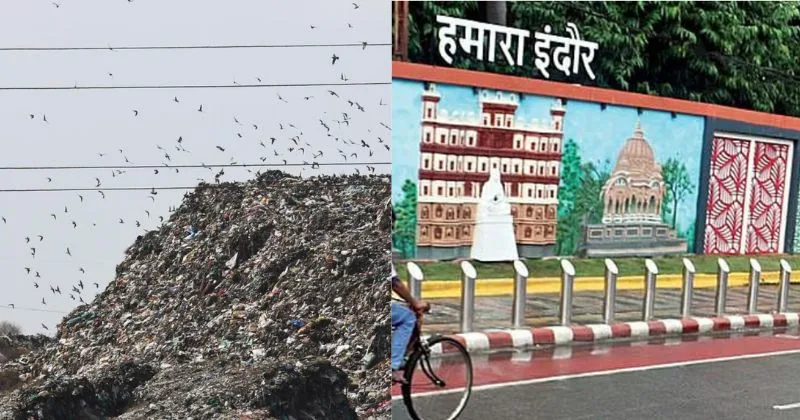
The recent announcement of Chennai officials’ planned visit to Europe, including cities like Barcelona, to study waste management techniques has sparked a heated debate. The World Bank is reportedly supporting this study tour, intended to help Tamil Nadu adopt advanced waste disposal and recycling methods. However, critics question the effectiveness of such international trips, given Chennai’s persistent waste management failures.
Karti Chidambaram’s Scathing Criticism
Sivaganga MP and Congress leader Karti Chidambaram took to social media to challenge the Chennai Corporation, asking whether any past study tours had resulted in tangible improvements. In a pointed tweet, he wrote:
“Can the @chennaicorp name one learning & implementation of a practice from any of the previous study tours? Poor garbage management, street dogs & cattle, broken sidewalks & potholed roads is the hallmark of Chennai. Visit Indore to start with.”
Can the @chennaicorp name one learning & implementation of a practise from any of the previous study tours? Poor garbage management, street dogs & cattle, broken sidewalks & potholed roads is the hallmark of Chennai. Visit Indore to start with. https://t.co/yDCko3AaL2
— Karti P Chidambaram (@KartiPC) March 25, 2025
This remark underscores the frustration with Chennai’s inefficient waste management system, which continues to struggle despite multiple expert consultations and modernization efforts.
Indore: India’s Cleanest City for Seven Years Straight
Indore, the commercial capital of Madhya Pradesh, has set a national benchmark for waste management. The city has been ranked India’s cleanest city for seven consecutive years under the Swachh Survekshan rankings. Unlike Chennai, Indore has successfully implemented door-to-door waste collection, waste segregation at source, mechanized road sweeping, and efficient landfill management.
A key highlight of Indore’s strategy has been its Bin-Free Initiative, eliminating open dumping points and ensuring 100 per cent waste collection from households and commercial establishments. GPS tracking of waste collection vehicles, biometric attendance for sanitation workers, and public engagement programs have contributed to the city’s transformation.
A Stark Contrast: Chennai’s Waste Crisis
According to official data, Chennai generates approximately 3,400 tonnes of solid waste per day, a figure expected to rise to 6,590 tonnes by 2026 across its metropolitan area. The city relies on two overburdened landfill sites at Kodungaiyur and Perungudi, both of which have become environmental hazards, causing severe health issues for nearby residents.
Unlike Indore, Chennai’s waste segregation remains weak, with much of the biomedical and e-waste ending up in the city’s landfills. Additionally, municipal reports highlight a lack of enforcement on plastic waste management and recycling initiatives, leading to inefficient disposal practices.
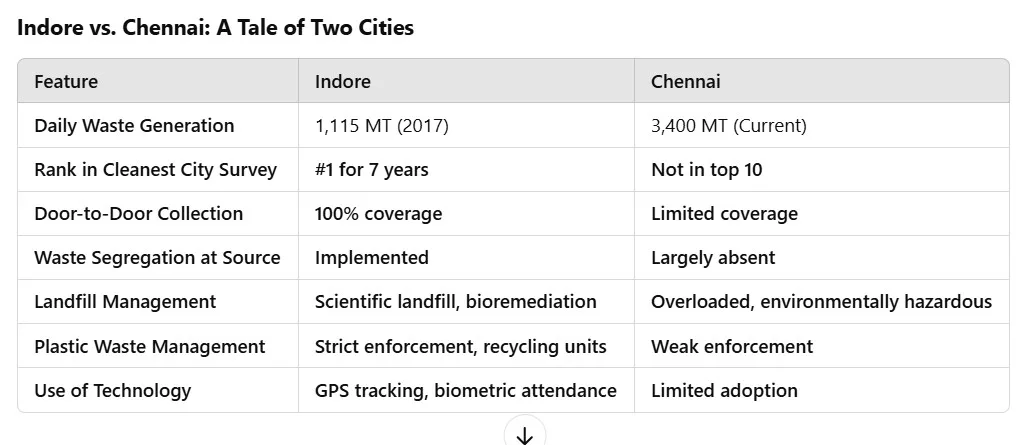
The report also states that a study on Solid Waste Management in CMDA was conducted by M/s. Environmental Resource Management, UK (ERM) in 1996, but its recommendations remain unimplemented to date.
Instead of spending taxpayers’ money on foreign study tours with little proven impact, critics argue that Tamil Nadu should look towards homegrown success stories like Indore. A visit to India’s cleanest city could provide far more practical, scalable, and economically feasible solutions to Chennai’s mounting garbage crisis.
Whether the Tamil Nadu government takes this suggestion seriously remains to be seen. If it fails to do so, Chennai will continue to struggle with overflowing landfills and poor sanitation despite repeated international study trips.














Comments