





In a contentious move that has sparked widespread outrage and fierce opposition, the Karnataka Assembly passed Karnataka Transparency in Public Procurement (Amendment) Bill, on March 21, which mandates a 4% reservation for Muslims in government contracts. Despite the immense backlash from opposition parties, particularly the Bharatiya Janata Party (BJP), the bill was pushed through without any substantial discussion, igniting a firestorm of criticism over its implications for equality and secularism in India.
The passed bill intends to reserve 4% of government contracts—valued up to Rs 2 crore—for Muslim contractors, along with reservations in tenders for goods and services valued up to Rs 1 crore.
#WATCH | Ruckus erupts in Karnataka Assembly as BJP MLAs enter the Well of the House and also tear and throw papers before the Speaker's chair
(Video source: Karnataka Assembly) pic.twitter.com/giejoDxCXF
— ANI (@ANI) March 21, 2025
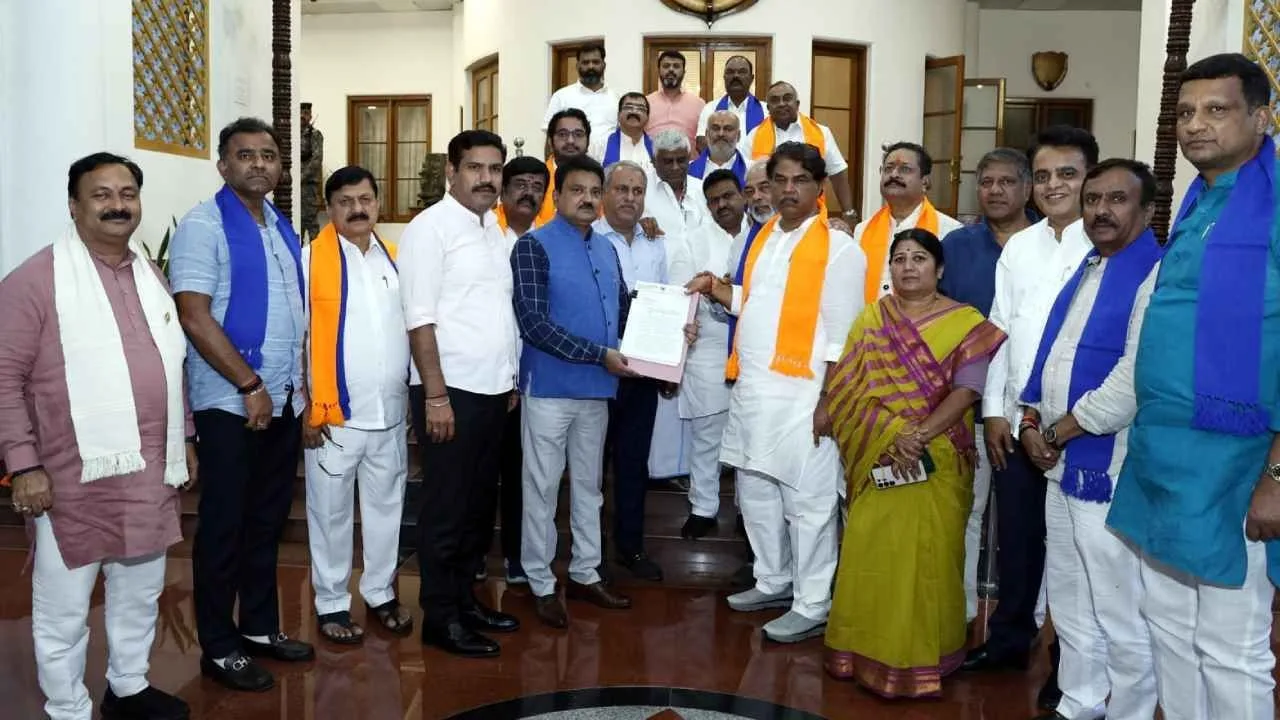
As an act of defiance to the bill, BJP members stormed the well of the House, tearing up copies and throwing them in protest. Meanwhile speaker U.T. Khader suspended 18 BJP MLAs for six months and forcibly evicting them from the assembly by marshals.
For generations, Congress has neglected the education & upliftment of Muslims, choosing instead to foster a sense of marginalization and victimhood within the community. Rather than empowering them, Congress has perpetuated a cycle of dependency through selective schemes that…
— Vijayendra Yediyurappa (@BYVijayendra) March 21, 2025
Critics argue that this occasion was not just a procedural affair; it epitomized a larger ideological battle raging within the state, and indeed the country, over the issue of reservations based on religion.
Opposition leader R. Ashok vehemently opposed the bill, denouncing it as unconstitutional and a dangerous precedent that could fracture the already fragile social fabric of Karnataka. He argued that the Indian Constitution upholds the principle of equality for all citizens and does not permit the allocation of government benefits based on religious identity. He emphasized that such a move could polarize communities and lead to further division in a state that has historically prided itself on its diversity.
In Karnataka, existing reservation policies provide allocations for Scheduled Castes and Scheduled Tribes at 24%, with Other Backward Classes receiving 4% under Category-1 and 15% under Category-2A. The push for 4% reservation for Muslims falls under Category 2B, which has instigated fierce debate among lawmakers and the public alike.
The BJP has articulated its strong condemnation of what it deems the Karnataka government’s “unconstitutional misadventure.” The party’s leaders have vowed to take legal action against the bill and to challenge it at every possible level, including a potential case in court if necessary.
Union Minister Shobha Karandlaje has publicly expressed her concerns, writing to the Governor and urging a veto of the bill. She has characterized the proposal as unconstitutional, arguing that it violates the fundamental principles of non-discrimination and equal opportunity that the Constitution guarantees to all citizens, irrespective of their religious affiliations.
The Karnataka govt's proposal to grant 4% reservation in govt tenders to Muslims under Category 2B is a direct assault on the Indian Constitution. Reservations CANNOT be based on religion – this move is discriminatory, unconstitutional, and a blatant act of appeasement!
The… pic.twitter.com/BRzfaSY3Hy
— Shobha Karandlaje (@ShobhaBJP) March 21, 2025
The BJP State President B.Y. Vijayendra has declared that the party will initiate a statewide movement against the Karnataka government’s decision to allocate 4% reservation for minorities in government contracts.
During a press conference held in the city, Vijayendra articulated his stance by emphasizing that neither the BJP nor the JDS is inherently opposed to the Muslim community. He clarified that their resistance to the reservation policy is grounded in principles of equality and fairness rather than communal animosity. “We believe in equal opportunities for all, irrespective of their religious background,” he stated. However, he took the opportunity to scrutinize the actions of Chief Minister Siddaramaiah, who also holds the position of Finance Minister. Vijayendra accused Siddaramaiah of disrespecting Hindus through his financial policies, stating, “This is something we cannot tolerate. We are here to voice our concerns.”
Legal scholars and constitutional experts echo these sentiments, cautioning that the introduction of a religious criterion in determining government contracts undermines the essential tenets of secularism and equality that the Indian Constitution was founded upon. The Hon’ble Supreme Court has historically ruled that reservations should be based on social and educational backwardness rather than religious identity, stressing that any deviation from this principle could result in significant legal repercussions.
Another focal point of Vijayendra’s address was the financial assistance provided to Muslim students pursuing education abroad. He noted that the amount has been increased from 20 lakhs to 30 lakhs, raising a crucial question about the prioritization of community needs within the government’s financial allocations. “Are there no poor Hindus in our state? If they seek education overseas, do they not require financial support?” he challenged, thereby underscoring what he perceives as a disparity in government support based on religious criteria.
Expanding on his critique, Vijayendra also commented on the state budget’s allocation for the self-defense of Muslim girls. He reflected on the broader issue of communal violence, highlighting the phenomenon of “Love Jihad.” “In our state, it is Hindu girls who are falling victim to this alarming trend, not Muslim girls,” he pointedly remarked.














Comments