





In a shocking display of financial impropriety and disregard for established procurement protocols, the Congress-led Karnataka government has authorised the expenditure of Rs. 7.20 crores for digital media promotion without adhering to the necessary tender processes or circular compliance. This scandalous decision comes at a time when the state is grappling with pressing funding shortages in critical areas, further raising questions about the administration’s priorities and governance.
On the surface, the move seeks to enhance public awareness about the schemes and projects under the Bengaluru Metropolitan Region Development Authority (BMRDA) and other local bodies, such as the Bangalore Water Supply and Sewerage Board (BWSSB) and the Bruhat Bengaluru Mahanagara Palike (BBMP). However, the lack of urgency associated with promoting these projects raises serious concerns about the motivation behind this large-scale expenditure.
The Finance Department had previously issued a circular on March 15, 2024, detailing exemptions under Section 4(g) of the Karnataka Transparency in Public Procurement Act, 1999. This law mandates that even in urgent matters, a minimum seven-day notice should be provided for short-term tenders. Yet, in a blatant oversight—or perhaps a calculated decision—the Information and Public Relations Department sidestepped this requirement by directly obtaining an exemption, effectively squandering taxpayer money without following due process.
Critics of this decision argue that it reflects a government more interested in self-aggrandisement than in responsibly managing public resources. The allegations of preferential treatment and favoritism in awarding contracts to the advertising agency MC&A, which comes with an exorbitant monthly fee of Rs. 60 lakhs, have added credence to claims of malpractice. This amount, which totals more than Rs. 7.20 crores for a year, breaks down into Rs. 48,42,615 designated for publicity and management, Rs. 2,42,131 for MC&A service charges, and an additional Rs. 9,15,254 for Goods and Services Tax (GST). Alarmingly, the Administration Department had not confirmed that these rates were reasonable.
The question arises: why is the government pursuing such an extravagant publicity campaign when substantial funding constraints plague essential public services? The Scheduled Caste, Scheduled Tribe, Backward Class, and Minority Welfare Department has stated that it faces funding shortages for beds, pillows, and other essential equipment for students housed in government-managed hostels. Furthermore, a medical student belonging to the Dalit community recently approached the High Court seeking an incentive of Rs. 1 crore—an amount that highlights extreme financial pressures within the state.
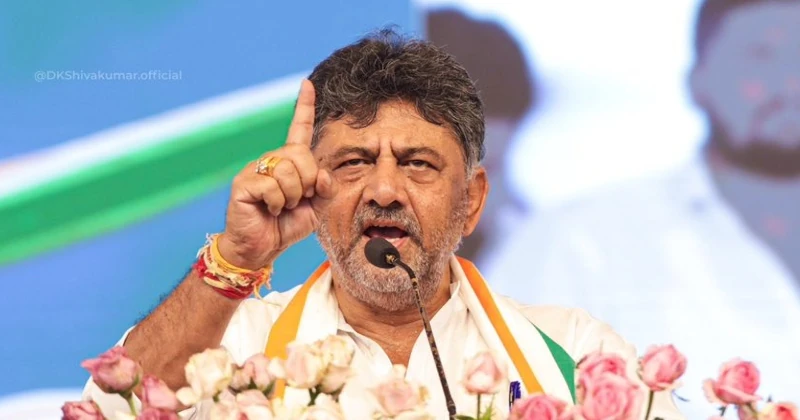
The Karnataka government’s recent decisions, particularly those spearheaded by Deputy Chief Minister DK Shivakumar, have drawn substantial public ire due to their unwarranted focus on outreach campaigns rather than essential welfare spending.
Shivakumar’s insistence on tackling “fake news” is an argument the government has leveraged to justify its promotional push. While the fight against misinformation is indeed a worthy endeavor, the question remains: Is it truly the responsibility of the government to invest nearly Rs. 7.20 crores into digital visibility instead of ensuring that essential educational and healthcare services are adequately funded? The division of priorities indicates a potential disconnect between government officials and the realities faced by ordinary citizens.
Documentation of Shivakumar’s decisions to form a dedicated social media team to manage information about BBMP and related projects raises significant concerns as well. These directives were established within a short time frame—a mere two months—highlighting the rushed nature of this initiative. Observers have noted that the timeline for forming a social media team seems orchestrated and planned, leaving little room for reflection on whether such an investment is genuinely warranted.
Adding another layer of controversy to the situation, Deputy Chief Minister Shivakumar instructed the Information Department to take decisive actions to publicize these programs extensively. This approach appears increasingly dubious in light of state fiscal constraints and an alarming trend towards prioritising image over substance. It cannot help but evoke skepticism about whether taxpayer funds are being utilised effectively or simply funneled toward campaigns that serve to prop up political narratives.
In addition to the lack of competitive bidding and adherence to established procurement processes, the recent push for digital media campaign funding also raises broader concerns about governance culture in Karnataka. The administration’s insistence on bypassing transparency and accountability standards for what they deem “urgent public relations needs” sets a dangerous precedent in public governance.












Comments