





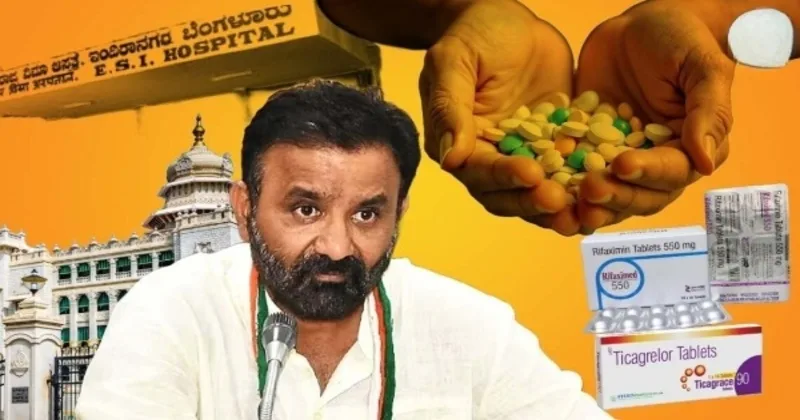
Bengaluru: Serious allegations of corruption and mismanagement have surfaced against the Karnataka government regarding the Employees State Insurance Scheme. Investigations reveal that improper procurement practices have allowed the purchase of medicines and medical equipment for one year without obtaining necessary government permissions, violating established regulations.
The Directorate of Medical Services is under scrutiny as a notice has been served to the Director of the State Labor Department, Dr Varadaraju, regarding these violations. A copy of the notice has been made available to the media, shedding light on the extent of the problem.
For the financial year 2023-24, the government allocated Rs 16.32 crore for the Employees’ State Insurance (ESI) hospitals, with funds intended for high-tech medical equipment and essential medicines such as ambulances and ECG machines. However, concerns have been raised about illegal procurement practices that have enabled the purchase of these medicines without adhering to the proper government protocols.
Initially, the Labor State Insurance Corporation had permitted the purchase of essential medicines only for a six-month period, specifically from June to November 2024. Nonetheless, reports indicate that the purchasing process for a full 12 months has begun without proper authorization. The Directorate of Medical Services has failed to provide essential information regarding the procurement of medicines within the government-sanctioned time frame, evidencing a clear disregard for regulatory compliance.
The notice states, “The drug procurement process should be stopped immediately, and written consent should be submitted within three days,” underlining the urgency of the situation.
Further investigations reveal alarming discrepancies in pricing for medications. For instance, the price of Rifaximin 550 tablets was slashed from Rs 15.90 to Rs 8.49, and Ticagrelor 90 mg tablets dropped from Rs 13.77 to Rs 4.37. There was a notable decline in the prices of various medications, with reports suggesting that around 80 per cent of pills saw significant price drops. The government, by failing to act decisively, may have allowed substantial financial losses through these questionable procurement practices.
Compounding these issues, the old procurement rate agreement was extended for a third time, set to expire on April 30, 2025, leading to concerns about the legitimacy and transparency of ongoing purchases. Despite an official purchase order placed in October 2024, the associated procurement was completed only at the end of December, raising flags about the irregularities in the indent prepared and the procurement process conducted hurriedly.
The notice also conveys that the indent was only officially sanctioned for six months, with no legal authority for extending beyond that period.
As part of an ongoing assessment, the Directorate of Medical Services proposed upgrades for ESI hospitals and the purchase of essential medical equipment. The proposal was submitted to the government on two occasions in June and July 2024, which afterward led to the initiation of tender processes. However, despite calls for tenders for equipment across various departments—including ENT, dental, general surgery, and more—procurement processes have not been without fault.
Critically, it has come to light that most purchases for medical equipment and furniture for hospitals and dispensaries were substandard. An investigation by the ESI has validated these shortcomings, raising further concerns about the efficacy and cost-effectiveness of supplies. Labor Minister Santosh Lad has also been brought into the fold, with a letter addressed regarding the alarming state of medical infrastructure.
Additionally, there has been an expenditure of Rs 5.99 crore on eight high-tech ambulances, which are currently not in operation due to a lack of drivers and paramedical staff. Other equipment, such as ECG machines, water coolers, and refrigerators, have been delivered but remain unused and gathering dust in many dispensaries.
Further highlights include a staggering ₹10.33 crore spent on furniture for dispensaries, much of which is already in poor condition. Moreover, many vital pieces of equipment remain uninstalled—a blatant oversight that adds to the inadequate health care provided.
ESI Deputy Director Vinay Kumar Sharma has insisted on a thorough investigation into these malpractices, requiring an actual report to be submitted to the office by July 8, 2024. Evidence shows that numerous workers’ state insurance corporation hospitals across various districts are in deplorable conditions, with many modern medical facilities rendered obsolete due to a lack of demand or misallocation of funds.
As these serious corruption charges continue to unfold, questions remain about the responsibility and accountability of those in power. The legitimacy of procurement practices, the management of state resources, and the overall welfare of workers under this insurance scheme stand at the forefront of public scrutiny.














Comments