





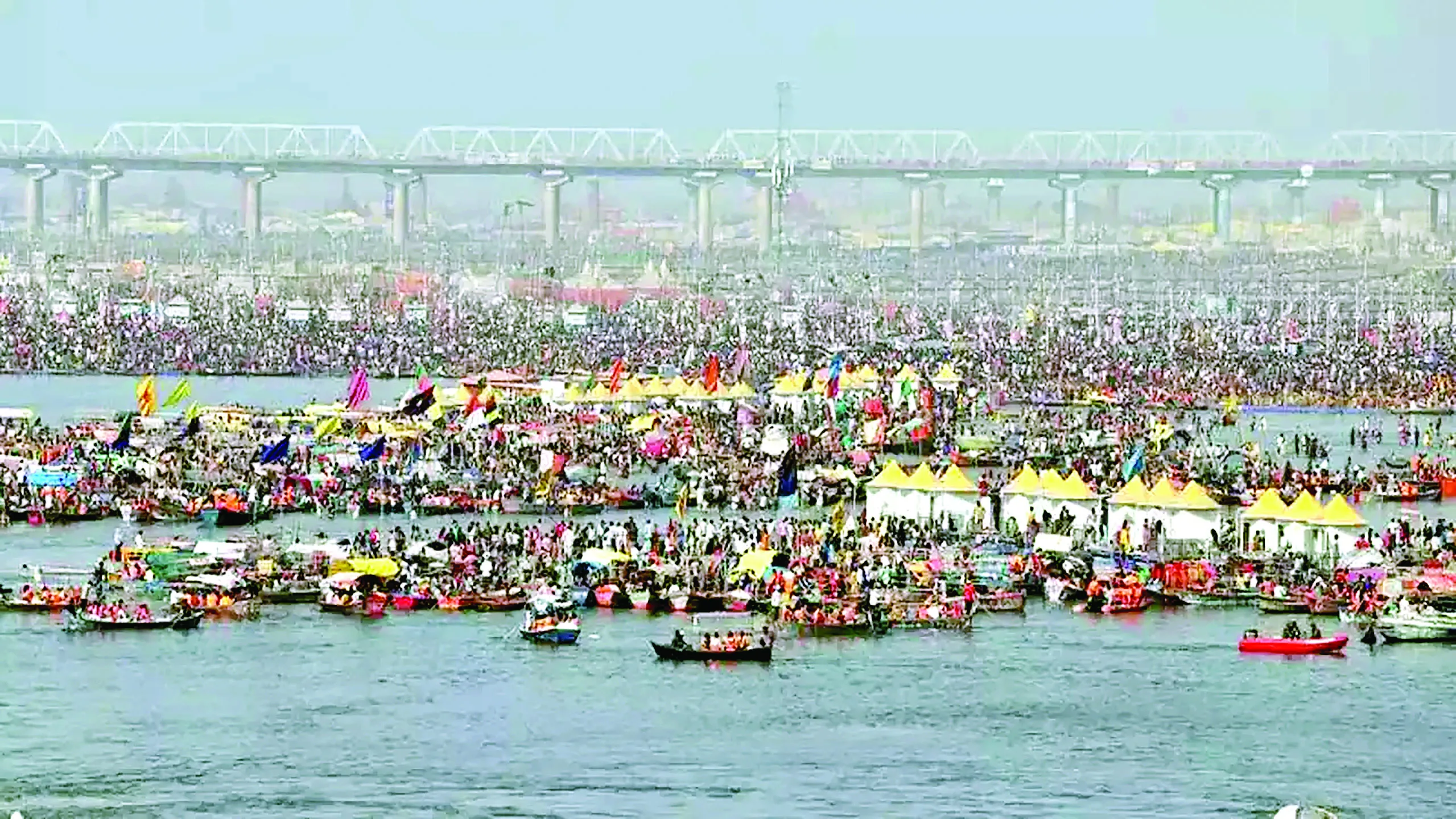
The Mahakumbh Mela is renowned as the world’s largest religious gathering, attracting crores of devotees for 45 days. In 2025, the pilgrimage attracted an unprecedented number of pilgrims and tourists, significantly boosting the State’s economy. This case study examines the economic and digital impact of the Mahakumbh 2025 on Uttar Pradesh, focusing on tourism, employment, infrastructure development, and revenue generation.
The Mahakumbh 2025 was also called as the “Digital Mahakumbh,” as it showcased a remarkable integration of Information and Communication Technology (ICT) tools and platforms to enhance organisation, monitoring, data-driven decision-making, safety, and security. The success of this mega-event was not just the result of meticulous planning and high-level leadership but was also shaped by the tireless efforts of sanitation workers, security personnel, paramilitary forces, and disaster response teams. These unsung heroes worked round the clock, often under extreme conditions, to ensure every visitor’s safe, clean, and well-managed experience.
Spiritual Gathering with Economic Ripples
Tourism remains at the core of the Kumbh economy. The 2025 congregation saw a record-breaking 65 crore visitors over 45 days, providing an enormous boost to the hospitality sector. Hotels, guesthouses, and temporary accommodations witnessed full occupancy, while local businesses—restaurants, eateries, and transport services—benefited immensely. The influx of foreign tourists further cemented Uttar Pradesh’s status as a global spiritual tourism hub. The estimated revenue from tourism alone exceeded Rs 1.5 lakh crore ($18 billion), reinforcing the economic significance of the festival.
Creating Employment at All Levels
Maha Kumbh 2025 has been a significant driver of employment, creating over 600,000 temporary and permanent jobs. From hospitality and transport to event management and security, job opportunities flourished. Approximately 45,000 families found employment in setting up tents, sanitation, and logistical support. Additionally, the local handicraft industry saw a turnover of Rs 35 crore ($4.4 million), benefiting artisans and small business owners selling religious souvenirs and handcrafted items. The festival has played a crucial role in sustaining the informal economy, providing livelihoods to thousands of vendors, boatmen, and service providers.
Infrastructure Development: A Lasting Legacy
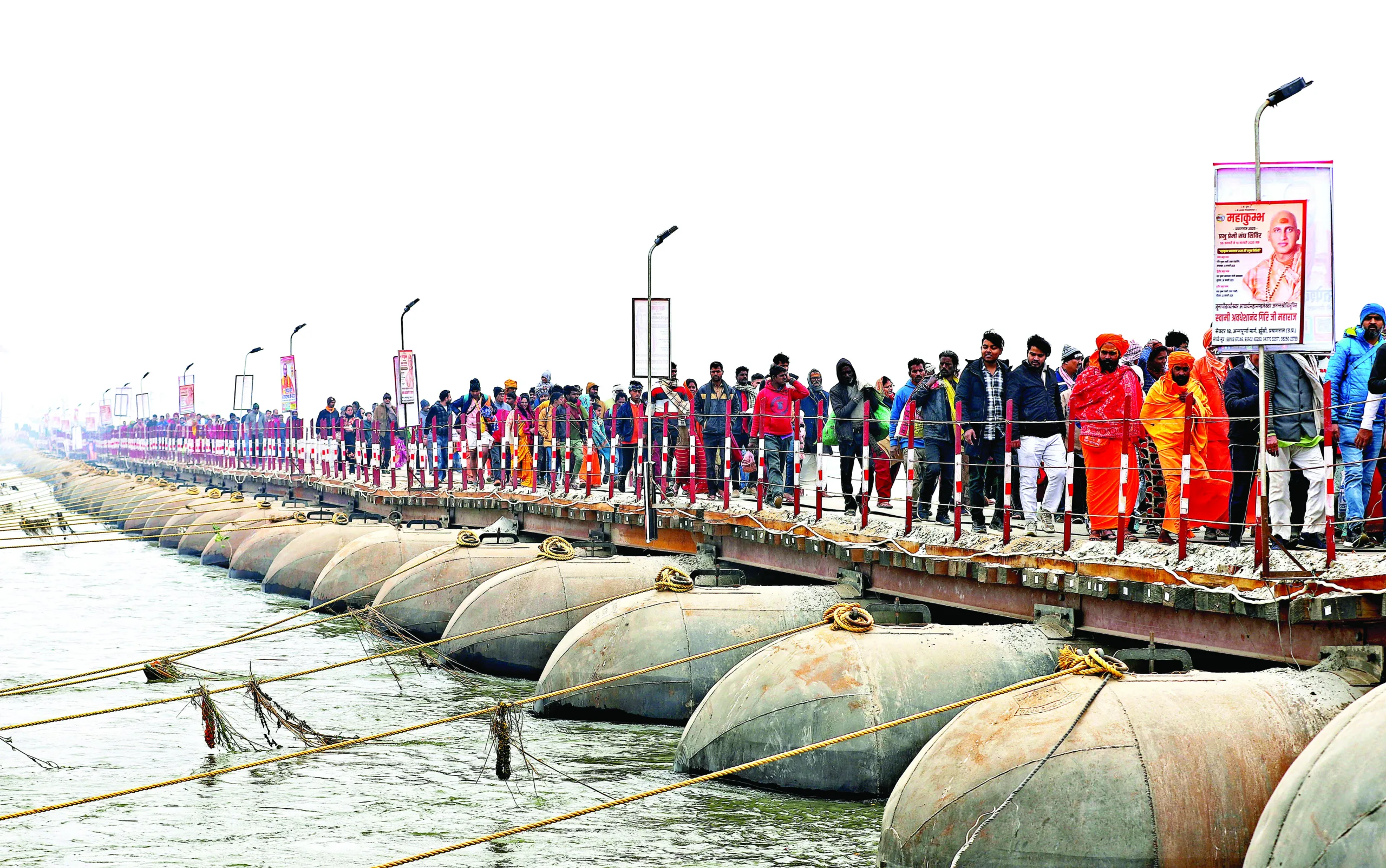
One of the most significant takeaways from Maha Kumbh 2025 has been the lasting impact of infrastructure investments. The Uttar Pradesh government allocated Rs 6,382 crore ($765 million) to enhance roads, bridges, sanitation, and public facilities in Prayagraj. Key projects significantly improved connectivity, such as a six-lane bridge over the Ganga River and a Rs 275 crore ($34 million) four-lane railway overbridge. Additionally, the mela grounds featured 150,000 toilets, 3,000 kitchens, and 11 hospitals to accommodate the massive crowd. These developments ensured a smoother event and will continue benefiting residents and visitors for years to come.
The Uttar Pradesh Government reaped substantial financial benefits from Maha Kumbh 2025. Direct and indirect revenue generation exceeded Rs 25,000 crore ($3.1 billion) from the hospitality, transport, and retail sectors. Financial transactions at the mela site alone ranged between Rs 2 lakh crore ($25 billion) and Rs 3 lakh crore ($37.5 billion), highlighting the event’s massive contribution to the state’s GDP. This economic ripple effect extended across multiple industries, strengthening overall economic activity in the region.
Technological Innovations
The integration of ICT tools and platforms transformed the management of the Mahakumbh, setting a new benchmark for large-scale event organisation. AI-powered surveillance and crowd management systems, Integrated Command and Control Centers (ICCC), Mobile Applications and AI Chatbots, and Digital Lost-and-Found Centers significantly enhanced safety, reducing the likelihood of accidents and enabling swift responses to emergencies. The use of mobile applications and AI chatbots improved the overall experience for pilgrims, providing them with accessible information and assistance. The successful implementation of these technologies demonstrated the potential of digital solutions in managing massive gatherings, ensuring the safety and satisfaction of attendees.
The integration of ICT tools Transformed the management of the MahaKumbh that has set a new benchmark for a large-scale event organisation
The Mahakumbh 2025 exemplified how visionary leadership, meticulous planning, interdepartmental coordination, and the widespread use of technology, including AI, can facilitate the successful execution of an event of such colossal magnitude.
The Mahakumbh 2025 significantly bolstered Uttar Pradesh’s economy through increased tourism, employment, infrastructure development, and revenue generation. Balancing cultural and economic benefits with these challenges is crucial for future editions of the Kumbh to continue bringing prosperity to the state and its people. Prime Minister Modi and Chief Minister Yogi Adityanath’s leadership in Maha Kumbh 2025 reaffirmed their commitment to cultural preservation, economic growth, and infrastructural development. Their ‘double engine’ governance transformed the event into a global marvel, proving that when visionary leadership and efficient execution come together, history is made. With this remarkable success, the legacy of Maha Kumbh has been elevated, ensuring that future editions continue to reflect Bharat’s spiritual and administrative prowess on the world stage.
Mahakumbh 2025 will be remembered as a landmark event in Bharat’s spiritual and administrative history. But beyond the grand celebrations and economic impact, we must remember those who worked tirelessly behind the scenes. The success of the Kumbh was not just built on devotion and planning but on the sweat, sacrifice, and dedication of these unsung heroes. Let us ensure that their contributions are never forgotten but celebrated as an integral part of this historic event. Mahakumbh 2025 set a new benchmark for future editions, demonstrating how a blend of tradition and technology can create a seamless experience for pilgrims.















Comments