





As spring approaches, the vibrant festival of Holi is set to be celebrated across Bharat with unmatched enthusiasm. The festival, which symbolises the victory of good over evil, is deeply rooted in Hindu beliefs and traditions. Holika Dahan, also known as Chhoti Holi or Holika Deepak, marks the beginning of the festival and holds immense significance. However, choosing the right muhurta (timing) for Holika Dahan is crucial, as performing the ritual at an inauspicious time is believed to bring misfortune not just to individuals but to entire cities and even the country.
The selection of the muhurta for Holika Dahan is based on precise astrological calculations. According to Hindu scriptures, Holika Dahan should be performed during Pradosh Kaal (which begins after sunset) while the Purnima Tithi is prevailing. It is essential to ensure that Bhadra, an inauspicious period, has ended before performing the ritual.
The ideal timing for Holika Dahan in 2025 is after Bhadra Mukha, as Bhadra should be avoided at all costs. If Bhadra prevails during Pradosh but ends before midnight, the ritual should be performed immediately after Bhadra ends. If Bhadra extends beyond midnight, then Holika Dahan should be conducted during Bhadra Punchha but never in Bhadra Mukha, which is considered highly inauspicious.
“Choosing the right muhurta for Holika Dahan is more important than for any other festival. Performing it at the wrong time can bring suffering and misfortune, making it essential to adhere to astrological recommendations,” states an expert from Drik Panchang.
Legend behind Holika Dahan
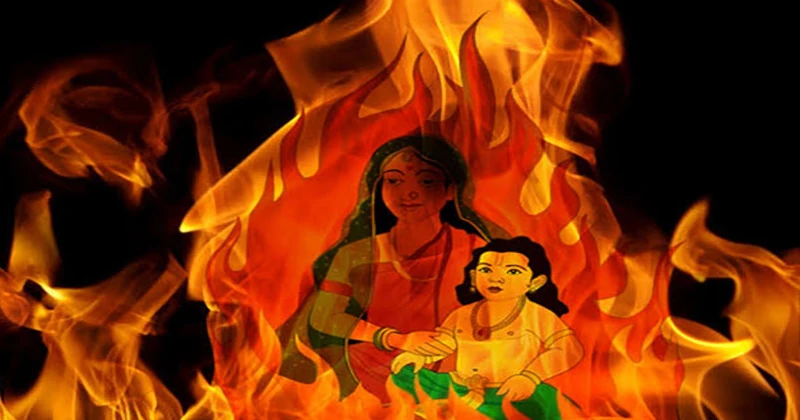
Holika Dahan has its origins in Hindu Beliefs, revolving around the story of the demon king Hiranyakashipu and his son Prahlad. The king, blinded by power and ego, demanded that everyone worship him instead of Bhagwan Vishnu. However, his own son, Prahlad, remained a devout follower of Bhagwan Vishnu. Enraged, Hiranyakashipu plotted to kill Prahlad with the help of his sister, Holika, who was immune to fire.
Holika tricked Prahlad into sitting on a pyre with her, confident that she would emerge unscathed while he perished. However, divine intervention ensured that Holika burned to ashes, while Prahlad remained unharmed. This event is commemorated through the burning of Holika effigies, symbolising the triumph of good over evil.
“Holi is not just about colours; it is a reminder that truth and devotion always prevail over tyranny and evil,” says a devotee from Mathura, the birthplace of Bhagwan Krishna, where Holi celebrations are particularly grand.
Celebrations and Rituals Across Bharat
Holika Dahan is widely observed across Bharat, particularly in the northern states, where large bonfires are lit, and effigies of Holika are burned. In Gujarat and Odisha, people offer gram and stalks from the harvest to the fire, paying homage to Agni, the fire god. In some places, devotees take embers from the bonfire home, believing it purifies their homes and wards off diseases.
The following day, Holi celebrations erupt in full force, bringing communities together in a riot of colours, joy, and festivity. People smear each other with gulal (coloured powder), drench friends and family with pichkaris (water guns), and revel in the spirit of unity and joy. “Holi is a festival of happiness, where all societal barriers fade away, and people come together to celebrate life, love, and togetherness,” remarks a cultural historian from Banaras.
The Many Forms of Holi
Holi is celebrated in various unique forms across Bharat.
- Lathmar Holi in Barsana and Nandgaon sees women playfully hitting men with sticks, recreating a legendary event from Krishna’s life.
- Phoolon ki Holi in Vrindavan is a mesmerising spectacle where people play with flower petals instead of colours.
- Basant Utsav in Bengal celebrates Holi with music, dance, and poetry, inspired by the great poet Rabindranath Tagore.
- Shigmo in Goa marks the festival with traditional folk performances and grand processions.
- Manjal Kuli in Kerala involves the throwing of turmeric-infused water instead of colorus.
Beyond the revelry and vibrant hues, Holi embodies the values of forgiveness, renewal, and the triumph of righteousness. It is a time to mend relationships, forget past grievances, and embrace the spirit of love and harmony. The festival also heralds the arrival of spring, spreading joy, hope, and new beginnings.












Comments