





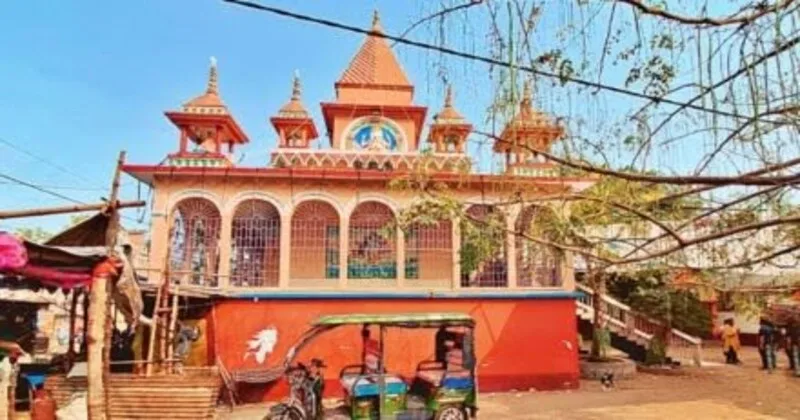
A battle for basic religious rights has erupted in Gidhagram village, located merely 150 kilometres from Kolkata. Over 130 Dalit families, primarily from the cobbler and weaver communities bearing the surname ‘Das,’ have claimed that they are being denied entry into the Gidheshwar Shiv Temple, the only place of worship in the locality. This caste-based discrimination, which should have been eradicated decades ago, continues to persist despite legal protections against untouchability and discrimination.
The affected families reside in the Daspara area of Gidhagram and claim they have been barred from even stepping onto the temple premises. They have repeatedly been subjected to social exclusion, with the temple committee and other villagers preventing their entry on the grounds of caste-based hierarchy.
Ekkori Das, a 50-year-old farmer and resident, expressed his anguish: “We don’t even have the right to climb the steps, let alone enter the temple and pray. Even after meeting the administration, nothing has changed.”
Despite a formal plea submitted to the district administration and local police, followed by a meeting on February 28 to discuss the matter, the issue remains unresolved. While officials claim they are trying to maintain law and order, the affected families feel abandoned, accusing the administration of deliberately stalling action.
At the heart of the controversy is the Gidheshwar Shiv Temple, which is believed to be around 200 years old. A plaque on the temple states that it was renovated in 1997. However, for generations, the Dalit families of Daspara have been denied access.
“For years, we have not been allowed to enter the temple. They call us ‘choto jaat’ (low caste) and ‘muchi jaat’ (cobbler caste),” said Ekkori Das. He added that the temple committee and influential villagers stop them whenever they attempt to enter.
Kalyani Das, a 58-year-old homemaker from Daspara, recalled her experience: “Last year, I took fruits and flowers to offer puja. But the temple committee members forced me to leave.”
The injustice does not stop at temple entry denial. Despite being ostracised from religious participation, Dalit families are still expected to contribute financially. “When they collect money for puja at the temple every year, we all pay. But they don’t allow us inside,” said 40-year-old Subhas Das, a farmer who owns a small plot of land.
On February 24, just before Maha Shivratri, the residents of Daspara decided to challenge this discrimination. They formally approached the Block Development Officer (BDO), the Sub-Divisional Officer (SDO), and the police, demanding justice. However, when Maha Shivratri arrived, they were once again denied entry.
Following the Shivratri incident, an official meeting was held on February 28, attended by local stakeholders, including residents, temple committee members, the local MLA, BDO, and police officers. A resolution was passed stating:
“Racial discrimination has been banned through our Constitution. Everyone has the right to worship. Therefore, Das families will be allowed to enter Gidheshwar Shiv Mandir in Gidhagram.”
Despite this, implementation remained elusive.
The Dalit families were informed that from March 1, two members from their community would be allowed to enter the temple under police escort. However, later that night, local police informed them that potential law and order disruptions meant that their temple visit was no longer feasible.
Lakkhi Das, a 35-year-old resident of Daspara, recalled: “We cannot fight with them. There are over 1,800 families in the village, and we are just 130. We are waiting for the administration to act. If nothing changes, we will approach higher officials or the court. Times have changed; we will fight for our rights.”
The temple committee members have cited “age-old traditions” to justify their stance. Ram Prasad Chakravorty, a committee member, stated: “One should not hurt the feelings of the majority in the village.”
However, the SDO of Katwa, Ahinsa Jain, has condemned the practice: “We cannot allow this in the 21st century. Everyone has equal rights, including the right to worship. A resolution was passed, and we are working to implement it while ensuring peace in the village.”
Pulak Chandra Konar, the up-pradhan of Gidhagram Gram Panchayat, admitted the deep-seated discrimination: “People say local zamindars established this temple 200 years ago. Later, a committee was formed to manage it. People of Daspara are from the Scheduled Caste cobbler community and are denied entry. We are caught between conflicting sides. We are ashamed, and as public representatives, we cannot allow this discrimination to continue.”
TMC MLA Apurba Chowdhury, who was present at the meeting, acknowledged the gravity of the situation but hinted at the complexities involved: “Such practices cannot be allowed in this age. We are talking with all stakeholders, but you must understand that this is a sensitive issue.”
Adding to their woes, the Dalit families have reported economic ostracisation. Many of them work as farm labourers and rear cattle, but they now allege that they are being sidelined at the village dairy center, further tightening the noose of social exclusion.
The Dalit families’ struggle officially began with a written appeal to the Katwa SDO on February 24. The letter detailed their right to worship and requested administrative protection. The petition stated:
“We are abused, mistreated, and thrown out whenever we go to pray. A section of villagers say we are untouchable cobblers belonging to low castes and, as such, have no right to visit the temple. Lord Mahadev will turn impure if we worship him at the temple.”
Despite the passing of a resolution supporting their cause, the promise remains unfulfilled. The very next day, police officials contacted the petitioners, advising them to delay their visit due to the ongoing Shivratri fair. Later, the authorities assured them they could visit on March 7. However, when they arrived, the temple gates were locked, preventing their entry yet again.
The incident raises uncomfortable questions about Bengal’s ruling Trinamool Congress (TMC) government. Chief Minister Mamata Banerjee has often positioned her party as an advocate for the marginalised, accusing the Bharatiya Janata Party (BJP) of promoting caste-based discrimination. The state government also endorses a caste census, arguing that it helps uplift backward communities. However, the ongoing discrimination in Gidhagram exposes the stark reality on the ground.
While Sanatan Dharma believers across the country recently witnessed the grand spiritual unity at the Maha Kumbh, the people of Daspara are still struggling for the right to step inside a temple in their own village. The question remains: will the government take decisive action, or will these families continue to face centuries-old discrimination in the name of tradition?














Comments