How Constitution of India in 1950 redressed the cruel and exploitative legal framework of the British colonialists
December 5, 2025
  • Read Ecopy
  • Circulation
  • Advertise
  • Careers
  • About Us
  • Contact Us
Android AppiPhone AppArattai
Organiser
  • ‌
  • Bharat
    • Assam
    • Bihar
    • Chhattisgarh
    • Jharkhand
    • Maharashtra
    • View All States
  • World
    • Asia
    • Europe
    • North America
    • South America
    • Africa
    • Australia
  • Editorial
  • International
  • Opinion
  • RSS @ 100
  • More
    • Op Sindoor
    • Analysis
    • Sports
    • Defence
    • Politics
    • Business
    • Economy
    • Culture
    • Special Report
    • Sci & Tech
    • Entertainment
    • G20
    • Azadi Ka Amrit Mahotsav
    • Vocal4Local
    • Web Stories
    • Education
    • Employment
    • Books
    • Interviews
    • Travel
    • Law
    • Health
    • Obituary
  • Subscribe
    • Subscribe Print Edition
    • Subscribe Ecopy
    • Read Ecopy
  • ‌
  • Bharat
    • Assam
    • Bihar
    • Chhattisgarh
    • Jharkhand
    • Maharashtra
    • View All States
  • World
    • Asia
    • Europe
    • North America
    • South America
    • Africa
    • Australia
  • Editorial
  • International
  • Opinion
  • RSS @ 100
  • More
    • Op Sindoor
    • Analysis
    • Sports
    • Defence
    • Politics
    • Business
    • Economy
    • Culture
    • Special Report
    • Sci & Tech
    • Entertainment
    • G20
    • Azadi Ka Amrit Mahotsav
    • Vocal4Local
    • Web Stories
    • Education
    • Employment
    • Books
    • Interviews
    • Travel
    • Law
    • Health
    • Obituary
  • Subscribe
    • Subscribe Print Edition
    • Subscribe Ecopy
    • Read Ecopy
Organiser
  • Home
  • Bharat
  • World
  • Operation Sindoor
  • Editorial
  • Analysis
  • Opinion
  • Culture
  • Defence
  • International Edition
  • RSS @ 100
  • Magazine
  • Read Ecopy
Home Bharat

How Constitution of India in 1950 redressed the cruel and exploitative legal framework of the British colonialists

On January 26, 1950, the Constitution of India came into effect, marking a transformative moment in the nation's history. This monumental document replaced the oppressive and exploitative legal framework of British colonial rule with a vision rooted in justice, equality, and democracy

V Maruti Laxminarasimha DasV Maruti Laxminarasimha Das
Jan 26, 2025, 01:30 pm IST
in Bharat
Follow on Google News
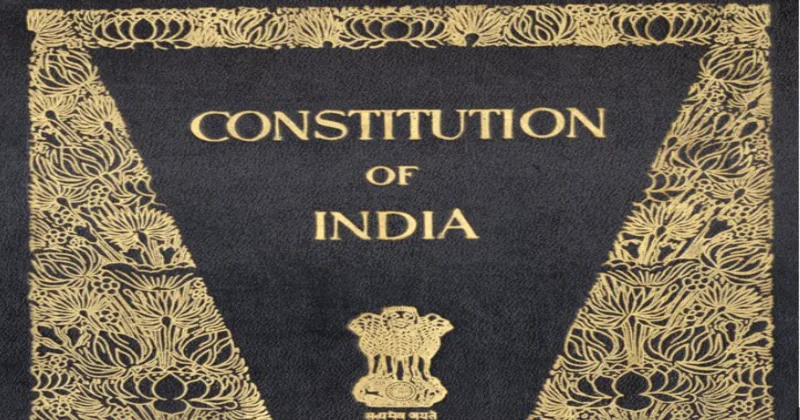
Image of the constitution of India

Image of the constitution of India

FacebookTwitterWhatsAppTelegramEmail

Even though Indians got Independence in 1947 and the constitution came into effect in 1950s, many stark realities of the atrocities, cruelty and inhumanity of the Colonials Britishers are skilfully hidden from the Indian public.  It is time to repeatedly inform the significance of the change brought over by the Constitution of Independent India.

“WE, THE PEOPLE OF INDIA, having solemnly resolved to constitute”

The above is a very powerful sentence from the Preamble of India as it conveys their power to write a new framework of governance with the new Indian constitution after Independence from British rule.

3.5 Crore Indians Died Of Starvation Due to Neglect By British Colonialists

Before India’s Independence, the situation was very worse under British rule. Since battle of Plassey in 1757, the people of India have lost the most basic rights. 3.5 crore Indians died of starvation in the British rule. Even the rule of women monarchs like Victoria was not of any use.

The women monarchs were as brutal and as remorseless as the male kings. The 1857 revolt, the destruction of Gurukul system, the apartheid against native educated, repression after 1857, destruction of native industry to favor the British industrialists all happened under Queen Victoria. Calling themselves ‘Gentlemen and Ladies’, they committed insane cruelty on Indians.

British Colonialists Treated Indian Subjects Worse Than Hitler Treated Jews

We know the atrocity of Hitler and how badly he treated the Jews in the concentration camps. However, it is worth noting the amount of food provided to such camps was reportedly twice as much as what the British rulers distributed to famine-affected people in India.  This was after lakhs were left to die and ignored initially by the British. In all this time, there was no shortage of food produced in India, just an uncaring attitude to the rights and needs of Indians in British rule. The British used to sell the foodgrains at record profits outside India to profiteer while lakhs of Indians died slowly and painfully.

British Colonialists Disrespected Indian Culture – Demonizing It As Superstition

In 1835, after the Indian Education Act, the gurukul system was destroyed by depriving it of funding and by not recognizing the graduates from gurukul education, thereby denying them jobs in 75 per cent of India, which was ruled by the British. Laws like ‘Criminal Tribes Act of 1871’ branded certain communities as criminals by birth, while the “Rowlatt Act” granted the police the power to arrest anyone without cause. These kinds of laws stand as stark testaments to the inhumanity of British colonial rule. To add insult to injury, during severe famines many colonial Britishers found fault with Indians for not killing the cows and eating them to escape death from hunger. It is a testimony to the moral and philosophical superiority of Indians that they treated the misfortune of British rule as ‘maya’ to bear with unspeakable cruelty and pursued a better life in the next birth by bearing the painful circumstances. It is said the opposite of love is not hate but to stop caring. The British rule of India is a tragic example of such an opposite and also of a demoniacal rule.

Now, let us look at the Indian constitution further and how the preamble addresses and kicks out the lousy British framework for exploitation, misrule and inhumanity. In the constitution of 1950 submitted by Ambedkar, there were only 3 words that summarized the preamble – Sovereign, Democratic and Republic. In the next section, let us see how those words are a radical improvement over the British colonial constitution.

By Choosing Sovereignty – Indians Wanted Relief From Domination Of British

By Sovereign it means, Indian public will control their destiny. Previously, the Viceroy and Executive Council of India appointed by the King or Queen of England would determine the rules. On certain topics, Indians were not allowed to debate in the legislatures and on other topics they were not allowed to vote. In addition to that unfairness, there have been multiple instances where the Viceroy vetoed even unanimously voted bills in the Central Legislature of India. British interests do not concern of Indians determined the decisions of the Viceroy of India.

The many Viceroys of India have repeatedly enacted laws rejected by elected representatives of British India, collected taxes and misused taxes for expenditures refused by the people’s representatives of India.

By Choosing Republic – Indians Rejected the Tyranny Of British Royalty

The misery of Indians under British rule happened under 8 kings and queens. Not only were the Kings and Queens of England the Monarchs and highest powers but also the Supreme governors of Church of England. Despite all the powers of the rulers – the public faced a miserable life. The power of the monarchs was not in the service of the common man of India. Making India a Republic is a rejection of the tyranny of the British Monarchs.

Not one British monarch showed any significant sympathy to the plight of the Indian public and it is no surprise that the summary rejection of monarchy and becoming a Republic which is the opposite of monarchy was a carefully made choice.

The confidence in leadership to emerge from the public might have been influenced by the experiences in India in the early 20th century with the rise of leaders like Swami Vivekananda, Lal, Bal, Pal, Bose, Ambedkar, and Sardar Patel to name a few. All of them were not sons of any royal dynasty but came from regular families and turned out to be great leaders who earned the confidence of the public.

By Choosing Democracy – Rejected The British Policy of Vetoing Public Voice

During British time there was no universal voting right. Only those owning property could vote. At one time, during British colonial rule, a mere 1 person out of 250 Indians had a right to vote. Further, as explained above the bills passed by the legislatures had no value as the Viceroy or the Governor of the British Presidencies which ruled 75 per cent of India could veto the bills and not respect the voice of the Indian public. By choosing democracy for the Indian constitution, the makers of our constitution made the majority opinion of the people of India the supreme power that rules the country.

Topics: Constitution of IndiaBritishSwami VivekanandaConstituent AssemblyRepublic DayPreambleColonial Rule
ShareTweetSendShareSend
✮ Subscribe Organiser YouTube Channel. ✮
✮ Join Organiser's WhatsApp channel for Nationalist views beyond the news. ✮
Previous News

Uphold sanctity of democracy, preserve integrity & unity of nation: RSS Sarkaryavah Dattatreya Hosabale in Manipur 

Next News

Republic Day: From ‘Lakhpati Didi Initiative’ to ‘Evolution of Banking Services’, tableaux highlight India’s progress

Related News

Representative image

No Scheduled Caste reservation for converts; Allahabad High Court orders strict action against fraudulent claims

Prime Minister Narendra Modi

PM Modi pays tribute to Dr Rajendra Prasad on his birth anniversary

Vision, foresight of Constitution framers motivates our pursuit for Viksit Bharat: PM Modi on ‘Samvidhan Diwas’

Indian social activist Ammu Swaminathan (Left) and Freedom fighter Sarojini Naidu (Right)

Constitution Day: From freedom struggle to founding document, how nationalist women built constitutional soul of Bharat

World Science Day: How Bharat Ratna Dr CV Raman illuminated the world with the ‘Raman Effect’

Sardar Vallabh Bhai Patel

India’s Destiny Reimagined: If Sardar Patel had been the first Prime Minister of Bharat

Load More

Comments

The comments posted here/below/in the given space are not on behalf of Organiser. The person posting the comment will be in sole ownership of its responsibility. According to the central government's IT rules, obscene or offensive statement made against a person, religion, community or nation is a punishable offense, and legal action would be taken against people who indulge in such activities.

Latest News

PM Modi presents Putin with Bhagavad Gita, chess set, and silver horse

Cultural ties strengthened: PM Modi presents Putin with Bhagavad Gita, chess set, and silver horse

Image for representational purpose only, Courtesy Vocal Media

Bihar to get ‘Special Economic Zones’ in Buxar and West Champaran

Thirupparankundram Karthigai Deepam utsav

Andhra Pradesh: AP Dy CM Pawan Kalyan reacts to Thirupparankundram row, flags concern over religious rights of Hindus

23rd India-Russia Annual Summit

India-Russia Summit heralds new chapter in time-tested ties: Inks MoUs in economic, defence, tourism & education

DGCA orders probe into IndiGo flight disruptions; Committee to report in 15 days

BJYM leader Shyamraj with Janaki

Kerala: Widow of BJP worker murdered in 1995 steps into electoral battle after three decades at Valancherry

Russian Sber bank has unveiled access to its retail investors to the Indian stock market by etching its mutual fund to Nifty50

Scripting economic bonhomie: Russian investors gain access to Indian stocks, Sber unveils Nifty50 pegged mutual funds

Petitioner S Vignesh Shishir speaking to the reporters about the Rahul Gandhi UK citizenship case outside the Raebareli court

Rahul Gandhi UK Citizenship Case: Congress supporters create ruckus in court; Foreign visit details shared with judge

(L) Kerala High Court (R) Bouncers in Trippoonithura temple

Kerala: HC slams CPM-controlled Kochi Devaswom Board for deploying bouncers for crowd management during festival

Fact Check: Rahul Gandhi false claim about govt blocking his meet with Russian President Putin exposed; MEA clears air

Load More
  • Privacy
  • Terms
  • Cookie Policy
  • Refund and Cancellation
  • Delivery and Shipping

© Bharat Prakashan (Delhi) Limited.
Tech-enabled by Ananthapuri Technologies

  • Home
  • Search Organiser
  • Bharat
    • Assam
    • Bihar
    • Chhattisgarh
    • Jharkhand
    • Maharashtra
    • View All States
  • World
    • Asia
    • Africa
    • North America
    • South America
    • Europe
    • Australia
  • Editorial
  • Operation Sindoor
  • Opinion
  • Analysis
  • Defence
  • Culture
  • Sports
  • Business
  • RSS @ 100
  • Entertainment
  • More ..
    • Sci & Tech
    • Vocal4Local
    • Special Report
    • Education
    • Employment
    • Books
    • Interviews
    • Travel
    • Health
    • Politics
    • Law
    • Economy
    • Obituary
  • Subscribe Magazine
  • Read Ecopy
  • Advertise
  • Circulation
  • Careers
  • About Us
  • Contact Us
  • Policies & Terms
    • Privacy Policy
    • Cookie Policy
    • Refund and Cancellation
    • Terms of Use

© Bharat Prakashan (Delhi) Limited.
Tech-enabled by Ananthapuri Technologies