AI-driven technique analyses heart cells' inner electrical signals from outside: Study
December 5, 2025
  • Read Ecopy
  • Circulation
  • Advertise
  • Careers
  • About Us
  • Contact Us
Android AppiPhone AppArattai
Organiser
  • ‌
  • Bharat
    • Assam
    • Bihar
    • Chhattisgarh
    • Jharkhand
    • Maharashtra
    • View All States
  • World
    • Asia
    • Europe
    • North America
    • South America
    • Africa
    • Australia
  • Editorial
  • International
  • Opinion
  • RSS @ 100
  • More
    • Op Sindoor
    • Analysis
    • Sports
    • Defence
    • Politics
    • Business
    • Economy
    • Culture
    • Special Report
    • Sci & Tech
    • Entertainment
    • G20
    • Azadi Ka Amrit Mahotsav
    • Vocal4Local
    • Web Stories
    • Education
    • Employment
    • Books
    • Interviews
    • Travel
    • Law
    • Health
    • Obituary
  • Subscribe
    • Subscribe Print Edition
    • Subscribe Ecopy
    • Read Ecopy
  • ‌
  • Bharat
    • Assam
    • Bihar
    • Chhattisgarh
    • Jharkhand
    • Maharashtra
    • View All States
  • World
    • Asia
    • Europe
    • North America
    • South America
    • Africa
    • Australia
  • Editorial
  • International
  • Opinion
  • RSS @ 100
  • More
    • Op Sindoor
    • Analysis
    • Sports
    • Defence
    • Politics
    • Business
    • Economy
    • Culture
    • Special Report
    • Sci & Tech
    • Entertainment
    • G20
    • Azadi Ka Amrit Mahotsav
    • Vocal4Local
    • Web Stories
    • Education
    • Employment
    • Books
    • Interviews
    • Travel
    • Law
    • Health
    • Obituary
  • Subscribe
    • Subscribe Print Edition
    • Subscribe Ecopy
    • Read Ecopy
Organiser
  • Home
  • Bharat
  • World
  • Operation Sindoor
  • Editorial
  • Analysis
  • Opinion
  • Culture
  • Defence
  • International Edition
  • RSS @ 100
  • Magazine
  • Read Ecopy
Home International Edition America USA

AI-driven technique analyses heart cells’ inner electrical signals from outside: Study

In a groundbreaking development, researchers have unveiled an innovative AI-driven technique that can analyse the intricate inner electrical signals of heart cells without invasive procedures

WEBDESKWEBDESK
Jan 18, 2025, 11:00 pm IST
in USA, Health
Follow on Google News
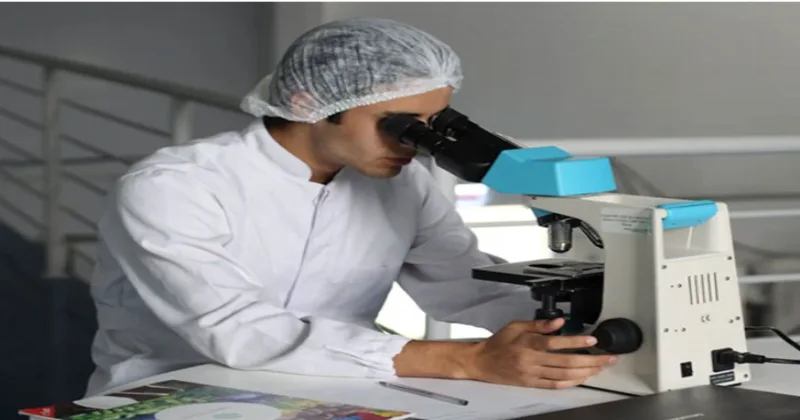
Representative Image

Representative Image

FacebookTwitterWhatsAppTelegramEmail

California: A team of researchers led by the University of California, San Diego, and Stanford University has discovered a noninvasive approach for monitoring electrical activity inside cardiac muscle cells from the outside, without physically penetrating the cells.

The method is based on capturing electrical signals from outside the cells and using AI to reconstruct the signals within the cells with high precision.The electrical signals inside heart muscle cells provide insights into how the heart functions, how its cells communicate and how they respond to drugs. However capturing these signals typically involves puncturing the cells with tiny electrodes, which can damage them and make large-scale testing complicated.

Now, researchers have found a way to peer inside the cells without actually going in. The key lies in extracting the relationship between the signals inside the cells (intracellular signals) and those recorded on their surface (extracellular signals). “We discovered that extracellular signals hold the information we need to unlock the intracellular features that we’re interested in,” said Zeinab Jahed, a professor in the Aiiso Yufeng Li Family Department of Chemical and NanoEngineering at UC San Diego, who is one of the study’s senior authors. Keivan Rahmani, a nanoengineering Ph.D. student in Jahed’s lab, is the first author of the study.

While extracellular signals can be captured with less invasive methods, they do not provide much detail about the cell’s electrical activity. “It is like listening to a conversation through a wall-you can detect that communication is happening, but you miss the specific details,” explained Jahed. “In contrast, intracellular signals offer the details, making you feel like you are sitting inside the room hearing every word clearly, but they can only be captured by invasive and more technically challenging methods.” Using AI, Jahed, Rahmani and colleagues developed a method to correlate extracellular signals with specific intracellular signals.

To develop the new method, the team first engineered an array of nanoscale, needle-shaped electrodes. These electrodes, each up to 200 times smaller than a single heart muscle cell, are made of silica-coated with platinum. Heart muscle cells, derived from stem cells, were grown and then placed on the electrode array.

The researchers collected a massive dataset–thousands of pairs of electrical signals–each pair linking an extracellular recording with its corresponding intracellular signal. The data included how the cells responded when exposed to various drugs. This offered a rich library of data on how heart muscle cells behave under different conditions.

When analyzing these pairs, researchers identified patterns between the extracellular and intracellular signals. They then trained a deep learning model to predict what the intracellular signals looked like based solely on the extracellular recordings. In tests, their model created accurate and complete reconstructions of the intracellular signals.

This work has important applications in drug screening, said Jahed. Every new pharmaceutical must undergo rigorous testing to ensure it does not adversely affect the heart–a process known as cardiotoxicity testing. Part of this process involves collecting detailed intracellular data from heart cells. Subtle changes in these electrical signals can provide clues about a drug’s effects on the heart, which can help drug developers assess the safety of new medications. “Currently, this is a lengthy and costly process. It typically starts with tests on animal models, which don’t always predict human outcomes,” said Jahed.

By using the new AI-driven approach in this study, researchers can screen drugs directly on human heart cells. This can offer a more accurate picture of how a drug will behave in the human body and potentially bypass the need for early-stage animal testing.

“This could dramatically reduce the time and cost of drug development,” said Jahed. “And because the cells used in these tests are derived from human stem cells, it also opens the door to personalized medicine. Drugs could be screened on patient-specific cells to predict how an individual might respond to these treatments.”
While the current study focused on heart muscle cells, the researchers are already working to expand their method to other types of cells, including neurons. Their goal is to apply this technology to better understand a wide array of cellular activities in different tissues. (With inputs from ANI)


 

Topics: University of CaliforniaaiArtificial Intelliegnce
ShareTweetSendShareSend
✮ Subscribe Organiser YouTube Channel. ✮
✮ Join Organiser's WhatsApp channel for Nationalist views beyond the news. ✮
Previous News

Jaishankar on India-China ties: ‘Working to disentangle relations from Post-2020 border complications’

Next News

36th Holocaust Day: Kashmiri Pandits – A saga of broken promises

Related News

RSS Sarsanghchalak Dr Mohan Bhagwat

Fraternity is Bharat’s civilisational strength; dispute is not in our nature: RSS Sarsanghchalak Dr Mohan Bhagwat

Representative Image

AI to Enter School Classrooms: Government to introduce artificial intelligence curriculum from Class 3 onwards

School children working on the laptop

From chalkboards to chipsets, SOAR is transforming skilling landscape of Bharat through tech-powered future

Artificial Intelligence(AI) is a source of both aspirations and anxieties

Uncertainties of Artificial Intelligence

The role of Artificial Intelligence in law: A Dharmic and Mimamsa-based perspective on justice

Namo Drone Didi making shashakt naari

AI and Aatmanirbhar Bharat initiatives driving Indian agriculture

Load More

Comments

The comments posted here/below/in the given space are not on behalf of Organiser. The person posting the comment will be in sole ownership of its responsibility. According to the central government's IT rules, obscene or offensive statement made against a person, religion, community or nation is a punishable offense, and legal action would be taken against people who indulge in such activities.

Latest News

Union Minister for Road Transport and Highways Nitin Gadkari (Right)

India set for highway overhaul as Union Minister Nitin Gadkari unveils nationwide shift to MLFF electronic tolling

RSS Akhil Bharatiya Prachar Pramukh Shri Sunil Ambekar

When Narrative Wars result in bloodshed, countering them becomes imperative: Sunil Ambekar

Ministry of Civil Aviation mandates emergency action: IndiGo ordered to stabilise flight operations by midnight

Chhattisgarh CM Vishnu Deo Sai at Panchjanya Conclave, Nava Raipur, Image Courtesy - Chhattisgarh govt

Panchjanya Conclave: Chhattisgarh CM Sai shares views on development projects in Maoist hotbed, women empowerment

Union Finance Minister Nirmala Sitharaman

‘TMC is holding Bengal back’: Sitharaman slams Mamata govt over industrial & healthcare setbacks

Karnataka: Muslim youth Mohammed Usman accused of sexual assault, blackmail & forced conversion in Bengaluru

Social Justice Is a cover; Anti-Sanatana dharma is the DMK’s real face at Thirupparankundram

Karnataka: Hindus demand reclaiming of Anjaneya Mandir at the site of Jamia Masjid; Setting wrongs of Tipu Sultan right

Assam govt proscribes all forms of Jihadi literatures in state; Islamic terror groups trying to recruit Muslim youth

Retired Subedar held for leaking Army details to Pak handlers posing as Indians

Gujarat ATS dismantles spy network involving Ex-Army personnel and woman for sharing information with Pakistan

Load More
  • Privacy
  • Terms
  • Cookie Policy
  • Refund and Cancellation
  • Delivery and Shipping

© Bharat Prakashan (Delhi) Limited.
Tech-enabled by Ananthapuri Technologies

  • Home
  • Search Organiser
  • Bharat
    • Assam
    • Bihar
    • Chhattisgarh
    • Jharkhand
    • Maharashtra
    • View All States
  • World
    • Asia
    • Africa
    • North America
    • South America
    • Europe
    • Australia
  • Editorial
  • Operation Sindoor
  • Opinion
  • Analysis
  • Defence
  • Culture
  • Sports
  • Business
  • RSS @ 100
  • Entertainment
  • More ..
    • Sci & Tech
    • Vocal4Local
    • Special Report
    • Education
    • Employment
    • Books
    • Interviews
    • Travel
    • Health
    • Politics
    • Law
    • Economy
    • Obituary
  • Subscribe Magazine
  • Read Ecopy
  • Advertise
  • Circulation
  • Careers
  • About Us
  • Contact Us
  • Policies & Terms
    • Privacy Policy
    • Cookie Policy
    • Refund and Cancellation
    • Terms of Use

© Bharat Prakashan (Delhi) Limited.
Tech-enabled by Ananthapuri Technologies