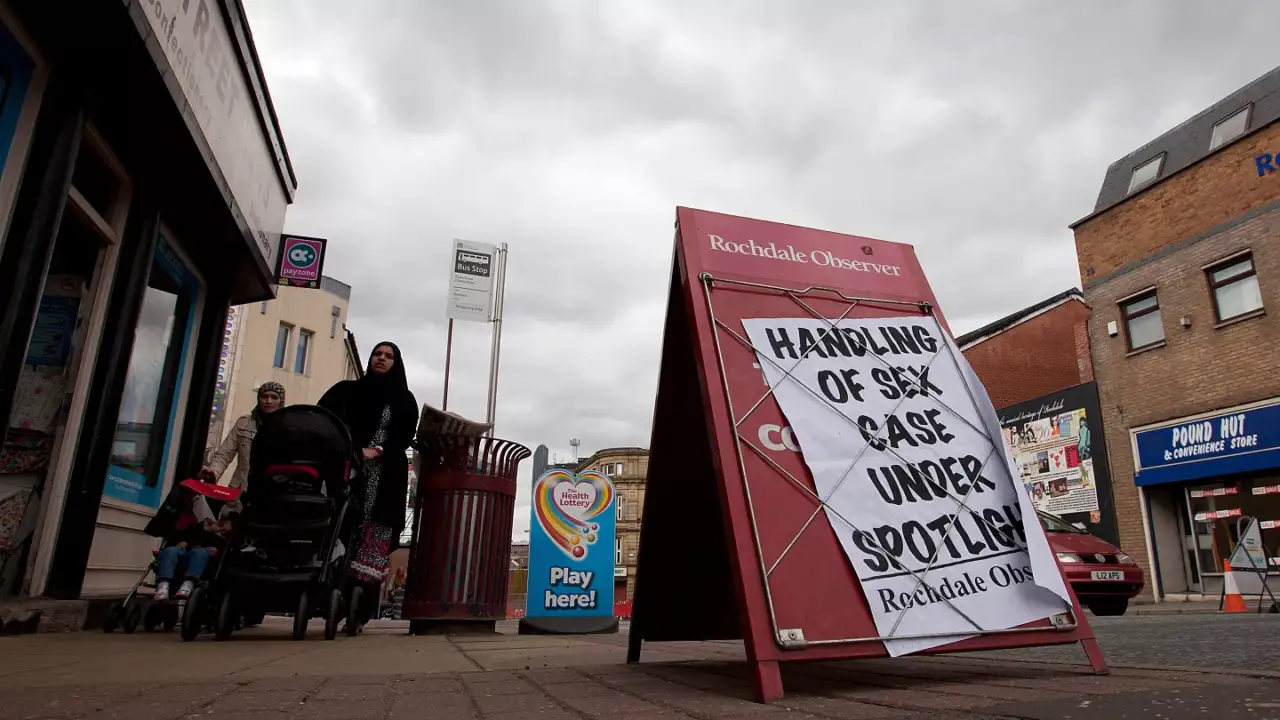
Grooming gangs, operating worldwide, represent a horrifying intersection of criminal exploitation and societal apathy. In the UK, this issue has taken a particularly sinister form, with grooming gangs systematically targeting vulnerable young individuals. These crimes are not only shocking in their magnitude but also in the reluctance of authorities and society to fully confront their roots, including the Islamic radical influences that may underpin them.
This article discusses the operations of grooming gangs, why they are shielded from scrutiny regarding their country of origin (Pakistan), cultural or religious affiliations, and how radical interpretations of beliefs may contribute to this crisis.
How Grooming Gangs Operate Globally and in the UK
The member of Grooming gangs which are mostly Pakistani Muslims typically follow a calculated, manipulative process to entrap and exploit their victims:
1. Targeting Vulnerable Victims
Gangs identify individuals—often minors—who are emotionally, socially, or economically vulnerable. These could include children in care, runaways, or those from unstable family environments.
2. Building Trust and Dependency
Perpetrators initially establish a seemingly caring relationship, using gifts, affection, or emotional attention to build trust. Victims often see the abuser as a “savior,” which increases their dependency.
3. Isolation and Control
Over time, victims are isolated from friends and family. Threats, blackmail, and coercion become tools for exerting control, ensuring compliance and silence.
4. Exploitation
Once trust and control are established, victims are subjected to systematic sexual exploitation, often trafficked within networks of abusers.
Case Studies from the UK
The UK has witnessed numerous cases of grooming gangs operating with impunity. Some of the most notorious include:
• Rotherham (1997-2013): An estimated 1,400 children were sexually exploited over 16 years. Perpetrators, largely of Pakistani Muslim descent, targeted vulnerable white girls. Authorities were accused of ignoring reports due to fears of being labeled racist or Islamophobic. Victims were threatened, beaten, and raped, with police and social workers failing to act despite repeated warnings.
• Telford (1980s-2010s): Over 1,000 girls were abused in what some have called Britain’s “worst grooming scandal.” Abusers lured girls as young as 11 into their network, exploiting them with threats and violence. Investigations revealed a systemic failure to protect victims due to fears of exacerbating racial tensions.
• Rochdale (2008-2012): This scandal involved a gang of predominantly Pakistani men grooming and sexually exploiting underage girls. Many of the victims reported feeling abandoned by authorities who dismissed their complaints as unreliable.
• Incidence Rates: In 2023, police in England and Wales recorded 717 reports of group-based child sexual abuse, averaging nearly two offences per day.
Challenges in Data Collection
It’s important to note that ethnicity information was available for only 34% of suspects in 2023 and 39% in the first nine months of 2024, indicating significant gaps in data collection.
Geographical Distribution
Contrary to some perceptions, grooming gang activities are not confined to specific regions but are reported across various towns and cities. For instance, experts have warned about the presence of such gangs throughout Scotland, indicating a widespread issue.
The Radical Influences on Grooming Gangs
One of the most controversial aspects of this issue is the role of radical religious or cultural ideologies in shaping the behaviour of certain grooming gangs. While it is essential to avoid stigmatising entire communities, it is equally important to examine the underlying factors contributing to these crimes. Radical interpretations of religious beliefs have been used to justify or excuse criminal behaviour in grooming gang cases. Radical ideologies that promote a sense of cultural or religious superiority have been cited as a factor in the targeting of non-Muslim girls.
Radicalisation and Ideology
In some cases, perpetrators displayed attitudes rooted in patriarchal and misogynistic interpretations of their cultural or religious beliefs. Victims, often from different ethnic or religious backgrounds, were dehumanised and treated as commodities.
• In the Rotherham case, one of the gang members openly referred to the victims as “white trash” who were “easy to exploit.”
• Many survivors openly reported being told by their abusers that they were fulfilling a religious duty by punishing “immoral” non-Muslim girls.
• Many perpetrators claimed their actions were sanctioned by their faith, misusing religious doctrines to rationalise their crimes.
• Victims in the Rochdale case reported being told they were “dirty infidels” who deserved punishment for not adhering to Islamic standards.
Group Dynamics and Loyalty
Grooming gangs often operate within close-knit communities, where loyalty and silence are enforced. Radical influences can exacerbate this dynamic, creating a sense of impunity among perpetrators who believe their actions serve a higher cause or are protected by their community.
Why the Ecosystem is Apologetic
Despite overwhelming evidence, and a growing anger in the general public, there has been a noticeable reluctance to confront the religious or cultural aspects of grooming gangs in UK. Authorities and media often avoid linking grooming gangs to specific ethnic or religious groups to prevent accusations of racism or Islamophobia. While this approach is intended to protect minority communities from stereotyping, it has inadvertently silenced honest discussions about the issue.
Political correctness in UK has prioritised sensitivity over justice. In cases like Rotherham, whistleblowers reported being silenced or ignored due to concerns about “damaging community relations.”
Media Narratives
Some media outlets avoid identifying perpetrators by ethnicity or religion, focusing instead on generic terms like “Asian grooming gangs.” This broad label unfairly implicates non-involved communities while failing to address the specific cultural or ideological influences at play. The recent statistics challenge this narrative, showing that the majority of offenders are white and Pakistani Muslims. This discrepancy highlights the complexities in addressing and understanding the true nature of these crimes.
The term “Asian” encompasses a vast and diverse group of people, including individuals from Indian, Bangladeshi, Chinese, Japanese, and other backgrounds. By using this term, media unfairly implicates communities that have no connection to these crimes. For example, British Sikh and Hindu communities have repeatedly voiced their frustration at being wrongfully associated with grooming gangs due to the blanket use of the term “Asian.”
Recommendations for Addressing the Crisis
1. Honest Conversations
The society in the UK must come out if their patriarchal mindset and acknowledge that exposing the cultural or religious dynamics of grooming gangs does not mean stigmatising entire communities. Open, honest discussions are essential for developing effective solutions. There seems to be a urgent need of engagement with community leaders and organisations to address harmful ideologies and promote positive cultural values.
2. Cultural Sensitivity Training for Authorities
Equip police, social workers, and educators with the tools to identify and address grooming without fear of accusations.
3. Victim-Centric Approaches
Prioritise the voices and needs of survivors, ensuring they receive justice and support.
4. Stronger Legislation and Accountability
Implement harsher penalties for grooming and hold authorities accountable for failures to protect victims.
Grooming gangs represent a devastating betrayal of society’s most vulnerable individuals. While it is critical to avoid inflaming racial or religious tensions, turning a blind eye to the cultural and ideological influences driving these crimes only perpetuates the problem. By addressing these issues with honesty, sensitivity, and determination, we can protect future generations from similar exploitation.
(Author is Senior Research Fellow, SPMRF, New Delhi)