





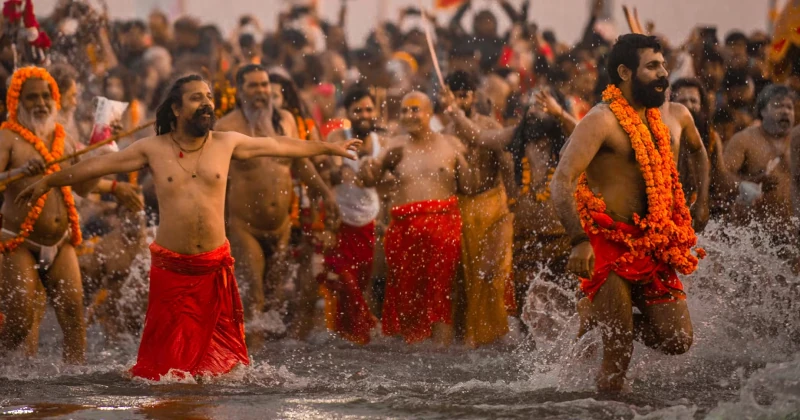
The Mahakumbh 2025 witnessed its inaugural ‘Amrit Snan’ on January 14, coinciding with the auspicious occasion of Makar Sankranti. This sacred event saw the participation of sadhus from the Mahanirvani Panchavati Akhara, who performed a ceremonial dip at the Triveni Sangam – the confluence of the Ganga, Yamuna, and the mystical Saraswati rivers.
The ‘Amrit Snan’ marks a pivotal moment in the Kumbh Mela as it symbolises spiritual renewal and divine blessings. Over the centuries, this event has evolved into a grand spiritual congregation where rituals are steeped in tradition, discipline, and historical significance.
This article delves into the importance of Akharas, their historical and spiritual significance, and their leading role in the Amrit Snan, which is a highlight of the Kumbh Mela.
Akharas are religious organisations that house ascetics and monks belonging to different sects of Hinduism.
These monastic orders are integral to the spiritual fabric of Hindu society, acting as custodians of ancient traditions, philosophy, and rituals. Their history dates back to the 8th century, with their formation attributed to Adi Shankaracharya, who established the Dashanami Sampradaya to unite Hindu ascetics under a structured system.
Types of Akharas
The 13 Akharas participating in the Kumbh Mela are categorised into three main groups based on their religious focus:
Shaivite Akharas: Dedicated to Lord Shiva. These include Mahanirvani, Atal, Niranjani, Anand, Bhairav, Awahan, and Agni Akharas.
Vaishnavite Akharas: Focused on Lord Vishnu and his avatars. These include Nirmohi, Digambar Ani, and Nirvani Ani Akharas.
Udaseen Akharas: These emphasise renunciation and spiritual practice, including Naya Udaseen and Bada Udaseen Akharas.
Each Akhara follows its unique spiritual practices, with a hierarchical structure led by a Mahant or Acharya overseeing spiritual and administrative matters.
Significance of Akharas in Kumbh Mela
The role of Akharas in the Kumbh Mela has evolved over centuries. Initially established to protect and preserve Hindu dharma, Akharas became vital to the organisation and sanctity of the Kumbh festivities.
Origins of Rituals
The roots of the Akharas’ involvement in the Kumbh Mela trace back to the 8th century, a period marked by the confluence of spiritual practices and religious gatherings. Ascetics would convene at Prayagraj, drawn by the celestial alignment that sanctifies the waters of the Ganga, Yamuna, and Saraswati rivers. It was during this time that the tradition of the Amrit Snan, the ritual bath believed to cleanse sins and grant liberation, was established.
By the 9th century, Akharas began to play an official role in organising these sacred gatherings, ensuring that rituals were conducted with discipline and devotion.
Maintaining Order Amidst Spiritual Fervor
Between the 9th and 18th centuries, the Akharas were instrumental in maintaining order at the Kumbh Mela. With millions of devotees and ascetics participating in the event, disputes often arose over the sequence of the Amrit Snan, as each group sought precedence in performing this holy act.
To address these challenges, the Akharas collectively devised a structured sequence for the ritual bathing.
However, disputes persisted until the establishment of the Akhil Bharatiya Akhara Parishad (ABAP), a governing body for Akharas. The ABAP standardised the rituals and resolved conflicts, ensuring the smooth conduct of the festival. This institutional framework continues to uphold harmony among the Akharas, highlighting their commitment to unity in diversity.
Defenders of Faith and Tradition
Beyond their spiritual responsibilities, the Akharas historically served as defenders of Hindu dharma. During periods of invasions and religious upheaval, they functioned as training grounds for warrior-ascetics. The Naga Sadhus, in particular, exemplified this dual role of spiritual pursuit and physical defense. Known for their renunciation and fierce warrior-like persona, these ascetics protected temples, holy sites, and the integrity of Hindu practices.
Their presence at the Kumbh Mela symbolises resilience and the intertwining of spiritual devotion with the defense of cultural heritage. Even today, the Naga Sadhus captivate the public’s imagination with their disciplined austerity and participation in the Amrit Snan.
The Akharas lead the Amrit Snan in a predetermined sequence, ensuring harmony and continuity of traditions. Each Akhara is allotted a specific time slot, and the procession to the bathing ghats is a grand spectacle. The Akhil Bharatiya Akhara Parishad oversees the sequence to avoid disputes and ensure smooth proceedings.
Role of Akharas in Leading the Amrit Snan
The Akharas hold a position of reverence during the Amrit Snan. Their participation symbolises the continuity of ancient traditions and the collective spiritual commitment of Hindu society.
Procession to the Ghats: The Akharas lead a grand procession to the bathing ghats, accompanied by chants, musical instruments, and vibrant displays of religious fervor.
Acharya Mahamandaleshwar: The head of each Akhara leads the procession, riding in a chariot.
Other Monks: Following the Acharya are senior monks like Mahamandaleshwar, Mahant, and Naga Sadhus.
Ritual Bathing: Once at the ghats, the Akharas perform the ritual dip in a synchronised manner, adhering to the sanctity of the occasion. Their bathing marks the official beginning of the Amrit Snan for the general public.
Spiritual Significance:
For the sadhus and devotees alike, the Amrit Snan is a moment of spiritual awakening. It reflects the Akharas’ role as intermediaries between the divine and humanity.
Key Akharas in Mahakumbh 2025
Juna Akhara:
- The largest Akhara, adhering to Shaivism.
- Known for its austerity, with Acharya Mahamandaleshwar Swami Avdheshanand as its head.
- Includes the Kinnar Akhara, which represents the transgender community.
Niranjani Akhara:
- Second-largest, founded in 904 AD.
- Its sadhus worship Kartikeya and are known for their scholarly pursuits.
Mahanirvani Akhara:
- Reveres Sage Kapilmuni and sacred symbols of protection and enlightenment.
- Headed by Acharya Mahamandaleshwar Swami Vishokananda.
Kinnar Akhara:
- Provides a spiritual platform for the transgender community.
- Participates in the Kumbh procession, showcasing inclusivity in Hinduism.
Revival of the ‘Amrit Snan’ Tradition
In recent years, the term ‘Shahi Snan’, used to describe the sacred bath, was replaced by ‘Amrit Snan’ to revive its ancient sanctity.
The change, initiated by Uttar Pradesh Chief Minister Yogi Adityanath, aligns with the effort to honor Hindu traditions and Sanskrit nomenclature.
According to historical accounts, the term ‘Shahi Snan’ was introduced during the Peshwa era in 1801 to resolve disputes between Akharas over precedence in bathing.
Five Key Amrit Snan Dates in 2025
- January 14: Makar Sankranti
- January 29: Mauni Amavasya
- February 3: Basant Panchami
- February 12: Maghi Purnima
- February 26: Maha Shivratri
Each date carries specific astrological and spiritual significance, drawing millions to the ghats to partake in the holy dip.
The Mahakumbh Mela 2025 is a testament to the enduring cultural and spiritual legacy of India. The Akharas, with their deep-rooted traditions and disciplined way of life, are the torchbearers of this legacy. Their leadership during the Amrit Snan underscores their role as spiritual custodians, guiding millions on their path to enlightenment.
Through their participation, the Akharas not only preserve ancient traditions but also demonstrate the inclusive and diverse nature of Hinduism, making the Kumbh Mela a celebration of faith, unity, and spiritual awakening.
















Comments