






Is there an inverse relationship between Congress and Dr Bhimrao Ramji Ambedkar (1891-1956)? Why the steep decline of the former in Bharat’s political space is coterminous with the steady rise of the latter as an icon of change, rationality and social justice in the country’s narrative. Who hated Dr BR Ambedkar, and why? Who was responsible for keeping him down and for forcing the tallest Indian social reformer of the 20th century to the margins of Indian political life, in the last few years preceding his demise in 1956?
A host of such questions have become relevant in the wake of the current political slugfest which recently resulted in a physical clash between the ruling NDA and the Congress within the precincts of Parliament. While allegations and counter-allegations are being exchanged, two MPs— Mukesh Rajput and Pratap Sarangi of the Bharatiya Janata Party (BJP) had to be hospitalised and are recovering from the injuries they had sustained in the violence that broke out in the Parliament complex on Dec 19, 2024.
Unmasking the Face
A detailed investigation will unmask the faces of those responsible for this unsavoury episode. Meanwhile, Congress scion Rahul Gandhi has been named as an accused in a complaint with the police. The sordid incident surely underlines the sharp decline of the party in India’s public discourse.
Notwithstanding its leader Rahul’s grandstanding, Congress continues to be in the political dog house, shunned by its allies. Desperate for votes, the party has since abandoned the development plank and is brazenly resorting to identity politics – forcing Indians into caste silos.
Ideological Confusion
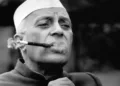
While trying to claim Dr Ambedkar’s legacy, the party is caught in a whirlpool of ideological confusion. Pt Nehru’s disdain for Dr Ambedkar is well known. He, as PM, had no compunction in awarding himself a Bharat Ratna in 1955. However, Dr Ambedkar had to wait for another 35 years to get this recognition!

The National Front Government (supported by BJP and Left) led by VP Singh, a Congress rebel, undid this historical injustice in 1990. It posthumously bestowed Bharat Ratna on Dr Ambedkar, installed his portrait in the Central Hall of Parliament and promulgated the SC/ST (Prevention of Atrocities) Act.
Pt Nehru painted Dr Ambedkar as a villain, did everything to destroy his exalted status in Indian public life. It’s really the height of hypocrisy and opportunism on part of the present Congress leadership to use Dr Ambedkar’s name to shore up its sagging political fortunes.
Popularising Dr Ambedkar
Since the Hindutva strand of Bharatiya politics and Dr Ambedkar share a lot of ideological space, the BJP-led NDA Government has taken a number of initiatives to undo the injustice to Dr Ambedkar’s memory. The Modi Government is focusing on the development of Panch Teerth (five places of pilgrimage) related to his life— including his birthplace in Mhow in Madhya Pradesh, the house in London where he lived, a Babasaheb Ambedkar International Memorial that has come up, and the development of the Chaitya Bhoomi in Mumbai.
Congress cannot own both— Nehru and Dr Ambedkar at the same time. Maybe the party believes that public memory is short. How long can the Congress pull through this charade? Time alone has the answer
A 430-foot statue of Dr Ambedkar is coming up in Mumbai, which would be visible from 25-30 km away too. Bungalow number 26, Alipur Road, where Dr Ambedkar spent his last days, is being transformed into an iconic memorial. Why Congress couldn’t do all that the BJP is doing to perpetuate Dr Amebedkar’s memory? Because it abhorred him and his message of social equality and harmony.
Unsavoury Relationship with Ambedkar
The relationship between Congress and Dr Ambedkar can clearly be divided into two distinct phases. One – when Gandhiji was alive, and the other – after his unfortunate assassination on January 30, 1948. After the death of indomitable Sardar Patel (December 15, 1950), the control of the vast Congress juggernaut passed on to Pandit Nehru.
Once ensconced in the powerful office of Prime Minister, Nehru’s authoritarian streak was in the open. He politically liquidated all those (within or without Congress) who disagreed with him on ideological grounds or because of his personal pique against them. Nehru (like the rest of his dynasty) suffered from a sense of entitlement.
In Nehru’s hegemonic scheme of things, there was no place for experience, merit, wisdom, and intellectual capabilities of those who didn’t kowtow his line or refused to be his yes men. Gandhiji, however, had an inclusive outlook, and persuaded Nehru to include three non-Congress leaders in his Cabinet— Dr Ambedkar, (leading to his appointment as Chairman of the Drafting Committee of the Indian Constitution), Dr Syama Prasad Mookerjee and Sardar Baldev Singh.
Subsequently, Dr Mukherjee died in a Kashmir jail as a Nehru and Sheikh Abdullah’s prisoner, under mysterious circumstances. Dr Ambedkar too couldn’t escape Nehru’s vendetta. He was elbowed out of power structure of India, after he ‘lost’ the Parliament poll which was surely rigged, under Nehru’s watch.
Victim of Nehru’s Vendetta
In 1952, Dr Ambedkar, after quitting Nehru’s cabinet, contested from North Mumbai. Congress fielded Narayan Kajrolkar, a milk seller, as its candidate against him. To humiliate Babasaheb, Communist Party, led by Shripad Amrit Dange, labelled him a “traitor”. Dr Ambedkar lost the election by approximately 14,000 votes while a staggering 78,000 were declared invalid. There is little doubt that the poll was rigged.
Nehru gloated over Dr Ambedkar’s defeat. On January 16, 1952, he wrote to his close friend, Lady Edwina Mountbatten, “In Bombay city and to a larger extent in Bombay province our success has been far greater than expected. Ambedkar has been dropped out.”
Earlier, in a letter to Rajkumari Amrit Kaur (January 26, 1946), Nehru had given vent to his animosity towards Ambedkar in these words, “… My whole stress was on the fact that Ambedkar had allied himself with the British Government and against the Congress and we could not deal with him.”
Now look at the irony, the same Congress and Nehru’s great-grandson are fighting to claim a piece of Dr Ambedkar’s legacy for survival on the Indian political landscape.
Ambedkar’s take on Nehru
The distrust between Nehru and Dr Ambedkar was mutual. Ambedkar too was peeved by Nehru’s obsession with Muslims, at the cost of other weaker sections. On October 10, 1951, after his resignation, Dr Ambedkar said, “. The Prime Minister’s whole time and attention is devoted to the protection of the Muslims…. what I want to know is, are the Muslims the only people who need protection? Are the Scheduled Castes, the Scheduled Tribes and the Indian Christians not in need of protection?”
Can Rahul’s Congress appropriate Dr Ambedkar’s political legacy? Given Nehru’s loathsome attitude, amounting to hate towards Dr Ambedkar, and latter’s distrust of the former, it’s a near impossible feat. Congress cannot own both— Nehru and Dr Ambedkar at the same time. Maybe the party believes that public memory is short. How long can the Congress pull through this charade? Time alone has the answer.
In 1939, Ambedkar was invited formally to an RSS training camp in Pune, where he had a meeting with its forunder Dr KB Hedgewar.He was happy to note that there wasn’t any discrimination on the basis of caste in the camp
Notwithstanding their differences, which sometimes turned acerbic, Gandhiji and Dr Ambedkar were indeed fellow travellers, since their respective agendas overlapped to an extent. Gandhiji’s prime goal was to free India from the British yoke and simultaneously work for the social-economic-cultural emancipation of the teeming millions. Harijans (children of God)— as he called those who had suffered the brunt of regressive social practices such as untouchability in a caste-ridden Hindu social structure – were his special area of concern.
For Dr. Ambedkar, born Dalit, and had endured the pain and humiliation of being one, fighting the menace of untouchability and working to improve the lot of his own people was of utmost importance. The two leaders had the same goal, but their methods differed. The differences between the two stalwarts were accentuated when the British brought about the divisive Communal Award, which proposed separate electorates for Dalits. Dr Ambedkar supported the proposal, believing that it would allow Dalits to advance their interests.
In 1933, Mahatma Gandhi asked Dr Ambedkar to write a message for his magazine Harijan. Ambedkar wrote a blunt critique on caste, which was published in the February 11 issue. He said, “The outcaste is a byproduct of the caste system. There will be outcastes as long as there are castes. Nothing can emancipate the outcaste except the destruction of the caste system. Nothing can help to save Hindus and ensure their survival in the coming struggle except the purging of the Hindu faith of this odious and vicious dogma.”
What “coming struggle”, Dr Ambedkar was hinting at? The context obviously was increasing Hindu-Muslim tension at that time (1930 onwards) which eventually led to the bloody creation of an Islamic state – Pakistan – that has no place for Hindus, Buddhists and Sikhs. Dr Ambedkar had the political acumen to foresee the waiting disaster, looming large on the country’s horizon – something sadly most of his contemporaries, including Nehru badly lacked.
Ambedkar & Hindutva are Natural Allies
Dr Ambedkar and the Hindutva movement are natural allies. Babasaheb was one of the first to use the word “Hindutva”. Way back in 1916, Dr Ambedkar presented a paper at an anthropology seminar of Columbia University, in which he said, “it is the unity of culture that is the basis of homogeneity. Taking this for granted, I venture to say that there is no country that can rival the Indian Peninsula with respect to the unity of its culture. It has not only a geographic unity, but it has over and above all a deeper and a much more fundamental unity— the indubitable cultural unity that covers the land from end to end.”
In a statement issued in 1927 on the issue of temple entry, Ambedkar said, “The most important point we want to emphasise is not the satisfaction you get from the worship of the image of God…Hindutva belongs as much to the untouchable Hindus as to the touchable Hindus. To the growth and glory of this Hindutva contributions have been made by Untouchables like Valmiki, the seer of Vyadhageeta, Chokhamela and Rohidas as much as by Brahmins like Vashishta, Kshatriyas like Krishna, Vaishyas like Harsha and Shudras like Tukaram. The heroes like Sidnak Mahar who fought for the protection of the Hindus were innumerable. The temple built in the name of Hindutva, the growth and prosperity of which was achieved gradually with the sacrifice of touchable and untouchable Hindus, must be open to all the Hindus irrespective of caste.” (Bahiskrit Bharat, 27 November 1927; quoted in Dhananjay Keer, Dr Ambedkar: Life and Mission, 1954)
Dr Ambedkar & RSS
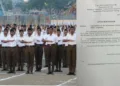
Dr Ambedkar was also in touch with Rashtriya Swayamsevak Sangh (RSS). According to RSS archives, in 1939, Ambedkar was invited formally to an RSS training camp in Pune, where he had a meeting with its forunder Dr KB Hedgewar. Dr Ambedkar was happy to note that there wasn’t any discrimination on the basis of caste in the camp which had 500 participants. In 1949, MS Golwalkar (Guruji), the second RSS Chief, met him in Delhi to express his gratitude for the help he offered in lifting the ban, imposed by the then Congress government following Gandhiji’s assassination.
A young RSS Pracharak, Dattopant Thengadi (who was later to shape into a leading intellectual) worked as Dr Ambedkar’s polling agent in 1954 by-elections and recorded his conversations and experiences in his book Dr Ambedkar aur Samajik Kranti ki Yatra.
On the issue of conversions from Hinduism to other faiths, Dr Ambedkar and Hindutva leaders were on the same page. Sharing his concerns on the issue, he said, “What the consequences of conversion will be to the country as a whole is well worth bearing in mind. Conversion to Islam or Christianity will denationalise the Depressed Classes. If they go over to Islam the number of Muslims would be doubled; and the danger of Muslim domination also becomes real. If they go over to Christianity, the numerical strength of the Christians becomes five to six crores.” (The Times of India, July 24, 1936)
Grammar of Anarchy
Like Hindutva icons, Dr Ambedkar too viewed Communism and its methods as a threat to democracy and pluralism. Speaking in the Constituent Assembly on November 25, 1949, he said, “We must hold fast to constitutional methods of achieving our social and economic objectives… When there was no way left for constitutional methods for achieving economic and social objectives, there was some justification for unconstitutional methods for achieving economic and social objectives. But where constitutional methods are open there can be no justification for these unconstitutional methods. These methods are nothing but the Grammar of Anarchy and the sooner they are abandoned the better for us.”
In his seminal work, Buddha or Karl Marx, Dr Ambedkar says, “The Communists say that there are the only two means of establishing communism. The first is violence. Nothing short of it will suffice to break up the existing system. The other is dictatorship of the proletariat. Nothing short of it will suffice to continue the new system,”
Dr Ambedkar on Islam
No doubt Ambedkar was unhappy with Hinduism. Like many others, he found the scourge of untouchability disgusting. But he didn’t find any substance in Abrahamic faiths either. Fifty-three days prior to his demise,on October 14, 1956, Dr Ambedkar and his followers converted to Buddhism. It was a well-considered decision. He wanted his people to move out of Hindu religion, but not its culture. The new faith had to be rooted in the pluralistic and catholic ethos of the country. He knew the Abrahamic religions were steeped in monotheistic mores and believed in homogenous social systems.
Among the three Abrahamic faiths, he loathed Islam the most. Maybe his personal experiences with Islam shaped him into a bitter critic of the faith.
In 1934, Dr. Ambedkar along with his co-workers while visiting Buddha Caves of Ajanta also wanted to see Daulatabad Fort in Sambhajinagar. In the book Waiting for Visa he wrote, “The month was Ramjan, the month of fast for the Mohammedans. Just outside the gate of the fort, there is a small tank of water full to the brim. There is a wide stone pavement. Our faces, bodies, and clothes were full of dust gathered in the course of our journey, and we all wished to have a wash….
“In the meantime, an old Mohammedan with a white flowing beard was coming from behind shouting, “The Dheds (meaning untouchables) have polluted the tank!” Soon all the young and old Mohammedans who were near about joined him and all started abusing us…. Ambedkar reflected “A person who is an untouchable to a Hindu is also an untouchable to a Mohammedan.”
In another seminal work, Pakistan or The Partition of India. Dr Ambedkar has given his understanding of Islam and Pakistan. He says, “Hinduism is said to divide people and in contrast, Islam is said to bind people together. This is only a half-truth. For Islam divides as inexorably as it binds. Islam is a close corporation and the distinction that it makes between Muslims and non-Muslims is a very real, very positive and very alienating distinction. The brotherhood of Islam is not the universal brotherhood of man. It is a brotherhood of Muslims for Muslims only. There is a fraternity, but its benefit is confined to those within that corporation. For those who are outside the corporation, there is nothing but contempt and enmity, …Islam can never allow a true Muslim to adopt India as his motherland and regard a Hindu as his kith and kin.”
Dealing with the issue of Muslim loyalty to his country vis-a-vis his loyalty to Islam, Dr Ambedkar wrote, “Among the tenets, one that calls for notice is the tenet of Islam which says that in a country which is not under Muslim rule, wherever there is a conflict between Muslim law and the law of the land, the former must prevail over the latter, and a Muslim will be justified in obeying the Muslim law and defying the law of the land…The only allegiance a Musalman, whether civilian or soldier, whether living under a Muslim or under a non-Muslim administration, is commanded by the Koran to acknowledge is his allegiance to God, to His Prophet and to those in authority from among the Musalmans…”
Dr Ambedkar analysed the Islamic tenets to understand how the Muslims are supposed to behave when they are in minority or majority in a country, as per their belief system. He said, “According to Muslim Canon Law, the world is divided into two camps, Dar-ul-lslam (abode of Islam), and Dar-ul-Harb (abode of war). A country is Dar-ul-Islam when it is ruled by Muslims. A country is Dar-ul-Harb when Muslims only reside in it but are not rulers of it. That being the Canon Law of the Muslims, India cannot be the common motherland of the Hindus and the Musalmans. It can be the land of the Musalmans—but it cannot be the land of the ‘Hindus and the Musalmans living as equals.’ Further, it can be the land of the Musalmans only when it is governed by the Muslims. The moment the land becomes subject to the authority of a non-Muslim power, it ceases to be the land of the Muslims. Instead of being Dar-ul-lslam, it becomes Dar-ul-Harb,” he said.
Dealing with the issue of how would Muslims react to a Hindu majority government at the centre, Dr Ambedkar said, “To the Muslims, a Hindu is a Kaffir. A Kaffir is not worthy of respect. He is low-born and without status. That is why a country that is ruled by a Kaffir is Dar-ul-Harb to a Musalman. Given this, no further evidence seems to be necessary to prove that the Muslims will not obey a Hindu government. The basic feelings of deference and sympathy, which predispose persons to obey the authority of government, do not simply exist. But if a proof is wanted, there is no dearth of it. It is so abundant that the problem is what to tender and what to omit…In the midst of the Khilafat agitation, when the Hindus were doing so much to help the Musalmans, the Muslims did not forget that as compared with them the Hindus were a low and an inferior race,” He had said.
Savarkar & Ambedkar On Same Page
In his classic work Annihilation of Caste (1944), Dr Ambedkar shares his vision of a strong Hinduism – strong India. To him division of Hindus in various castes is the biggest obstacle in achieving his dream and turning it into a reality. He says, “So long as caste remains, there will be no Sangathan, and so long as there is no Sangathan, the Hindu will remain weak and meek…Indifferentism is the worst kind of disease that can infect a people. Why is the Hindu so indifferent? In my opinion, this indifferentism is the result of the caste system which has made Sangathan and co-operation even for a good cause impossible.”
In an Essays on the Abolition of Caste, 1930, Veer Savarkar, echoes the same sentiment. He says “To regard our millions of co-religionists as ‘untouchables’ and worse than animals is an insult not only to humanity but also to the sanctity of our soul. It is my firm conviction that this is why untouchability should be principally eradicated. Untouchability should go also because its eradication is in the interests of our Hindu society. But even if the Hindu society were to partially benefit from that custom, I would have opposed it with equal vehemence. When I refuse to touch someone because he was born in a particular community but play with cats and dogs, I am committing a most heinous crime against humanity. Untouchability should be eradicated not only because it is incumbent on us but because it is impossible to justify this inhuman custom when we consider any aspect of Dharma. Hence, this custom should be eradicated as a command of Dharma. From the point of view of justice, Dharma and humanism, fighting untouchability is a duty and we Hindus should completely eradicate it. In the present circumstances, how we will benefit by fighting it is a secondary consideration. This question of benefit is an aapaddharma (duty to be done in certain exceptional circumstances) and eradication of untouchability is the foremost and absolute Dharma.
Ambedkar on Foreign Policy
Speaking at a gathering of students of Lucknow University on November 8, 1951, Dr Ambedkar said, “The government’s foreign policy failed to make India stronger. Why should not India get a permanent seat in the UN Security Council? Why has the prime minister not tried for it? India must choose between parliamentary democracy and the Communist way of dictatorship and come to a final conclusion”. On Tibet and China, he differed from Nehru, “If Mao had any faith in the Panchsheel, he certainly would treat the Buddhist in his own country in a very different way. There is no room for Panchsheel in politics”.
Dalits have been discriminated against for long in India, and the injustice continues till today, though a lot less brutal than in the past. Thanks to reforms (including provisions of reservations) initiated at the instance of enlightened sections of Hindu society, the social and economic conditions of Dalits have improved in the post-Independence years. The gap between Dalits and the rest, however, is still wide. On the positive side there is none in the country who defends untouchability at an intellectual level, or at a political plane and opposes affirmative steps to help Dalits catch up with the rest of the society.
Dr Ambedkar, the Hindutva icons and organisations have a lot in common. Like BJP (earlier Bhartiya Jan Sangh), Dr Ambedkar too disapproved of Nehru’s pro-China policy and his dithering on the Tibet issue. Both are committed to the eradication of untouchability and emancipation of the Dalits. Both reject radical Islam, and are suspicious of Communists’ commitment to democracy and the very idea of India.
Congress has the unfortunate history of collaborating with both – the Left and Muslim League – the political face of the Jihadi mindset. No wonder, it despised Dr Ambedkar and tried hard to obliterate his memory. In fact, Dr Ambedkar’s opinions on several subjects – Pakistan, Islam and the status of tribals are more RSS than RSS. All these factors create an ideological affinity between Dr. Ambedkar and the votaries of Hindutva
Nehru tried to stymie Dr Ambedkar. Congress worked ceaselessly to eradicate his memory from the public mind by ignoring him. Today, 68 years after his death, like a colossal Dr Ambedkar dominates the proceedings of Indian Parliament. Even those who ridiculed Dr Ambedkar, called him a “traitor” and defeated him through a rigged Lok Sabba poll, are today forced to swear by him and his message.













Comments