How Pakistan’s deep state wants to change the narrative for itself by sanctioning terror attacks in Jammu & Kashmir
December 5, 2025
  • Read Ecopy
  • Circulation
  • Advertise
  • Careers
  • About Us
  • Contact Us
Android AppiPhone AppArattai
Organiser
  • ‌
  • Bharat
    • Assam
    • Bihar
    • Chhattisgarh
    • Jharkhand
    • Maharashtra
    • View All States
  • World
    • Asia
    • Europe
    • North America
    • South America
    • Africa
    • Australia
  • Editorial
  • International
  • Opinion
  • RSS @ 100
  • More
    • Op Sindoor
    • Analysis
    • Sports
    • Defence
    • Politics
    • Business
    • Economy
    • Culture
    • Special Report
    • Sci & Tech
    • Entertainment
    • G20
    • Azadi Ka Amrit Mahotsav
    • Vocal4Local
    • Web Stories
    • Education
    • Employment
    • Books
    • Interviews
    • Travel
    • Law
    • Health
    • Obituary
  • Subscribe
    • Subscribe Print Edition
    • Subscribe Ecopy
    • Read Ecopy
  • ‌
  • Bharat
    • Assam
    • Bihar
    • Chhattisgarh
    • Jharkhand
    • Maharashtra
    • View All States
  • World
    • Asia
    • Europe
    • North America
    • South America
    • Africa
    • Australia
  • Editorial
  • International
  • Opinion
  • RSS @ 100
  • More
    • Op Sindoor
    • Analysis
    • Sports
    • Defence
    • Politics
    • Business
    • Economy
    • Culture
    • Special Report
    • Sci & Tech
    • Entertainment
    • G20
    • Azadi Ka Amrit Mahotsav
    • Vocal4Local
    • Web Stories
    • Education
    • Employment
    • Books
    • Interviews
    • Travel
    • Law
    • Health
    • Obituary
  • Subscribe
    • Subscribe Print Edition
    • Subscribe Ecopy
    • Read Ecopy
Organiser
  • Home
  • Bharat
  • World
  • Operation Sindoor
  • Editorial
  • Analysis
  • Opinion
  • Culture
  • Defence
  • International Edition
  • RSS @ 100
  • Magazine
  • Read Ecopy
Home Bharat

How Pakistan’s deep state wants to change the narrative for itself by sanctioning terror attacks in Jammu & Kashmir

Any attempt to normalise ties between India and Pakistan is always blocked by the latter’s deep state. This explains the rise in the number of terror attacks in Jammu & Kashmir over the last couple of weeks. There are a host of reasons why the dee-state of Pakistan stands in the way of peace being restored in J&K

Vicky NanjappaVicky Nanjappa
Nov 12, 2024, 11:00 am IST
in Bharat, Jammu and Kashmir
Follow on Google News
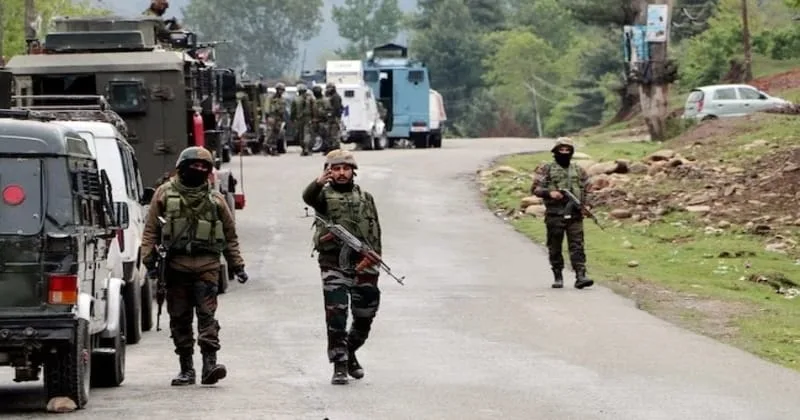
Representative image

Representative image

FacebookTwitterWhatsAppTelegramEmail

There has been an increase in the number of terror-related incidents in Jammu and Kashmir since the elections were held. The elections were held for the first time following the abrogation of Article 370 and J&K being declared a Union Territory.

The question that arises is why the attacks suddenly shot up. The answer to this could lie in the fact that the deep state in Pakistan is in overdrive mode to ensure that there shall be no normalcy in J&K.

Recently, at a press conference, Pakistan’s Finance Minister Muhammad Aurangzeb spoke about the normalisation of relations with India. He said that not trading with your neighbours, particularly India, does not make any sense. The remarks were made at a press conference in Washington. He however was quick to clarify that political and geo-political issues were beyond his purview. He said that any movement towards normalisation with India would require the involvement of the members of the deep-state.

Following the visit by External Affairs Minister Dr S Jaishankar to Islamabad to attend the Shanghai Cooperation Organisation conclave, there were reports in the Pakistan media signalling that there would be normalisation in ties. Further, it was speculated that this visit would also pave the way for Pakistan’s membership in the BRICS, a decision that has been on hold since August 2023.

However, exactly the opposite happened, and the number of terror strikes only increased in J&K, thus signalling that there is a deep state in Pakistan which does not wish for any normalisation in ties. Nearly 10 persons, including Army officials, have been killed by Pakistan-based terrorists. Some of the most audacious attacks took place when terrorists struck a two-truck Army convoy in Gulmarg, which resulted in the death of Army Army porters and two soldiers. Further, seven persons were killed by terrorists in Ganderbal at a construction site.

It was clear that the terrorists involved in these attacks had trained in Pakistan and had entered India from the launch pads that had been set up in Pakistan-occupied Kashmir.

Typical of the deep state

These attacks came at a time when there were signals that there would be a thaw in the tensions between the two countries. This is, however, not the first time that Pakistan has upped the ante in J&K. There have been many instances in the past as well. It took place when Atal Bihari Vajpayee was the Prime Minister. One may recall that Prime Minister Narendra Modi made a surprise visit to Pakistan a few years back after taking over the top post for the first time in 2014. The visit was aimed at strengthening ties, but Pakistan responded almost immediately by carrying out an attack in Pathankot.

This is typical of the Pakistan deep-state, which has always controlled the relations between India and Pakistan. However, this deep state does not act on its own. There are several global non-Pakistani groups as well that fund such campaigns against India. The role of the Soros group, which has actively funded anti-India activities, can also not be ruled out. The idea is to ensure as many cross-border incursions into India and then strike.

This helps the deep-state control the narrative and ensure that such acts clearly align with their strategic objectives. Another way of looking at the involvement of the deep state is by examining how attacks in J&K are carried out to draw global attention. Pakistan has been begging the world to intervene in the Kashmir dispute as it sees it as an unresolved issue. However, India has maintained Kashmir belongs to India and will always remain India’s internal matter.

The proxies at war

Pakistan has for long followed a strategy of deniability. Every act of terror it carries out in India has been denied by Islamabad. Take, for instance, the Mumbai 26/11 attack. The ten terrorists had sported saffron bands so that it could have passed off as an attack carried out by the Hindus. Helping the cause of the Pakistan deep-state are some within India.

In the aftermath of the Mumbai 26/11 attacks, there were books describing it as a Hindu conspiracy. Further, there were some who insisted that Hemant Karkare, the head of the Maharashtra ATS, was killed by a Hindu and not the Pakistani terrorists. Karkare is the same officer who filed one false case after another to frame Hindus and coin the term Hindu terror. However, Ajmal Kasab’s confession buried all those theories after he narrated how he was trained and launched from Pakistan.

Using proxies such as the Lashkar-e-Tayiba or Jaish-e-Mohammad has been a strategy of the deep state for a long. Even during the Kargil war, Pakistan did initially try to pass it off as a war being fought not by its soldiers, but by terror groups. All these attempts are made to divert the attention and also have a deniability factor so that Pakistan could cry foul with the international community.

While many within Pakistan want to move on and have normal ties with India, the deep state will hear nothing of that. It has created monsters such as Hafiz Saeed and Masood Azhar. They need to be kept happy, and for that, they see a free hand to go about striking in India. The deep state does not object to it and allows them to carry as it fears that subduing these terror groups would mean that they could turn against the establishment sometime. A classic example of this is the Tehreek-e-Taliban, a breakaway faction of the Afghanistan Taliban. This group has turned against the establishment and focuses all its resources on striking Pakistan. It is not just in J&K; the deep state has interests in Bangladesh as well. It has several proxies working there, such as the Jamaat-e-Islami, which have directed their attacks on Hindus. Further, Pakistan has sponsored a mass infiltration drive into the Indian side with the intention of disrupting communal harmony and changing demographics.

Also Read: Odisha : Security forces unearth Maoist arms dump in Malkangiri’s Swabhiman area, recover large quantity of explosives

Pressure building up

It is a known fact that Pakistan is in the doldrums thanks to its economic crisis. There is growing pressure from the people of Pakistan for the leadership to act. They would prefer an economic solution to their problems rather than have the funds spent on funding proxies against India. There is a lot of pressure on the Pakistani Army, ISI and its chief, General Asim Munir. The pressure on the deep state is being exerted by the people, political class and others. To bounce off this pressure from themselves, the deep state has approved a series of attacks in Jammu and Kashmir. This, according to them, would change the narrative in India. They feel that India has achieved nothing post the abrogation of Article 370, and the decision to do so has only resulted in more violence in the Union Territory. This is the narrative that they want to set in Pakistan so that the real questions are diverted elsewhere.
 

Topics: india pakistan relationsterrorism in kashmirPakistan deep stateJammu & Kashmir violencePakistan India tensionsPakistan terror attackscross border terrorism
Share9TweetSendShareSend
✮ Subscribe Organiser YouTube Channel. ✮
✮ Join Organiser's WhatsApp channel for Nationalist views beyond the news. ✮
Previous News

Odisha : Security forces unearth Maoist arms dump in Malkangiri’s Swabhiman area, recover large quantity of explosives

Next News

Canada: Brampton Temple cancels event amid high threat from Khalistanis, Hindus express anguish

Related News

Pakistan's Chief of Army Staff Asim Munir, Aleema Khan and ex-Pak PM Imran Khan

Aleema Khan, sister of Imran Khan, accuses Asim Munir of Islamist hardline driving Pakistan toward conflict with India

Representative Image

Dealing best with the internal enemy in Bharat

India’s Permanent Representative to the UN, Ambassador Parvathaneni Harish

Delhi Blast: India urges UN Security Council to crack down on illicit arms trafficking after explosion near Red Fort

Lt Governor Manoj Sinha pays tribute to bravehearts in Kokernag operation

J&K: LG Manoj Sinha pays tributes to martyred soldiers, emphasises terrorism has been kept at bay

Pakistan Prime Minister Shahbaz Sharif

Pakistan PM Sharif claims Trump ended India-Pakistan clash, turns UN stage into comedy of military boasts and praise

Lashkar-e-Taiba co-founder Hafiz Saeed, Pakistan Army chief Asim Munir and Jaish-e-Mohammed chief Masood Azhar

Pakistan-backed Jaish-e-Mohammed rebrands as Al-Murabitun to dodge sanctions, seek funds and fuel cross-border terror

Load More

Comments

The comments posted here/below/in the given space are not on behalf of Organiser. The person posting the comment will be in sole ownership of its responsibility. According to the central government's IT rules, obscene or offensive statement made against a person, religion, community or nation is a punishable offense, and legal action would be taken against people who indulge in such activities.

Latest News

Petitioner S Vignesh Shishir speaking to the reporters about the Rahul Gandhi UK citizenship case outside the Raebareli court

Rahul Gandhi UK Citizenship Case: Congress supporters create ruckus in court; Foreign visit details shared with judge

(L) Kerala High Court (R) Bouncers in Trippoonithura temple

Kerala: HC slams CPM-controlled Kochi Devaswom Board for deploying bouncers for crowd management during festival

Fact Check: Rahul Gandhi false claim about govt blocking his meet with Russian President Putin exposed; MEA clears air

Union Minister for Road Transport and Highways Nitin Gadkari (Right)

India set for highway overhaul as Union Minister Nitin Gadkari unveils nationwide shift to MLFF electronic tolling

RSS Akhil Bharatiya Prachar Pramukh Shri Sunil Ambekar

When Narrative Wars result in bloodshed, countering them becomes imperative: Sunil Ambekar

Ministry of Civil Aviation mandates emergency action: IndiGo ordered to stabilise flight operations by midnight

Chhattisgarh CM Vishnu Deo Sai at Panchjanya Conclave, Nava Raipur, Image Courtesy - Chhattisgarh govt

Panchjanya Conclave: Chhattisgarh CM Sai shares views on development projects in Maoist hotbed, women empowerment

Union Finance Minister Nirmala Sitharaman

‘TMC is holding Bengal back’: Sitharaman slams Mamata govt over industrial & healthcare setbacks

Karnataka: Muslim youth Mohammed Usman accused of sexual assault, blackmail & forced conversion in Bengaluru

Social Justice Is a cover; Anti-Sanatana dharma is the DMK’s real face at Thirupparankundram

Load More
  • Privacy
  • Terms
  • Cookie Policy
  • Refund and Cancellation
  • Delivery and Shipping

© Bharat Prakashan (Delhi) Limited.
Tech-enabled by Ananthapuri Technologies

  • Home
  • Search Organiser
  • Bharat
    • Assam
    • Bihar
    • Chhattisgarh
    • Jharkhand
    • Maharashtra
    • View All States
  • World
    • Asia
    • Africa
    • North America
    • South America
    • Europe
    • Australia
  • Editorial
  • Operation Sindoor
  • Opinion
  • Analysis
  • Defence
  • Culture
  • Sports
  • Business
  • RSS @ 100
  • Entertainment
  • More ..
    • Sci & Tech
    • Vocal4Local
    • Special Report
    • Education
    • Employment
    • Books
    • Interviews
    • Travel
    • Health
    • Politics
    • Law
    • Economy
    • Obituary
  • Subscribe Magazine
  • Read Ecopy
  • Advertise
  • Circulation
  • Careers
  • About Us
  • Contact Us
  • Policies & Terms
    • Privacy Policy
    • Cookie Policy
    • Refund and Cancellation
    • Terms of Use

© Bharat Prakashan (Delhi) Limited.
Tech-enabled by Ananthapuri Technologies