The arrest of a 25-year-old woman in Chennai for her alleged role in drug smuggling has once again put the spotlight on the state of Tamil Nadu, which has been seeing one drug bust after another.
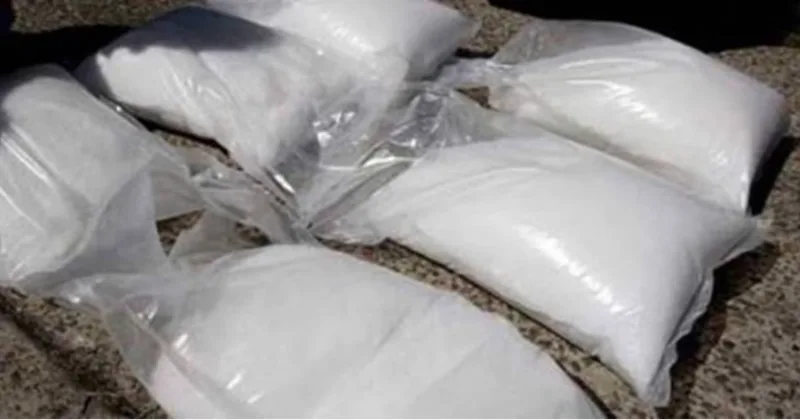
Following the arrest of G Fathima, who was the kingpin of the racket, the police seized cannabis and methamphetamine from her and her gang.
Tamil Nadu Governor, RN Ravi had once pointed out that there are international cartels that are working in the state. He was citing an investigation by the National Investigation (NIA) while he made the statement.
Tamil Nadu has had a long history with drug smuggling and it had almost been institutionalised thanks to the patronage that a lot of politicians gave to these drug cartels.
The origins
More than half a century back, the Kodikarrai fishing port in Tamil Nadu was identified by smugglers as the perfect landing spot. Smugglers from Sri Lanka would bring in opium and in return would take back beedis from India.
This route became more popular with the smugglers and gradually they moved from opium to cannabis to cocaine. The consignments became larger and with this the drug cartels started to make booming business. From the port the drugs would be picked up by the local drug lords and the same would be supplied extensively in Tamil Nadu. Over a period of time, they expanded their network to the remaining southern states.
Modus operandi
The Indian agencies learnt that the vessels that come in from Sri Lanka through Tamil Nadu illegally. It is in these vessels that the drugs are transported into Tamil Nadu. The drugs are then transported through ferry services.
During the investigations, it was learnt that a major chunk of these operations were taking place near Nagapatanam at the end to the Salt Pan area of the Kodikarrai fishing port.
Once the consignment reaches its destination in Tamil Nadu, it is distributed across networks and then supplied locally and also in the other states.
What started off as a trade off between the Sri Lankan and Indian smugglers of opium and beedis had evolved into a major racket involving cocaine and other drugs.
However the headache for the Central agencies grew when some Chinese elements tapped this network and began using the same route to smuggle arms and ammunition. It was at this time around 2011 that the numbers of Chinese settlers began to grow in the Southern states. At first many thought they were Tibetans, but the real picture began to emerge after a couple of busts in which it was found that the Chinese were using this route to smuggle both drugs and arms.
The entry of the Pakistanis
For several decades, the Pakistanis have been using a common route to smuggle drugs to the rest of the world. They procure it from Afghanistan and then get into it Pakistan. From here, the drugs would make its way into the international markets through India.
Their usual routes would be through the coasts of Gujarat and Maharashtra or through Jammu and Kashmir. However for the past decade, they have been finding it extremely hard to penetrate the drugs through this route, owing to heightened security. A couple of attempts to smuggle large contrabands of drugs through this route have failed as the agencies have got the better of them.
This led to a change in plan. With the LTTE no longer operating the ISI set up cells of the Lashkar-e-Tayiba in Sri Lanka. At first it was thought that these cells would recruit and train Muslim youth in Sri Lanka and then send them to carry out strikes in South India. While this was one part of the plan, the real agenda was to set up a major drug cartel in South India.
What made it easier for the ISI was that they were able to tap this market with ease as most of the drug cartels were controlled by a major political party in Sri Lanka.
The agents of the ISI would smuggle drugs directly into Sri Lanka from Pakistan and then supply it to the rest of the world directly from there. The drug route into India was the same that the Chinese had used and the old time smugglers from Sri Lanka were using.
It is this extensive network that has ended up making Tamil Nadu a major hub for drug smuggling. It has in fact gone on to become one of the drug capitals of the country.
Why is it hard to monitor
An official with the Narcotics Control Bureau (NCB) tells Organiser that there are too many players in this racket. It took a very long time before actual coordination took place between the Central and state agencies, the official explains.
It would not be wrong to say that there was no political pressure on the agencies not to act against such cartels. In March this year, Tamil film producer and former DMK functionary was arrested after it was learnt that he was the mastermind in the 2,000 crore international drug racket. The NCB had learnt that he was the kingpin of the India-Australia-New Zealand drug trafficking network.
The NCB official explains that even monitoring the cartels is hard at times. The Tamil Nadu coastline which is used to bring in these drugs is 1,076 kilometres long. Moreover there are 59 fishing villages, which act as a perfect cover for these smugglers. In addition to this there are 7 lakh fishermen who live in these villages. Some of them have been found to be providing both cover and logistic support to these cartels. The officer also adds that there has to be constant monitoring here and also support from the locals and the local establishment, failing which it would go on to become South India’s biggest security nightmare.
TN a major transit point
Tamil Nadu over the years has gone on to become one of the most important transit points for drug smugglers. The International drug syndicates are trafficking a banned substance called methamphetamine or its precursor pseudoephedrine. This drug is in high demand in Sri Lanka, Malaysia and Australia.
Data collected by the NCB’s Chennai zone suggests that the seizures of methamphetamine bound for Sri Lanka shot up from 12 kilograms to 66 kgs in 2022. In 202, it was 83 kg. In 2024 alone the NCB has seized 57 kg of methamphetamine so far. In these cases it was found that the substance was soured from Myanmar.
Methamphetamine has a huge demand thus making it a favourite among today’s cartels. This substance costs anything between Rs 50,000 ti Rs 1,00,000 per kilogram in Manipur and around Rs 7 lakh a kg in Chennai. By the time it reaches Sri Lanka, Australia or New Zealand, the valuation of methamphetamine goes up in the range of Rs 5 crore to Rs 10 crore per kilogram.
This drug that is sourced from Myanmar is smuggled first into Manipur. It is then sent to Tamil Nadu through human carriers. Investigations have found that the substance is directly sent from Manipur to Rameswaram, Thoothukudi or Nagapattinam through bus, train or car in concealed compartments. From here it makes its way into Sri Lanka and from there to other foreign nations.
From Tamil Nadu to undertake the job, the cartels have hired a large number of Sri Lankan Tamils who are living in TN cities and the refugee camps.