





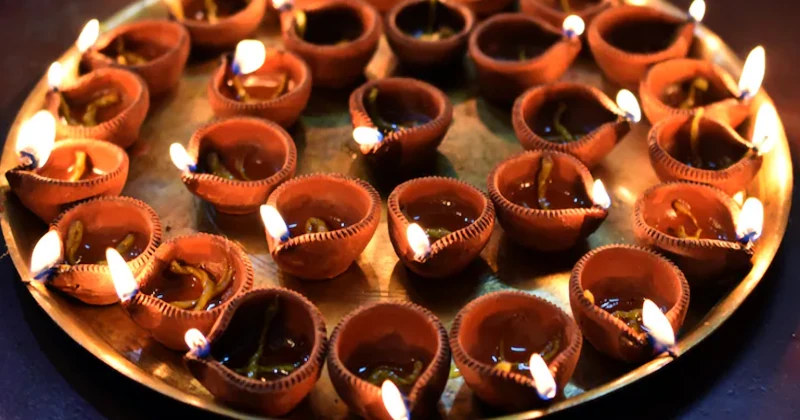
Choti Deepawali, also known as Naraka Chaturdashi, is being celebrated on October 30, 2024. It holds a special place in the hearts of Indian households, marking the second day of the grand five-day Deepawali festival. Celebrated a day before the main Deepawali (Badi Deepawali), Choti Deepawali signifies the triumph of good over evil, as it celebrate Bhagwan Krishna’s victory over the demon Narakasura. This day carries immense cultural importance, deeply embedded in the traditions and values of Indian society, reflecting unity, spirituality, and the essence of Indian heritage.
The story of Choti Deepawali revolves around the defeat of the demon Narakasura by Bhagwan Krishna, who freed thousands of women from the demon’s captivity. This victory is seen as the triumph of good over evil, and on this day, people celebrate by lighting diyas to symbolize the removal of darkness and ignorance. In many parts of India, particularly in Maharashtra, the day begins with a symbolic abhyanjana snan (ritual bath), which is considered to rid the body of impurities and ward off evil. This bath is often taken before sunrise, with traditional oils and scrubs made from herbs.
On Choti Deepawali, homes across India are illuminated with diyas (oil lamps), symbolising the light of knowledge, hope, and righteousness. Cleaning and decorating homes with rangoli is a common tradition that shows inviting Goddess Lakshmi (the goddess of wealth) into one’s home. Many households in India also light earthen lamps made by local artisans, which ultimately contributes to Vocal for Local and promotes eco-friendly Deepawali celebrations.
In various regions, Choti Deepawali is marked by ritualistic baths with fragrant oils or ubtan, believed to cleanse negative energies and rejuvenate the body and soul. After the bath, people don new clothes and offer prayers to Lord Yama, the god of death, seeking protection from untimely demise. It is believed that following these rituals ensures longevity and prosperity for the entire family. Southern states like Tamil Nadu, Andhra Pradesh, and Karnataka observe Naraka Chaturdashi by performing early morning pujas dedicated to Lord Krishna, and some parts of Karnataka also burn effigies of Narakasura to symbolize his defeat.
In Bengal, Choti Deepawali coincides with Kali Puja, where households worship the fierce form of Durga Ma, seeking her blessings for protection from evil forces. The entire household is decorated with diyas and lights, and special sweets like rasgulla and sandesh are prepared for the festive occasion.
Choti Deepawali is also a day of family bonding and community togetherness. Neighbours exchange sweets, homemade delicacies, and gifts as a gesture of love and goodwill. Indian households are known for their sense of community, and this day strengthens these social ties. Traditional sweets like kaju katli, laddu, and gulab jamun, along with regional delicacies, are shared among loved ones, fostering a spirit of unity and harmony.
The exchange of gifts during Choti Deepawali reflects a deep-rooted cultural tradition of expressing gratitude and spreading joy. In recent years, the focus on gifting Made in India products, ranging from handicrafts to locally manufactured goods, has gained significance, aligning with the ongoing efforts to boycott foreign products and support Indian craftsmanship.
In line with modern trends, many Indian households are now emphasising eco-friendly and pollution-free Deepawali celebrations. The Modi government’s initiatives for green Deepawali resonate with the essence of Swachh Bharat (Clean India) and sustainability. On Choti Deepawali, families are encouraged to avoid harmful firecrackers and instead celebrate with traditional lamps and eco-friendly decorations, reinforcing the importance of protecting the environment while staying true to the cultural heritage of the festival.
Choti Deepawali carries profound spiritual importance, as it is regarded as a day to purify the mind and soul, clearing away negativity in preparation for the grand celebration of Badi Deepawali. In Indian culture, festivals focus not only on external festivities but also on inner cleansing.
As we move into the era of sustainability and conscious living, Choti Deepawali continues to serve as a reminder of the timeless wisdom that Indian traditions hold. From ancient rituals to modern eco-conscious celebrations, Choti Deepawali 2024 reflects the evolving yet enduring cultural legacy of India, shining a light on the beauty of both tradition and progress.















Comments