





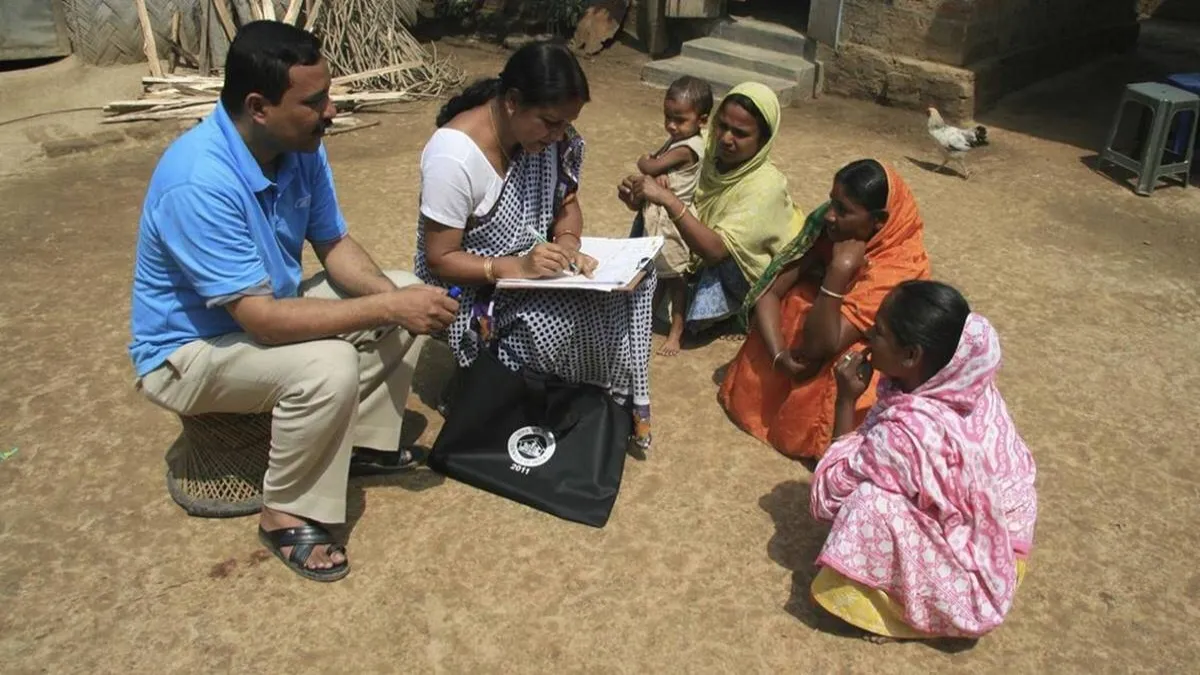
After a four-year delay due to the COVID-19 pandemic, India’s next national census is now scheduled to commence in 2025, as revealed by government sources on Monday, October 29. Originally slated for 2021, the decennial survey, critical for policy planning and constituency demarcation, will now span into 2026 before the government proceeds with the long-awaited delimitation exercise to redraw parliamentary and assembly boundaries.
This delayed census has significant implications. According to officials, once the survey is completed, the groundwork will be laid for implementing the Women’s Reservation Bill, a landmark legislation ensuring reserved seats for women in legislative bodies. The completion of the census, therefore, serves as a prerequisite for this historic political change.
A key aspect under discussion is the potential inclusion of a caste enumeration, a topic that has gained momentum in recent months. Support for a caste-based census has come from varied quarters, including opposition parties like the Congress, and even within the NDA coalition itself, where allies like Janata Dal (United), Lok Janshakti Party, and Apna Dal have shown a growing inclination toward such a measure. Additionally, the Rashtriya Swayamsevak Sangh (RSS), the BJP’s ideological partner, recently endorsed the idea, describing a comprehensive caste count as vital for accurate policy planning.
Despite this momentum, sources indicate there is yet to be a consensus on how caste data would be integrated into the census. Among the proposals under review are the inclusion of an “Other Backward Classes” (OBC) category alongside existing counts for Scheduled Castes (SC), Scheduled Tribes (ST), and religious groups. There is also consideration of counting various sub-sects within these broad categories. Speaking to The Indian Express, a government official explained, “There are suggestions to expand the census framework to include OBCs and finer details about SC and ST sub-groups, which could offer a more granular view of India’s social fabric.”
Furthermore, government insiders emphasised that any move that might “disadvantage” states in the south—many of which have shown remarkable progress in population control and social development—would be handled with caution.
To ensure continuity throughout this pivotal census operation, the government has extended the term of Mrityunjay Kumar Narayan, the Registrar General and Census Commissioner of India, until August 2026.
The 2025 census will also impact the delimitation process, which has been on hold since the 84th Constitutional Amendment in 2002. At the time, the NDA government, led by then-Prime Minister Atal Bihari Vajpayee, opted to postpone delimitation until after the next census results post-2026.
According to recent reports, however, the government is now poised to initiate the delimitation process in 2027, with an expected completion by 2028. This timeline could enable redrawn constituencies to take effect in time for the 2029 Lok Sabha elections, aligning with the roll-out of women’s reservations.
The upcoming census has also intensified calls for an all-party discussion on caste enumeration and delimitation. Senior Congress leader Jairam Ramesh recently urged the government to convene such a meeting to clarify its stance on these issues and address the complexities involved in implementing both a caste census and constituency redrawing.
Union Home Minister Amit Shah has previously indicated that the next census will be conducted digitally, employing a mobile application. While discussing the upcoming census in August, Shah stated, “It will be carried out at an appropriate time. Once decided, I will announce how it will be done.”















Comments