





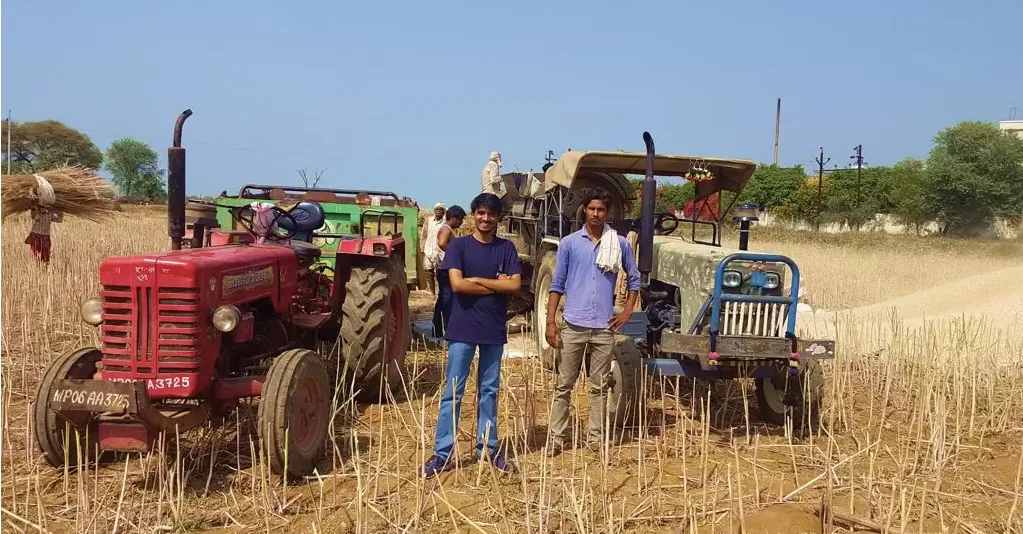
In the heart of Chambal, where vast ravines meet fields of swaying crops, a remarkable transformation is taking place. A region traditionally known for its agricultural bounty is now becoming a beacon of sustainability, thanks to an innovative approach to managing crop residue. In a groundbreaking project, a young entrepreneur from Morena, Shubham Singh, is turning agricultural waste—once burned as useless by-products—into valuable products like paper and furniture boards.
Shubham Singh, the founder of the company ‘Craste,’ is leading this environmental revolution. According to an exclusive report by Dainik Bhaskar, Shubham’s initiative addresses one of the country’s most pressing challenges: the burning of agricultural waste, particularly in states like Punjab, Haryana, and areas surrounding the national capital, Delhi. Every winter, stubble burning contributes to severe pollution, raising health concerns and worsening air quality. However, Shubham’s vision for turning waste into wealth could offer a sustainable solution to this persistent problem.
Shubham’s journey into the world of sustainable products began in 2018 with a simple but profound idea. “Every year, farmers burn millions of tons of straw, husk, and sugarcane skins, considering it trash,” he told Dainik Bhaskar. “For them, it’s garbage, but for me, it’s gold—pure gold.”
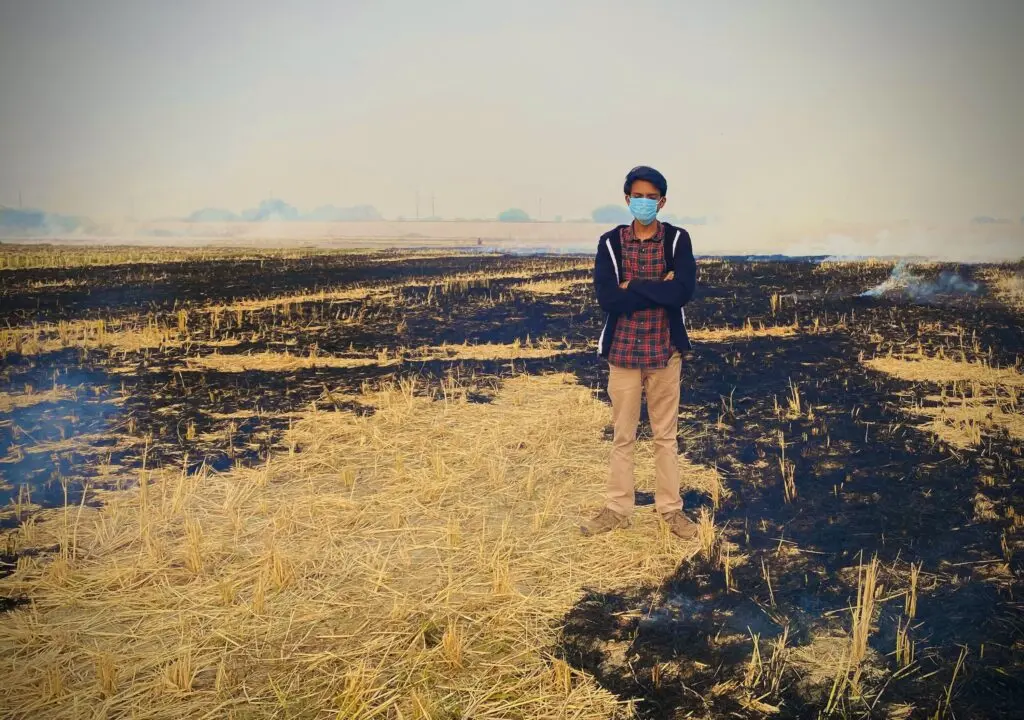
Walking through his factory in Morena, the reporter mentions that it’s clear how Shubham’s idea has taken shape. The factory is a hub of activity, where machines on one side churn out paper sheets, while on the other, husk and sugarcane skins are treated to create sturdy furniture boards. The vast piles of agricultural residue stacked outside the factory are not just waste—they are the raw materials fueling this innovative enterprise.
“This is our raw material,” Shubham explained, gesturing toward the heaps of husk and sugarcane waste as quoted in the report. “We started research after 2018, but production only began this April. In the last three months alone, we’ve done business worth approximately 20 lakh rupees.”
Despite the achievements, there are challenges. Morena is a rural area, and power outages are frequent. As the electricity flickered during the interview, Shubham commented on the difficulties of running a factory in such conditions. “Power outages are a real issue here,” he admitted. “I thought about setting up the factory in a big city, but in the end, I decided to start in my own village. It’s challenging, but this is where the raw material is, and this is home.”
Shubham’s path to entrepreneurship began with a passion for chemistry. After finishing high school, he left Morena for Bengaluru to study chemical engineering, a decision that raised eyebrows. “Most of my peers were choosing computer or mechanical engineering, but I was fascinated by chemistry,” he recalled. After graduating in 2014, he pursued a master’s degree in London, where an article about Delhi’s alarming pollution levels sparked his interest in waste management. “As a chemical engineering student, I started thinking about how waste could be better managed,” Shubham said.
Upon returning to India in 2016, he saw firsthand the widespread practice of burning agricultural waste. It was then that the idea of turning this waste into valuable products began to take shape. In 2018, Shubham received support from the Department of Science and Technology under a fellowship program titled “Waste to Value.” Over the next few years, he refined his process, despite facing scepticism from others. “Some people laughed, saying, ‘Look, he’s hauling husk after coming back from London!'” he recounted.
Today, Shubham’s factory is proof of his hard work and determination. The furniture boards produced at his factory are made entirely from agricultural waste, and they are remarkably strong, and capable of supporting up to 300 kilograms. “When we went for market testing and told people these boards were made from straw and waste, they were amazed,” Shubham said. “No one believed that such high-quality products could be made from something considered trash.”
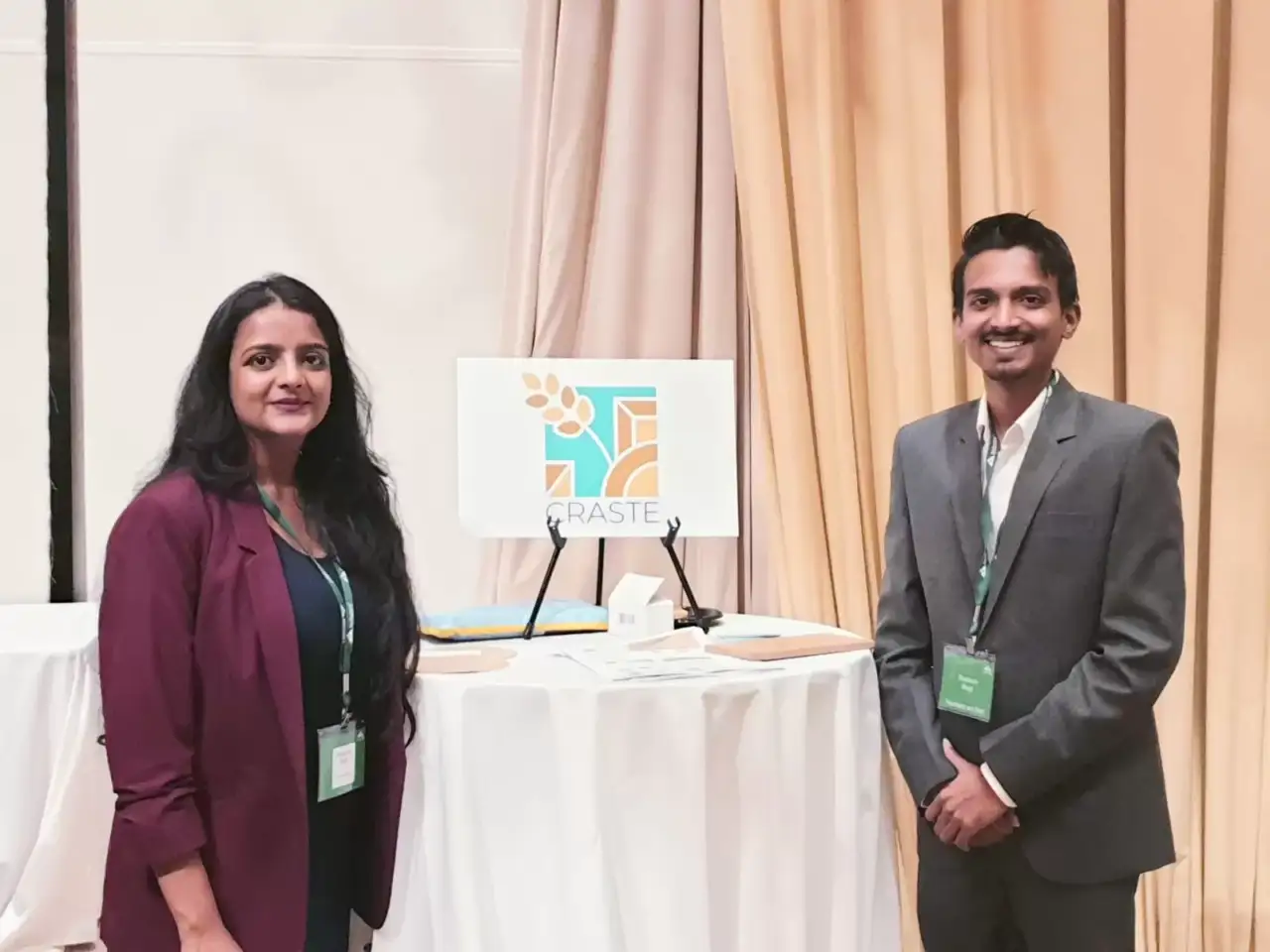
Inside his office, Shubham proudly showed me the furniture—all made from the boards his factory produces. “These boards are just like plywood,” he explained. The process involves preparing pulp from the straw, mixing it with chemicals and glue, and pressing it into moulds to create the final product.
Despite initial hurdles in gaining distributors, Shubham’s company now has a network of around 50 distributors across the country. “We originally operated from Pune, but we moved the office to Morena because of the easy access to raw materials,” Shubham said. “So far, we’ve done business worth 20 lakh, but our goal is to build a company worth 100 crores in the next two to three years.”
Shubham’s work is not just about business—it’s about rethinking how we view waste and sustainability. His efforts are an example of how innovative thinking and determination can lead to solutions that benefit both the environment and the economy.
















Comments