Study confirms Lothal’s dockyard role: Ancient Sabarmati River route reveals Harappan Civilisation’s cast trade network
December 6, 2025
  • Read Ecopy
  • Circulation
  • Advertise
  • Careers
  • About Us
  • Contact Us
Android AppiPhone AppArattai
Organiser
  • ‌
  • Bharat
    • Assam
    • Bihar
    • Chhattisgarh
    • Jharkhand
    • Maharashtra
    • View All States
  • World
    • Asia
    • Europe
    • North America
    • South America
    • Africa
    • Australia
  • Editorial
  • International
  • Opinion
  • RSS @ 100
  • More
    • Op Sindoor
    • Analysis
    • Sports
    • Defence
    • Politics
    • Business
    • Economy
    • Culture
    • Special Report
    • Sci & Tech
    • Entertainment
    • G20
    • Azadi Ka Amrit Mahotsav
    • Vocal4Local
    • Web Stories
    • Education
    • Employment
    • Books
    • Interviews
    • Travel
    • Law
    • Health
    • Obituary
  • Subscribe
    • Subscribe Print Edition
    • Subscribe Ecopy
    • Read Ecopy
  • ‌
  • Bharat
    • Assam
    • Bihar
    • Chhattisgarh
    • Jharkhand
    • Maharashtra
    • View All States
  • World
    • Asia
    • Europe
    • North America
    • South America
    • Africa
    • Australia
  • Editorial
  • International
  • Opinion
  • RSS @ 100
  • More
    • Op Sindoor
    • Analysis
    • Sports
    • Defence
    • Politics
    • Business
    • Economy
    • Culture
    • Special Report
    • Sci & Tech
    • Entertainment
    • G20
    • Azadi Ka Amrit Mahotsav
    • Vocal4Local
    • Web Stories
    • Education
    • Employment
    • Books
    • Interviews
    • Travel
    • Law
    • Health
    • Obituary
  • Subscribe
    • Subscribe Print Edition
    • Subscribe Ecopy
    • Read Ecopy
Organiser
  • Home
  • Bharat
  • World
  • Operation Sindoor
  • Editorial
  • Analysis
  • Opinion
  • Culture
  • Defence
  • International Edition
  • RSS @ 100
  • Magazine
  • Read Ecopy
Home Bharat

Study confirms Lothal’s dockyard role: Ancient Sabarmati River route reveals Harappan Civilisation’s cast trade network

A new study by IIT Gandhinagar has provided strong evidence supporting the existence of a dockyard at Lothal during the Harappan Civilisation by confirming the ancient course of the Sabarmati River flowed by the site. The research highlights Lothal's importance in trade, linking it to other key Harappan locations via river and sea routes

WEBDESKWEBDESK
Sep 10, 2024, 06:00 pm IST
in Bharat
Follow on Google News
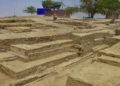
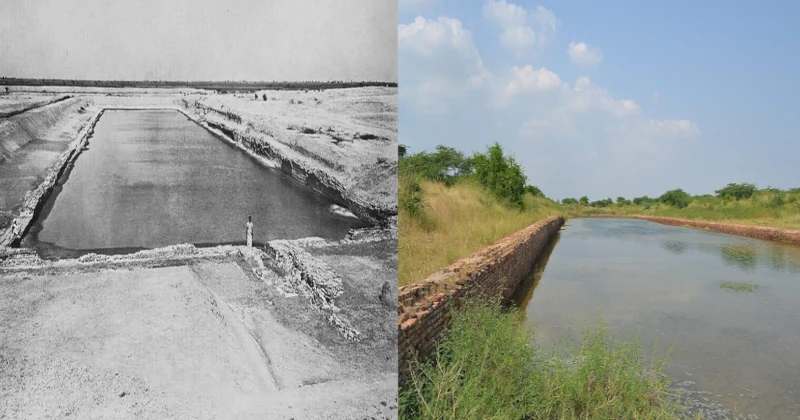
The Lothal dockyard after its discovery and excavation

The Lothal dockyard after its discovery and excavation

FacebookTwitterWhatsAppTelegramEmail

In a groundbreaking study from the Indian Institute of Technology-Gandhinagar (IITGn) has presented fresh evidence supporting the existence of a dockyard at Lothal, a prominent site from the Indus Valley Civilisation. This discovery, which resolves decades of debate among archaeologists, hinges on findings that confirm the ancient course of the Sabarmati River flowed by Lothal, facilitating trade routes during the Harappan era.

Lothal and the Harappan Civilisation: A Historical Overview

Lothal, located in Gujarat’s Bhal region, was discovered in the 1950s under a mound in the marshy fields of Saragwala village. The site quickly gained recognition due to its clear indications of Harappan town planning, with features like houses, bathing platforms, streets, fortification walls, and large structures. Archaeologists soon proposed that Lothal had functioned as a crucial trading hub with a dockyard. However, this idea remained contentious for decades, with critics suggesting the basin structure found at the site was merely an “irrigation tank.”

The Indus Valley, also known as the Harappan Civilisation, flourished from around 3300 to 1300 BCE, with urban centers spread across modern-day Pakistan and northwest India. This Bronze Age society is regarded as one of the world’s oldest civilisations, thriving alongside those in Egypt and Mesopotamia. It boasted remarkable urban planning, advanced water management, trade networks, and craftsmanship.

The New Study: Evidence from the Sabarmati River and Trade Routes

The new study, titled “Sabarmati and its Connection with the Harappan Port Lothal and the Nal Corridor: A Study Using Multi-Sensor Data, Cloud Computing, and Multi-Platforms,” was published in the Journal of Archaeological Science in August. The research was conducted by a team from IIT Gandhinagar, including Ekta Gupta, V N Prabhakar, and Vikrant Jain.

The researchers used advanced technologies, including satellite imagery, digital elevation models (3D representations of terrain), and 19th-century topographic maps, to trace the paleochannels of the Sabarmati River and reveal its historical course. These technologies allowed them to identify ancient river routes and paleochannels that once connected Lothal to other key sites, including Dholavira and the Little Rann of Kachchh.

One of the study’s most significant findings was that the Sabarmati River, which now flows 20 kilometers away from Lothal, once ran directly alongside the site during the Harappan Civilisation. This revelation supports the theory that Lothal’s port facilitated trade, using both river and sea routes. A key inland network connected Lothal to the Nal Sarovar wetland and the Little Rann, enabling traders to transport goods to Dholavira, another major Harappan site. The study also suggests that goods from Gujarat reached the Gulf of Khambhat and were potentially transported further to Mesopotamia (modern-day Iraq).

The Dockyard Debate: Evidence Revisited

The debate over whether Lothal housed a dockyard stems from the discovery of a 222 x 37-meter basin structure, originally thought to serve as a dock for ships. Those who supported the dockyard theory pointed to the basin, a wharf, and Harappan seals as evidence of maritime activity. However, skeptics argued that it was unlikely for ports in ancient India to be directly situated on the sea and questioned the structure’s use, suggesting it was instead for irrigation.

The IITGn study addresses these concerns, offering evidence that a vital trade route did exist along the Sabarmati River. The researchers argue that this supports the dockyard theory, highlighting Lothal’s importance in trade via river and sea routes during the Harappan era.

Prabhakar, one of the study’s authors, elaborated on the findings: “We discovered that the Sabarmati River gradually shifted to its present-day course. During the time of Lothal, the river flowed directly by the site, confirming that the port would have been fully functional for trade.” He added that the study showed how traders might have traveled from Lothal through the Nal Sarovar wetland and the Little Rann to Dholavira, transferring goods via boats, possibly within two days of travel.

Technology and Methodology: Pioneering Techniques in Archaeological Research

The researchers employed satellite imaging, early topographic maps, and digital elevation models to study geomorphic changes over the last 150 years. This technology allowed them to “peep anywhere in the world,” providing access to remote and previously inaccessible areas. The satellite images proved particularly helpful in distinguishing ancient river channels from modern streams, saving the team considerable time that would have been spent on traditional ground surveys.

The technology also revealed the intricate network of water channels and trade routes connected to Lothal, underscoring the site’s importance in the broader Harappan trade network.

Implications of the findings: Lothal’s legacy reconsidered

The study’s conclusions lend strong support to the hypothesis that Lothal was a vital trade hub with a functioning dockyard during the Harappan period. These findings not only bolster the historical understanding of Lothal’s role in ancient trade but also enhance the broader narrative of the Indus Valley Civilisation’s extensive and sophisticated commerce.

In addition to the evidence gathered at Lothal, other signs of early sea trade from the region include the numerous temples dedicated to the goddess Sikotara in Gujarat. These temples reference the island of Socotra, located at the mouth of the Red Sea, which served as a stopover for Indian sea-farers over 2,000 years ago.
Topics: Harappan civilisationSabarmati RiverIndus ValleyLothal DockyardIITGnHarappan era
Share17TweetSendShareSend
✮ Subscribe Organiser YouTube Channel. ✮
✮ Join Organiser's WhatsApp channel for Nationalist views beyond the news. ✮
Previous News

Manipur Government suspends Internet and Mobile Data services amid rising violence to curb disinformation

Next News

Netflix’s IC 814 web series sparks row over alleged political bias and misrepresentation of facts

Related News

Pre-Harappan roots of Hindu Civilisation should be explored: New evidence from Kutch pushes timeline of India

5,000-year-old water management system unearthed at Rakhigarhi: Insights into Harappan ingenuity & cultural legacy

Row over mentioning Harappan Civilisation as ‘Sindhu Sarasvati’ in NCERT books — All you need to know

Rakhigarhi Excavation Site (Representative Image)

Rakhigarhi excavation unveils ancient skeleton’s DNA; Archaeological evidence that debunks Aryan invasion theory 

The Home Minister virtually launching the 'Aksar River Cruise' on July 2 (Image: Twitter)

Home Minister Amit Shah virtually inaugurates ‘Akshar River Cruise’ at Ahmedabad’s Sabarmati Riverfront

Sabarmati Riverfront: A fairy tale of urban transformation

Load More

Comments

The comments posted here/below/in the given space are not on behalf of Organiser. The person posting the comment will be in sole ownership of its responsibility. According to the central government's IT rules, obscene or offensive statement made against a person, religion, community or nation is a punishable offense, and legal action would be taken against people who indulge in such activities.

Latest News

PM Modi presents Putin with Bhagavad Gita, chess set, and silver horse

Cultural ties strengthened: PM Modi presents Putin with Bhagavad Gita, chess set, and silver horse

Image for representational purpose only, Courtesy Vocal Media

Bihar to get ‘Special Economic Zones’ in Buxar and West Champaran

Thirupparankundram Karthigai Deepam utsav

Andhra Pradesh: AP Dy CM Pawan Kalyan reacts to Thirupparankundram row, flags concern over religious rights of Hindus

23rd India-Russia Annual Summit

India-Russia Summit heralds new chapter in time-tested ties: Inks MoUs in economic, defence, tourism & education

DGCA orders probe into IndiGo flight disruptions; Committee to report in 15 days

BJYM leader Shyamraj with Janaki

Kerala: Widow of BJP worker murdered in 1995 steps into electoral battle after three decades at Valancherry

Russian Sber bank has unveiled access to its retail investors to the Indian stock market by etching its mutual fund to Nifty50

Scripting economic bonhomie: Russian investors gain access to Indian stocks, Sber unveils Nifty50 pegged mutual funds

Petitioner S Vignesh Shishir speaking to the reporters about the Rahul Gandhi UK citizenship case outside the Raebareli court

Rahul Gandhi UK Citizenship Case: Congress supporters create ruckus in court; Foreign visit details shared with judge

(L) Kerala High Court (R) Bouncers in Trippoonithura temple

Kerala: HC slams CPM-controlled Kochi Devaswom Board for deploying bouncers for crowd management during festival

Fact Check: Rahul Gandhi false claim about govt blocking his meet with Russian President Putin exposed; MEA clears air

Load More
  • Privacy
  • Terms
  • Cookie Policy
  • Refund and Cancellation
  • Delivery and Shipping

© Bharat Prakashan (Delhi) Limited.
Tech-enabled by Ananthapuri Technologies

  • Home
  • Search Organiser
  • Bharat
    • Assam
    • Bihar
    • Chhattisgarh
    • Jharkhand
    • Maharashtra
    • View All States
  • World
    • Asia
    • Africa
    • North America
    • South America
    • Europe
    • Australia
  • Editorial
  • Operation Sindoor
  • Opinion
  • Analysis
  • Defence
  • Culture
  • Sports
  • Business
  • RSS @ 100
  • Entertainment
  • More ..
    • Sci & Tech
    • Vocal4Local
    • Special Report
    • Education
    • Employment
    • Books
    • Interviews
    • Travel
    • Health
    • Politics
    • Law
    • Economy
    • Obituary
  • Subscribe Magazine
  • Read Ecopy
  • Advertise
  • Circulation
  • Careers
  • About Us
  • Contact Us
  • Policies & Terms
    • Privacy Policy
    • Cookie Policy
    • Refund and Cancellation
    • Terms of Use

© Bharat Prakashan (Delhi) Limited.
Tech-enabled by Ananthapuri Technologies