Final resolution of the 2nd International Buddhist Forum: "Traditional Buddhism and the challenges of modernity"
July 28, 2026
  • Read Ecopy
  • Circulation
  • Advertise
  • Careers
  • About Us
  • Contact Us
Android AppiPhone AppArattai
Organiser
  • ‌
  • Bharat
    • Assam
    • Bihar
    • Chhattisgarh
    • Jharkhand
    • Maharashtra
    • View All States
  • World
    • Asia
    • Europe
    • North America
    • South America
    • Africa
    • Australia
  • Editorial
  • International
  • Opinion
  • RSS @ 100
  • More
    • Op Sindoor
    • Analysis
    • Sports
    • Defence
    • Politics
    • Business
    • Economy
    • Culture
    • Special Report
    • Sci & Tech
    • Entertainment
    • G20
    • Azadi Ka Amrit Mahotsav
    • Vocal4Local
    • Web Stories
    • Education
    • Employment
    • Books
    • Interviews
    • Travel
    • Law
    • Health
    • Obituary
  • Subscribe
    • Subscribe Print Edition
    • Subscribe Ecopy
    • Read Ecopy
  • ‌
  • Bharat
    • Assam
    • Bihar
    • Chhattisgarh
    • Jharkhand
    • Maharashtra
    • View All States
  • World
    • Asia
    • Europe
    • North America
    • South America
    • Africa
    • Australia
  • Editorial
  • International
  • Opinion
  • RSS @ 100
  • More
    • Op Sindoor
    • Analysis
    • Sports
    • Defence
    • Politics
    • Business
    • Economy
    • Culture
    • Special Report
    • Sci & Tech
    • Entertainment
    • G20
    • Azadi Ka Amrit Mahotsav
    • Vocal4Local
    • Web Stories
    • Education
    • Employment
    • Books
    • Interviews
    • Travel
    • Law
    • Health
    • Obituary
  • Subscribe
    • Subscribe Print Edition
    • Subscribe Ecopy
    • Read Ecopy
Organiser
  • Home
  • Bharat
  • World
  • Operation Sindoor
  • Editorial
  • Analysis
  • Opinion
  • Culture
  • Defence
  • International Edition
  • RSS @ 100
  • Magazine
  • Read Ecopy
Home Culture

Final resolution of the 2nd International Buddhist Forum: “Traditional Buddhism and the challenges of modernity”

The global Buddhist leaders convene in Ulan-Ude to address challenges modern-day challenges that are being faced by Buddhism today

WEBDESKWEBDESK
Aug 15, 2024, 09:15 pm IST
in Culture, International Edition
Follow on Google News
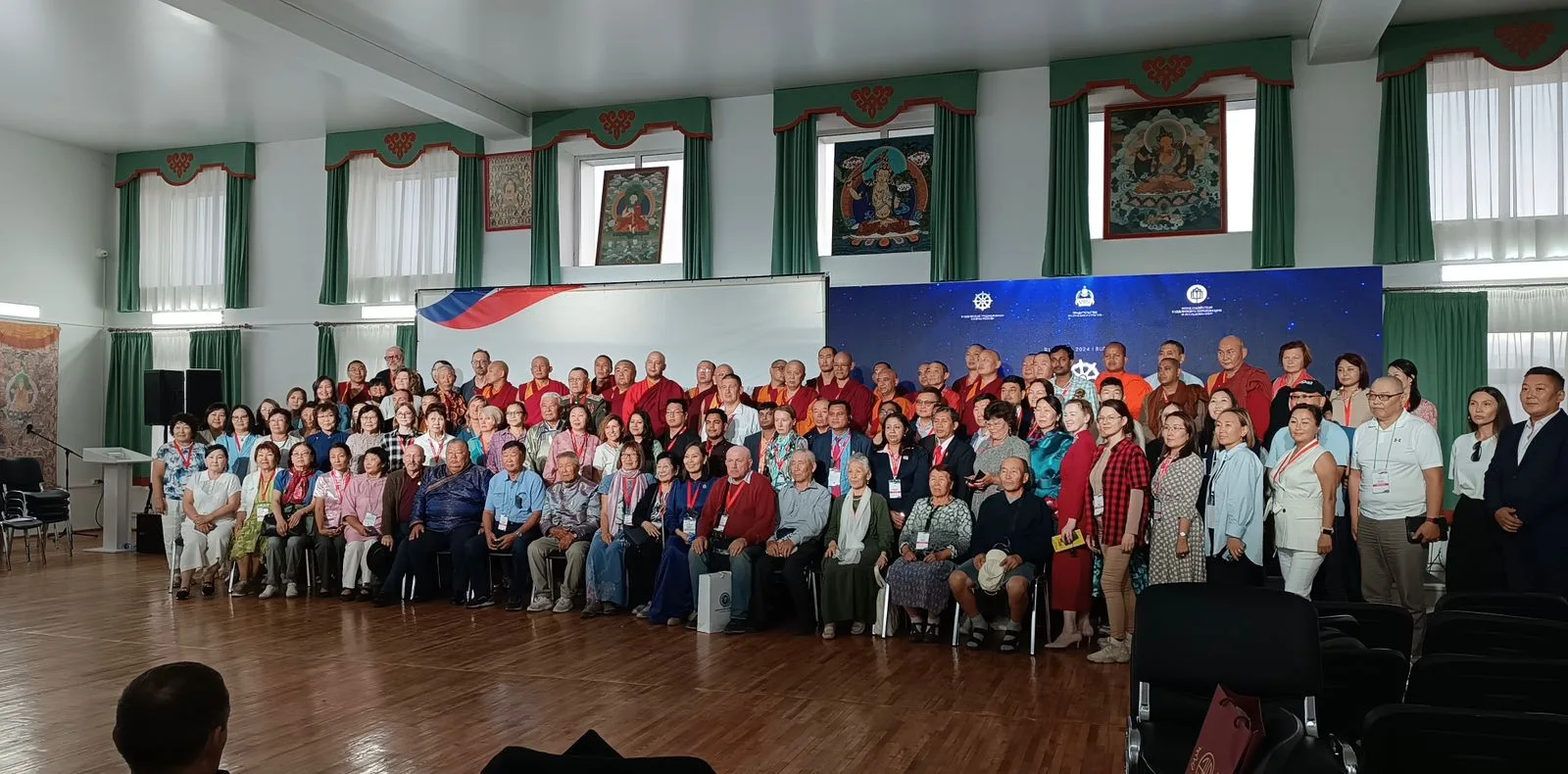
Delegates at the 2nd International Buddhist Forum

Delegates at the 2nd International Buddhist Forum

FacebookTwitterWhatsAppTelegramEmail

Representatives from Buddhist and other spiritual communities, secular organizations, and various state and public sectors gathered in Ulan-Ude for the Second International Buddhist Forum “Traditional Buddhism and Modern Challenges.”

We, the participants of the Second International Buddhist Forum “Traditional Buddhism and Modern Challenges”, representatives of Buddhist and other spiritual communities, secular organizations, state and public structures, education, science, business, gathered in Ulan-Ude (Buryatia, Russia) on 12-14 August 2024, from Bangladesh, Belarus, Brazil, Bhutan, Cambodia, China, India, Japan, Laos, Mongolia, Myanmar, Nepal, Russia, Sri Lanka, Thailand, Vietnam, being guided by the ideas of fraternal interaction, strengthening of humanitarian, cultural and spiritual ties, respecting the sovereignty of countries and interests of particular organizations, we believe:

1. Buddhism is one of the greatest spiritual achievements of mankind, which has created a vast cultural tradition, and has promoted the establishment of ties between different regions and peoples of the world for thousands of years. All schools and movements within the Buddhist faith play an equal role in the broader Buddhist movement. In light of the challenges posed by modernity, they advocate for the preservation of traditional spiritual values, wisdom, compassion, and spiritual discipline. Additionally, they emphasize the importance of fostering a sense of brotherhood among all individuals.

2. Education based on the combination of traditional values and modern teaching methods, the use of innovative technology, and the preservation of humanity is an essential part of the development of Buddhism. The availability of modern education should be inclusive and accessible to all. Therefore, it is necessary to introduce courses on Buddhism in universities and secondary schools. These courses should be centered around the teachings of compassion, nonviolence, and interconnectedness. The primary focus should be on establishing suitable conditions for the sustenance of a publicly accessible spiritual pilgrimage, enabling individuals to visit prominent Buddhist cultural centers.

3. Maintaining traditional values in the domains of family, state, education, and politics serves as a dependable foundation for sustainable global development. Maintaining purity in nature and purity in consciousness and mental health in modern society, the balance of environment and man, constant work on one’s own consciousness and harmony in the world are interrelated parts of the development of modern civilization.

4. The incorporation of scientific research into Buddhism, including its heritage, culture, and literature, should hold a significant position in the endeavors of spiritual communities and academic and religious groups. We support the developing a joint project of creating a large Buddhist encyclopedia, publishing scientific and popular research journals and books, which will bring together leading scholars and researchers from all countries of the world. We also emphasize the importance of new translations of key Buddhist scriptures with commentaries and studies, workshops and conferences, training courses and support for special public programs.

5. Buddhist communities engage in active collaboration with the state and other public institutions to educate individuals, bolster national customs, safeguard traditional values, and uphold religious liberties. We oppose any attempts to sow interreligious enmity, to turn Buddhism and other spiritual teachings into destructive cults and ideologies, to create conflicts between various Buddhist schools and streams, to use Buddhism to create sects that violate human interests and rights, to discredit other movements, to incite enmity, to promote extremism and separatism. Buddhism is an inclusive teaching that cannot be monopolized by any particular group.

6. Strengthen cooperation, exchange of experience and consolidation of specialists and organizations in the research and development of traditional medicine, including international cooperation.

7. Admit the significant contribution of Pandito Khambo Lamas to the development of the Buddhist community, Buddhist philosophy, education and spiritual practice, the construction of harmonious state-confessional relations, the preservation of traditional spiritual and moral values, the development of humanitarian cooperation and international dialogue with the countries of the Buddhist world.

8. We express our backing for the proposal of regular international Buddhist forums that encompass participants from all countries worldwide, with the intention of hosting such a forum in the year 2025.

During the three-day event, delegates explored how Buddhism can contribute to addressing modern issues such as climate change, social inequality, and the erosion of cultural and spiritual values in an increasingly globalized world. The discussions underscored the need for collaboration between spiritual communities, educational institutions, and governmental bodies to foster a more harmonious and sustainable future.

Topics: Buddhism2nd International Buddhist Forum
Share13TweetSendShareSend
✮ Subscribe Organiser YouTube Channel. ✮
✮ Join Organiser's WhatsApp channel for Nationalist views beyond the news. ✮
Previous News

Agni Missile Pioneer and Padma Bhushan Awardee Dr Ram Narain Agarwal passes away at 83

Next News

“Heartfelt wishes to people of India”: Italian PM Giorgia Meloni extends greetings on 78th Independence Day

Related News

India–Myanmar Civilisational Connect: Significance of President U Min Aung Hlaing’s visit to India

Sacred relics of Buddha’s disciples return to India from Mongolia; Historic 10-day expo echoed civilisational ties

Sacred relics of Buddha's chief disciples reach Mongolia from Sanchi

Sacred Relics of Buddha’s chief disciples reach Mongolia from Sanchi; Reflect India’s spiritual & civilisational legacy

Sarnath, a sacred confluence of Hindu, Jain, and Buddhist traditions

Sarnath: A triveni of faiths where Hindu, Jain and Buddhist traditions converge across millennia

The enduring influence of Buddhism from Bharat to East Asia

Buddhism’s Global Odyssey: How Bharat’s ancient wisdom shaped civilisations across Asia & beyond

Scheduled Caste status to be revoked upon conversion to any religion other than Hindu, Sikh and Buddha dharma

Load More

Latest News

AIMIM President and MP Asaduddin Owaisi, Telangana CM Revanth Reddy

Telangana CM Revanth Reddy succumbs to Asaduddin Owaisi’s push, introduces Family Register Certificate for SIR

Bollywood, Are You Listening? The unmade story of Yellapragada Subbarow, the Indian scientist who helped save the world

Despite so many efforts, the US-Iran war does not seem to end

The retreat of the global guarantor

Plastic Currency Revolution: RBI prepares mega trial of 2 billion waterproof, tear proof Rs 10 and Rs 20 notes

Tamil Nadu: Madras HC quashes TVK govt’s compassionate jobs for Karur stampede victims’ families

Shri Vinai Kumar Saxena, LG Leh, the Chief Guest with Shri Indresh Kumar ji and other prominent guests

Sindhu Darshan Yatra: Celebrating the sacred connect

Uddhav Thackrey compares Abhijeet Dipke to Bhagwan Vishnu sparking row

Uddhav Thackeray’s ‘Vishnu Avatar’ Praise for CJP Cockroach Abhijeet Dipke triggers Sanatan sentiment row

People protesting against Pakistan in PoJK

Bloodshed in PoJK: Dozens injured in Rawalakote firing; 14 JAAC supporters killed & 5 died in poll violence in Mirpur

No Wealthy Background, Cheque Cases in Dubai: How Did Mohammed Shaji Fund 23 Employees for CJP Protest in Delhi?

No Wealthy Background, Cheque Cases in Dubai: How Did Abreco Freight’s Mohammed Shaji Fly 23 Employees to CJP Protest?

The NEET protests exposed how misinformation, foreign narratives, and propaganda shaped public discourse

From NEET Protests to Information Warfare: Examining foreign media narratives, fake news and anti-India propaganda

Load More
  • Privacy
  • Terms
  • Cookie Policy
  • Refund and Cancellation
  • Delivery and Shipping

© Bharat Prakashan (Delhi) Limited.
Tech-enabled by Ananthapuri Technologies

  • Home
  • Search Organiser
  • Bharat
    • Assam
    • Bihar
    • Chhattisgarh
    • Jharkhand
    • Maharashtra
    • View All States
  • World
    • Asia
    • Africa
    • North America
    • South America
    • Europe
    • Australia
  • Editorial
  • Operation Sindoor
  • Opinion
  • Analysis
  • Defence
  • Culture
  • Sports
  • Business
  • RSS @ 100
  • Entertainment
  • More ..
    • Sci & Tech
    • Vocal4Local
    • Special Report
    • Education
    • Employment
    • Books
    • Interviews
    • Travel
    • Health
    • Politics
    • Law
    • Economy
    • Obituary
  • Subscribe Magazine
  • Read Ecopy
  • Advertise
  • Circulation
  • Careers
  • About Us
  • Contact Us
  • Policies & Terms
    • Privacy Policy
    • Cookie Policy
    • Refund and Cancellation
    • Terms of Use

© Bharat Prakashan (Delhi) Limited.
Tech-enabled by Ananthapuri Technologies