Researchers reveals ways of preventing cancer cells from colonising liver
December 6, 2025
  • Read Ecopy
  • Circulation
  • Advertise
  • Careers
  • About Us
  • Contact Us
Android AppiPhone AppArattai
Organiser
  • ‌
  • Bharat
    • Assam
    • Bihar
    • Chhattisgarh
    • Jharkhand
    • Maharashtra
    • View All States
  • World
    • Asia
    • Europe
    • North America
    • South America
    • Africa
    • Australia
  • Editorial
  • International
  • Opinion
  • RSS @ 100
  • More
    • Op Sindoor
    • Analysis
    • Sports
    • Defence
    • Politics
    • Business
    • Economy
    • Culture
    • Special Report
    • Sci & Tech
    • Entertainment
    • G20
    • Azadi Ka Amrit Mahotsav
    • Vocal4Local
    • Web Stories
    • Education
    • Employment
    • Books
    • Interviews
    • Travel
    • Law
    • Health
    • Obituary
  • Subscribe
    • Subscribe Print Edition
    • Subscribe Ecopy
    • Read Ecopy
  • ‌
  • Bharat
    • Assam
    • Bihar
    • Chhattisgarh
    • Jharkhand
    • Maharashtra
    • View All States
  • World
    • Asia
    • Europe
    • North America
    • South America
    • Africa
    • Australia
  • Editorial
  • International
  • Opinion
  • RSS @ 100
  • More
    • Op Sindoor
    • Analysis
    • Sports
    • Defence
    • Politics
    • Business
    • Economy
    • Culture
    • Special Report
    • Sci & Tech
    • Entertainment
    • G20
    • Azadi Ka Amrit Mahotsav
    • Vocal4Local
    • Web Stories
    • Education
    • Employment
    • Books
    • Interviews
    • Travel
    • Law
    • Health
    • Obituary
  • Subscribe
    • Subscribe Print Edition
    • Subscribe Ecopy
    • Read Ecopy
Organiser
  • Home
  • Bharat
  • World
  • Operation Sindoor
  • Editorial
  • Analysis
  • Opinion
  • Culture
  • Defence
  • International Edition
  • RSS @ 100
  • Magazine
  • Read Ecopy
Home World

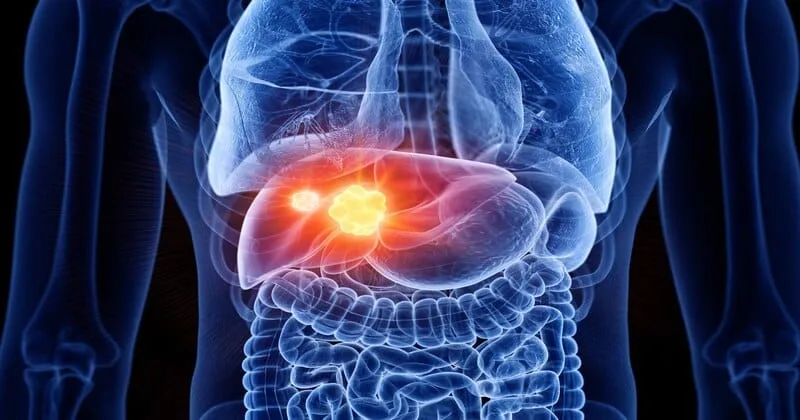
Researchers reveals ways of preventing cancer cells from colonising liver

Researchers have identified new methods to prevent cancer cells from spreading to the liver, offering promising strategies for combating metastatic cancer. These findings could significantly impact treatment approaches and improve patient outcomes

WEBDESKWEBDESK
Aug 14, 2024, 11:00 pm IST
in World, Health
Follow on Google News
Representative image

Representative image

FacebookTwitterWhatsAppTelegramEmail

Nine times out of ten, metastasis is the cause of cancer deaths. This is the point when the primary tumour has sent out cells, like seeds, and invaded other organs of the body. Despite significant advancements in the treatment of primary tumours, medicine remains mainly powerless against metastases. As of right now, there are no drugs that stop this process.

Researchers from the Department of Biosystems Science and Engineering at ETH Zurich in Basel, under the direction of Andreas Moor, have now published findings in the journal Nature that demonstrate how colorectal cancer cells colonise the liver. Their research will aid in the creation of therapies that might impede the spread of disease.

Cancer is said to metastasise when cells from the primary tumour break off and travel via the circulatory system to other parts of the body.

“Colorectal cancer metastasises to the liver because of how our blood flows,” Moor says. Blood is first enriched with nutrients in the intestines before it goes to the liver, which metabolises the nutrients. For colorectal cancer cells, the liver is the last stop. “They get caught in the liver’s capillary network,” Moor says.

Costanza Borrelli, a doctoral student, and other members of Moor’s team have now shown that the liver cells also play a large role in whether or not the cancer cells lodged there can colonise their new location. Science has known for over a century that, much like plant seeds in soil, cancer cells are dependent on their environment, yet it was previously unknown which molecular mechanisms play a role here.

Using sophisticated tests on genetically modified mice, Moor and his team have discovered that the secret lies in certain proteins on the cell surface. When liver cells have a protein called Plexin-B2 and the colorectal cancer cells possess certain proteins from the semaphorin family, the colorectal cancer cells can attach themselves to the liver cells.

Cancer cells that have semaphorins on their surface are especially dangerous, as attested by clinical studies cited by Moor’s researchers in their paper. The study data shows that colorectal cancer metastasises earlier and more frequently to the liver if the tumour has large amounts of semaphorin.

Plexin and its counterpart semaphorin were previously known to the research community for their function in the nervous system, where the two proteins steer growing nerve cells and ensure they form the right pathways. “Why liver cells also create plexin and what this protein does in healthy livers is anything but clear – and interests us immensely,” Moor says. In other words, the question of its function remains open.

What Moor and his team have discovered, however, is that direct contact between plexin and semaphorin triggers fundamental changes in colorectal cancer cells. To break off from the primary tumour, the cancer cells have to change their identity: they free themselves from the surface layer of the intestine, or epithelium, severing their close connections to neighbouring cells.

Once in the bloodstream, the cancer cells resemble those from connective tissue called mesenchyme. Yet once they find their new niche – thanks to the plexin on some liver cells – the cancer cells turn back into their sedentary form. “An epithelisation process takes place,” the researchers wrote in their paper. Moor expands: “You can spot this immediately if you look at the cancer cells, as they form invaginations similar to the folds or crypts in the intestines.”

The researchers’ discovery will have an impact on more than colorectal cancer patients: further tests have shown that plexin also encourages the formation of metastases in melanoma and pancreatic cancer. For Moor and his team, this throws up many new research questions. One in particular is drawing their focus: when cancer cells cluster together to form a tumour, they also influence cells in their environment. “Cancer cells set up their own ecosystem,” Moor explains.

If efforts to inhibit the crucial interaction between plexin and semaphorin succeed, it may be possible to prevent the cancer from establishing new tumours in the first place. That’s because early on, when the relationships among the cells in this ecosystem have not yet been firmly established, tumour metastases are especially vulnerable, Moor explains. He appears confident that an answer lies within this “critical period of time in the development of metastases”, even though the path to any potential treatment is still long.

(with inputs from ANI)

Topics: CancerLiverLiver cancerliver health
ShareTweetSendShareSend
✮ Subscribe Organiser YouTube Channel. ✮
✮ Join Organiser's WhatsApp channel for Nationalist views beyond the news. ✮
Previous News

Amid continuing violence in Bangladesh, 26 Muslim intruders from neighbouring country arrested in Tripura in two days

Next News

How ISRO outpaced Pakistan’s SUPARCO despite a late start

Related News

Representative image

Childhood exposure to bacterial toxin can trigger Colorectal cancer among the young: Study

Representative image

Researchers discover potential new treatment for liver fibrosis

Representative image

Ayurvedic Herb for Liver Cirrhosis: A natural path to liver health

Representative image

Study finds critical relationship between stem cells, mechanical signals

Breakthrough ‘3-in-1’ antibody offers promising new approach for targeted cancer treatment

Representative image

Ayurvedic Herbs for Liver Health: Natural remedies for detoxification and restoration

Load More

Comments

The comments posted here/below/in the given space are not on behalf of Organiser. The person posting the comment will be in sole ownership of its responsibility. According to the central government's IT rules, obscene or offensive statement made against a person, religion, community or nation is a punishable offense, and legal action would be taken against people who indulge in such activities.

Latest News

PM Modi presents Putin with Bhagavad Gita, chess set, and silver horse

Cultural ties strengthened: PM Modi presents Putin with Bhagavad Gita, chess set, and silver horse

Image for representational purpose only, Courtesy Vocal Media

Bihar to get ‘Special Economic Zones’ in Buxar and West Champaran

Thirupparankundram Karthigai Deepam utsav

Andhra Pradesh: AP Dy CM Pawan Kalyan reacts to Thirupparankundram row, flags concern over religious rights of Hindus

23rd India-Russia Annual Summit

India-Russia Summit heralds new chapter in time-tested ties: Inks MoUs in economic, defence, tourism & education

DGCA orders probe into IndiGo flight disruptions; Committee to report in 15 days

BJYM leader Shyamraj with Janaki

Kerala: Widow of BJP worker murdered in 1995 steps into electoral battle after three decades at Valancherry

Russian Sber bank has unveiled access to its retail investors to the Indian stock market by etching its mutual fund to Nifty50

Scripting economic bonhomie: Russian investors gain access to Indian stocks, Sber unveils Nifty50 pegged mutual funds

Petitioner S Vignesh Shishir speaking to the reporters about the Rahul Gandhi UK citizenship case outside the Raebareli court

Rahul Gandhi UK Citizenship Case: Congress supporters create ruckus in court; Foreign visit details shared with judge

(L) Kerala High Court (R) Bouncers in Trippoonithura temple

Kerala: HC slams CPM-controlled Kochi Devaswom Board for deploying bouncers for crowd management during festival

Fact Check: Rahul Gandhi false claim about govt blocking his meet with Russian President Putin exposed; MEA clears air

Load More
  • Privacy
  • Terms
  • Cookie Policy
  • Refund and Cancellation
  • Delivery and Shipping

© Bharat Prakashan (Delhi) Limited.
Tech-enabled by Ananthapuri Technologies

  • Home
  • Search Organiser
  • Bharat
    • Assam
    • Bihar
    • Chhattisgarh
    • Jharkhand
    • Maharashtra
    • View All States
  • World
    • Asia
    • Africa
    • North America
    • South America
    • Europe
    • Australia
  • Editorial
  • Operation Sindoor
  • Opinion
  • Analysis
  • Defence
  • Culture
  • Sports
  • Business
  • RSS @ 100
  • Entertainment
  • More ..
    • Sci & Tech
    • Vocal4Local
    • Special Report
    • Education
    • Employment
    • Books
    • Interviews
    • Travel
    • Health
    • Politics
    • Law
    • Economy
    • Obituary
  • Subscribe Magazine
  • Read Ecopy
  • Advertise
  • Circulation
  • Careers
  • About Us
  • Contact Us
  • Policies & Terms
    • Privacy Policy
    • Cookie Policy
    • Refund and Cancellation
    • Terms of Use

© Bharat Prakashan (Delhi) Limited.
Tech-enabled by Ananthapuri Technologies