





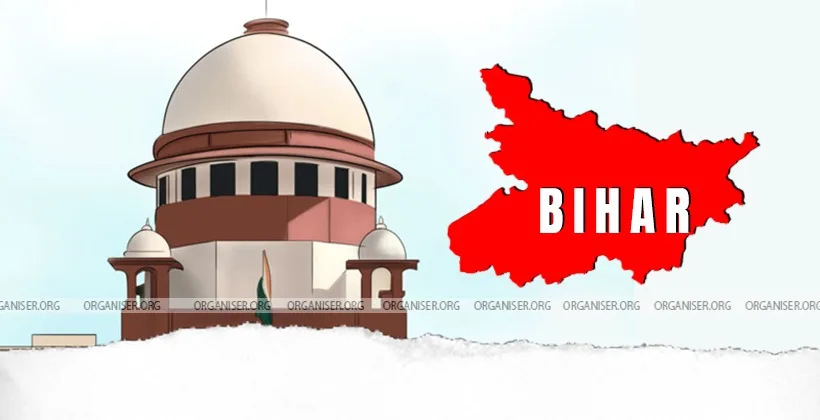
The Supreme Court on Monday, July 29 refused to stay Patna High Court’s order of setting aside the increase in reservation for Scheduled Castes (SC), Scheduled Tribes (ST) and Other Backward Classes (OBC) from 50 per cent to 65 per cent in government services and admission quota in educational institutions.
A bench of Chief Justice D Y Chandrachud and justices’ J B Pardiwla and Manoj Misra, however, agreed to hear separate petitions of the Bihar government against the High Court’s verdict in September.
Appearing for the state government, senior advocate Shyam Divan urged the bench to stay the HC order citing a similar instance of Chhattisgarh in which the apex court had stayed the order of the High court.
“We will list the matter, but we will not grant any stay,” the bench said while also refusing to issue notice on the interim relief sought by the State government’s counsel Divan.
Supreme Court refuses to stay Patna High Court decision to quash Bihar reservation law
Read more: https://t.co/381skMH40v pic.twitter.com/ofcspNS3Ux
— Bar and Bench (@barandbench) July 29, 2024
Notably, the Patna High Court in its June 20 verdict had set aside the Bihar Reservation of Vacancies in Posts and Services (for Scheduled Caste, Scheduled Tribes and Other Backward Classes) Amendment Act, 2023 and The Bihar (In admission in Educational Institutions) Reservation (Amendment) Act, 2023 as ultra vires of the constitution and violative of equality clause under Articles 14-16 of the Constitution.
The high court in its order had asserted that it saw “no extenuating circumstance enabling the state to breach the 50 per cent cap on reservations” laid down by the Supreme Court.
Significantly, the Bihar State legislature had in 2023 amended the Bihar Reservation of Vacancies in Posts and Services (For Scheduled Castes, Scheduled Tribes and Other Backward Classes) Act, 1991 after claiming that members of SC/ST and OBC were still comparatively less in proportion in government service.
The government’s move which came on the heels of much hyped caste survey had further reduced the space of those competing for the public employment on merit to only 35 per cent.
The Patna High Court however while setting aside the new amendments made by the government had remarked that the caste survey report itself revealed that backward communities were adequately represented in public employment by virtue of reservation and also merit. Hence the State should introspect on excluding the ‘creamy layer’ from the benefits while keeping the reservation limits within 50 percent.















Comments