





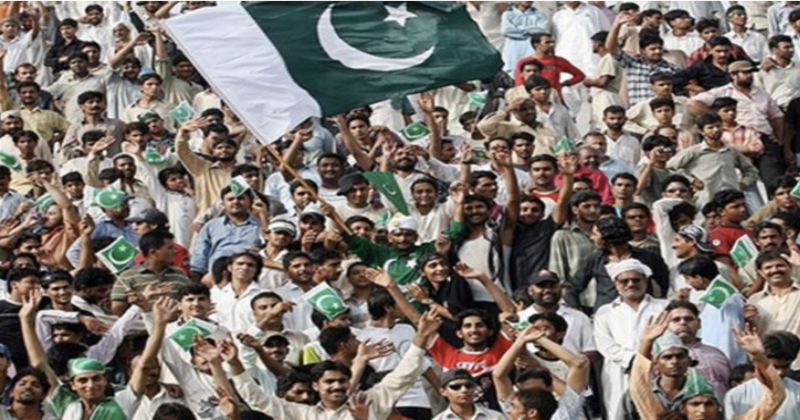
Pakistan Federal Minister for Planning Ahsan Iqbal had a rather gloomy outing on Thursday as he released official results of the 7th population census completed last year. The results also officially confirmed that almost 40% population above the age of 10 years were illiterate. Besides, close to 2.54 crore children were out of schools, according to a report of the Express Tribune.
Almost all news outlets of Pakistan on Friday carried detailed reports, as also comments on the official census figures. The population growth rate was put at 2.55 per cent which was the highest in South Asia. The province of Balochistan topped the list of population growth at 3.2 per cent, as per the census figures. These census figures have been compiled and collated by the Pakistan Bureau of Statistics (PBS).
The official census figures show that if this trend persists, Pakistan’s population will become double of what it is today by 2047. For a global comparison, it needs to be said that only 27 countries in the world, mostly in sub-Saharan Africa, have growth rates higher than Pakistan’s. The average household size in Pakistan has been put at 6.30 whileas in Khyber Pakhtunkhwa, the average household size of 6.95 is the highest among all the provinces.
The census results show that the majority of the Pakistani population is young and no less than nearly 80 per cent is under 40 years. Specifically, 40.56 per cent of the population is under 15 years and 26 per cent of population is between 15 and 29 years old. The age pyramid and population distribution by age group clearly reveal that Pakistan’s highest percentage of youth, often without quality education and requisite skills can be a bane rather than boon for the nation.
Those falling in the younger age groups need jobs, which can only be generated if there is political and economic stability. However, these factors are conspicuous by their absence and the main reason behind the brain drain from the country, according to most experts. The Federal Planning Minister Ahsan Iqbal said that the rising population put pressure on the scarce resources, adversely affected per capita income as also hit living conditions of the citizens.
Over the past few decades, despite rapid urbanisation, 61 per cent population still lives in rural areas with 39 per cent living in urban areas. Of all the provinces, Khyber Pakhtunkhwa (KP) has the lowest urban population at 15 per cent, and Sindh has the highest at 54 per cent, followed by Punjab at 52 per cent and Balochistan at 31 per cent. According to the official census figures, there are 2.12 million foreign nationals living in Pakistan, with the highest percentage being that of Afghans at 90.47 per cent who predominantly reside in KP.
Muslims make up around 96.35 per cent of the total population, and the second largest religion being followed is Hinduism with Hindus making at 1.61 per cent of the population. The number of Christians has been stated at 1.37% and the share of Qadiani (Ahmadiyas) have reduced in both percentage and absolute terms to 0.07% or by 29,053 to 162,684 individuals, according to the census.
While collating the census figures, the respondents were also asked to provide details regarding their mother tongues. On that count, the number of Urdu speaking people have increased to 9.3 per cent by 2023 but the number of people speaking Punjabi has gone down to 37 per cent. The percentage of population speaking the Sindhi language has gone down marginally from 14.6 per cent to 14.3 per cent, those speaking Pashto reduced from 18.3 per cent to 18.2 per cent. Those who gave Balochi as the language they spoke showed a rise from 3 per cent to 3.4 per cent. The number of Saraiki-language people was reduced from 12.2 per cent to 12 per cent.
The report mentions Karachi as the most populous city having a population of 18.87 million with Lahore, the capital of Punjab province, pegged at number 2 with a population of 13 million.












Comments