Tax Terrorism Under UPA Rule: A deep dive into harsh tax regime, GST and its impact on business
June 13, 2026
  • Read Ecopy
  • Circulation
  • Advertise
  • Careers
  • About Us
  • Contact Us
Android AppiPhone AppArattai
Organiser
  • ‌
  • Bharat
    • Assam
    • Bihar
    • Chhattisgarh
    • Jharkhand
    • Maharashtra
    • View All States
  • World
    • Asia
    • Europe
    • North America
    • South America
    • Africa
    • Australia
  • Editorial
  • International
  • Opinion
  • RSS @ 100
  • More
    • Op Sindoor
    • Analysis
    • Sports
    • Defence
    • Politics
    • Business
    • Economy
    • Culture
    • Special Report
    • Sci & Tech
    • Entertainment
    • G20
    • Azadi Ka Amrit Mahotsav
    • Vocal4Local
    • Web Stories
    • Education
    • Employment
    • Books
    • Interviews
    • Travel
    • Law
    • Health
    • Obituary
  • Subscribe
    • Subscribe Print Edition
    • Subscribe Ecopy
    • Read Ecopy
  • ‌
  • Bharat
    • Assam
    • Bihar
    • Chhattisgarh
    • Jharkhand
    • Maharashtra
    • View All States
  • World
    • Asia
    • Europe
    • North America
    • South America
    • Africa
    • Australia
  • Editorial
  • International
  • Opinion
  • RSS @ 100
  • More
    • Op Sindoor
    • Analysis
    • Sports
    • Defence
    • Politics
    • Business
    • Economy
    • Culture
    • Special Report
    • Sci & Tech
    • Entertainment
    • G20
    • Azadi Ka Amrit Mahotsav
    • Vocal4Local
    • Web Stories
    • Education
    • Employment
    • Books
    • Interviews
    • Travel
    • Law
    • Health
    • Obituary
  • Subscribe
    • Subscribe Print Edition
    • Subscribe Ecopy
    • Read Ecopy
Organiser
  • Home
  • Bharat
  • World
  • Operation Sindoor
  • Editorial
  • Analysis
  • Opinion
  • Culture
  • Defence
  • International Edition
  • RSS @ 100
  • Magazine
  • Read Ecopy
Home Bharat

Tax Terrorism Under UPA Rule: A deep dive into harsh tax regime, GST and its impact on business

The GST, introduced by the Modi government, has made India's tax system simpler by unifying tax rates across all states. This change has made it easier for businesses to operate and for people to understand their taxes. It has also lowered taxes on essential items, giving financial relief to everyday people and helping the economy grow by being more transparent and efficient

WEBDESKWEBDESK
Jul 10, 2024, 09:00 am IST
in Bharat, Economy
Follow on Google News
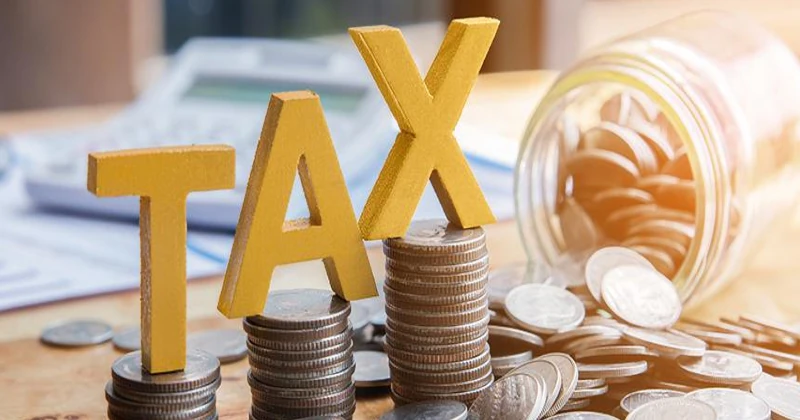
Representative Image

Representative Image

FacebookTwitterWhatsAppTelegramEmail

Before the implementation of GST, the tax structure in India was complicated and had multiple layers of taxation at both the central and state levels. Items were taxed differently across various states. This was the cause of lack of uniformity and increased compliance costs for businesses. The GST has harmonised the tax rates and brought consistency across the country. Due to this simplification, businesses can easily operate and it is easier for consumers to understand the taxes they are paying.

The Goods and Services Tax (GST) was implemented on July 1, 2017, under the leadership of Prime Minister Narendra Modi. It has been a transformative reform in India’s taxation system. One of the most significant impacts of GST has been the reduction in the tax burden on the common man, providing much-needed financial relief. This landmark tax reform replaced multiple indirect taxes with a unified tax system and simplified the tax structure and made it more transparent.

Tax Relief to the Common Man
Multiple daily use items before and after the implementation of GST:
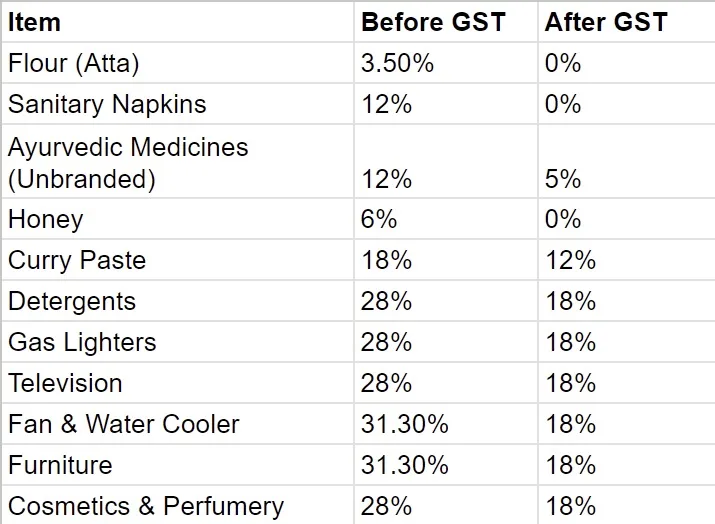
Items like flour (atta), sanitary napkins, and honey, which are essential for daily living, have seen their tax rates reduced to zero. Before GST, these items were taxed at rates ranging from 3.5 per cent to 12 per cent, making them less affordable for many households.

Reduced Tax Burden on Common Man
Prices of various daily use items before and after the implementation of GST:
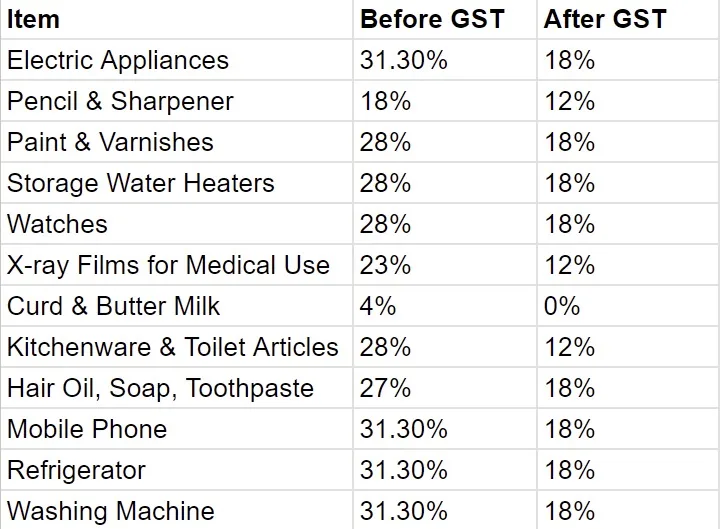
Additionally, products like detergents, gas lighters, and televisions, which previously attracted a tax rate of 28 per cent, are now taxed at 18 per cent. This reduction has made these items more affordable for the average household and has eased the cost of living.

Read More: Sengol Controversy: Sanctity of dharma danda

The tax relief extends to consumer durables as well. Items such as electric appliances, storage water heaters, and refrigerators, which were taxed at a high rate of 31.3 per cent, now have a more reasonable tax rate of 18%. This has reduced the overall cost of these goods, making them more accessible to a larger section of the population.

Sanitary napkins which were previously taxed at 12 per cent, are now exempt from GST, reflecting the government’s commitment to promoting women’s health and hygiene. This exemption is a significant step towards making sanitary products more affordable and accessible.

Furthermore, the tax rates on hair oil, soap, and toothpaste have been reduced from 27 per cent to 18 per cent, lowering the cost of these essential personal care items. This reduction ensures that basic hygiene products are within reach for more consumers, improving overall public health standards.

The GST reform has not only simplified the tax structure but also provided much-needed financial relief to millions of Indian households, underscoring the Modi government’s commitment to economic inclusivity and consumer welfare.

The Goods and Services Tax (GST) regime, implemented under the Modi government, has significantly bolstered the “Make in India” initiative by reducing the overall tax burden on manufacturing. This reform has played a pivotal role in making Indian goods more competitive in the global market.

By eliminating the cascading effect of multiple taxes, GST has lowered the cost of production. This reduction in production costs has made Indian products more attractive to both domestic and international buyers. As a result, foreign investment has surged, and domestic manufacturing has received a substantial boost, leading to job creation and economic development.

The introduction of GST has made tax administration more transparent. The online GST portal has simplified tax compliance for businesses, reducing the scope for corruption and tax evasion. This streamlined tax process has cut down the time and effort required for filing taxes, making it more efficient for businesses of all sizes.

Overall, the GST regime has not only supported the “Make in India” initiative but has also enhanced economic growth by fostering a more transparent and efficient tax system.

The implementation of the Goods and Services Tax (GST) under the Modi government has emerged as a transformative reform for the Indian economy. By reducing the tax burden on essential and daily use items, the government has provided substantial financial relief to the common man.

The GST regime has introduced a simplified tax structure, which has increased transparency and efficiency in the tax system. This landmark reform has not only made goods more affordable but also given a significant boost to domestic manufacturing. These achievements underscore the success of the GST implementation.

The reduction in tax rates on essential items has eased the cost of living for millions of consumers. Additionally, the streamlined tax process has facilitated ease of business, fostering a more conducive environment for economic activities.

Overall, the GST has set the stage for sustained economic growth and development, benefiting millions of consumers and businesses across India. The positive impact of this reform is evident in the increased affordability of goods and the enhanced transparency and efficiency in the tax administration.

Topics: GSTPM Narendra ModiUPAGoods and Services Tax
Share1TweetSendShareSend
✮ Subscribe Organiser YouTube Channel. ✮
✮ Join Organiser's WhatsApp channel for Nationalist views beyond the news. ✮
Previous News

Bharat has fully integrated all SDGs into its national strategy: Indian Envoy to UN Yojana Patel

Next News

Baloch National Gathering 2024: Community leaders, organisations in Pakistan to protest against CPEC, genocide

Related News

Prime Minister Narendra Modi

Even the US bows to PM Modi’s long-standing leadership!

Russian President Vladimir Putin and Prime Minister Narendra Modi(File Photo)

Russia Day: From Buddha Dhamma to BrahMos, Why India-Russia Friendship Has Endured Every Geopolitical Storm

Prime Minister Narendra Modi

The MODI Era: Legacy of 4399 days of Transformation

PM Narendra Modi addressing the NDA meeting

‘The problem was Congress, not Hindus’: PM Modi’s blistering attack, lists India’s milestones in last 12 years

Odisha CM Mohan Charan Majhi and Union Minister of Law and Justice Arjun Ram Meghwal along with other dignitaries on the stage on the occasion of completion of 12 years of the Central Government

PM Modi’s 12-years of governance marks era of transformation, growth & global recognition: Odisha CM Mohan Majhi

Modi govt clears Rs 13,000 Crore Great Nicobar Airport Project (This is an AI generated image)

India’s strategic move in Great Nicobar: Rs 13,000 crore airport to double strength in the Indian Ocean

Load More

Latest News

Foundation stone laying ceremony for the natural calamity victims by SevaBharati

Keralam: SevaBharati begins housing project for homeless victims of the Wayanad landslide

Tulsi Gabbard discloses declassified files on US funded biolabs worldwide; Was Washington secretly brewing a bio-war?

The radicalised youth booked for spreading jihadi ideology in India

From Madrasa to Telegram Groups: How Faizan from MP and Naeem from UP were drawn into a Pakistan-linked jihadi network?

Assam government restrict s issuance of Aadhaar Cards

Assam’s Aadhaar Crackdown: Why people above 18 now face new restrictions; What CM Himanta Biswa Sarma said

12 cases raise claims of alleged bias and anti-India narrative framing on Wikipedia, questioning its editorial neutrality and content representation

Wikipedia Exposed: 12 cases that raise serious questions about Anti-Hindu bias and narrative manipulation

Sri Rama Sene chief Pramod Muthalik slams Prakash Raj in the Dharmasthala Mass burial case

Dharmasthala ‘Mass Burial’ Case: Prakash Raj faces public fury: Protesters burn effigy, Hindu groups demand SIT Probe

Intelligence inputs suggest a shift from mass-casualty attacks to a sustained campaign of fear driven by targeted killings and underworld operatives

Pakistan’s Proxy War 2.0: How Dawood-ISI network is building a new sharpshooter army in India

PM Modi’s era through the prism of strategic governance

From Gujarat Model to Global Leadership: Assessing PM Narendra Modi’s 12-year journey of strategic governance

G7 Summit: A strategic opportunity for India to script human-centric AI ecosystem with sovereign models

From Bankura’s red soil, Panchmura’s terracotta tradition blends clay, devotion, and craft into a living heritage of West Bengal

Story of Bankura Terracotta: West Bengal’s living legacy of clay, devotion & timeless craft

Load More
  • Privacy
  • Terms
  • Cookie Policy
  • Refund and Cancellation
  • Delivery and Shipping

© Bharat Prakashan (Delhi) Limited.
Tech-enabled by Ananthapuri Technologies

  • Home
  • Search Organiser
  • Bharat
    • Assam
    • Bihar
    • Chhattisgarh
    • Jharkhand
    • Maharashtra
    • View All States
  • World
    • Asia
    • Africa
    • North America
    • South America
    • Europe
    • Australia
  • Editorial
  • Operation Sindoor
  • Opinion
  • Analysis
  • Defence
  • Culture
  • Sports
  • Business
  • RSS @ 100
  • Entertainment
  • More ..
    • Sci & Tech
    • Vocal4Local
    • Special Report
    • Education
    • Employment
    • Books
    • Interviews
    • Travel
    • Health
    • Politics
    • Law
    • Economy
    • Obituary
  • Subscribe Magazine
  • Read Ecopy
  • Advertise
  • Circulation
  • Careers
  • About Us
  • Contact Us
  • Policies & Terms
    • Privacy Policy
    • Cookie Policy
    • Refund and Cancellation
    • Terms of Use

© Bharat Prakashan (Delhi) Limited.
Tech-enabled by Ananthapuri Technologies