





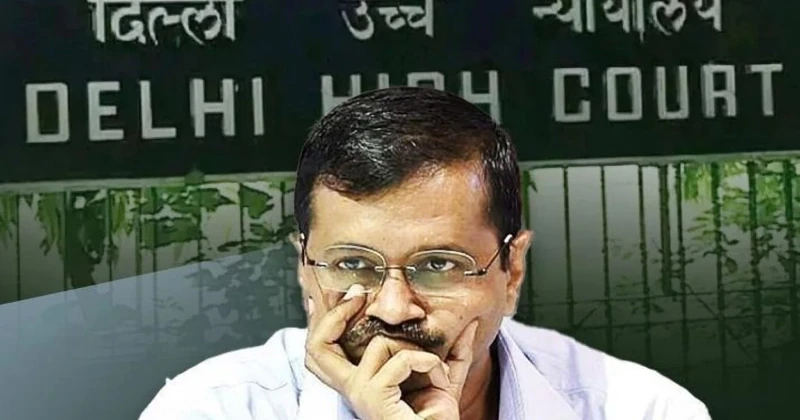
On June 20, a Delhi court granted bail to Chief Minister Arvind Kejriwal, who had been arrested by the Enforcement Directorate (ED) concerning a money laundering case related to the now-cancelled Delhi liquor excise policy. Vacation Judge Niyay Bindu of the Rouse Avenue Court issued the bail order after extensive hearings with Kejriwal and the ED. The detailed court order is still awaited.
Following the bail announcement, ED’s counsel, Zoheb Hossain, requested a 48-hour delay in signing the bail bond to allow the central agency time to appeal the decision. The court denied this request, stating that the bail bond should be presented to the duty judge on June 21. Subsequently, the ED has moved the Delhi High Court against the trial court’s order, seeking an urgent hearing.
Kejriwal was initially arrested by the ED on March 21, with allegations that he was the ‘kingpin’ in the Delhi liquor excise policy scam. After weeks in jail, the Supreme Court released him on interim bail on May 10 to campaign for the Lok Sabha polls, but he was returned to jail on June 2 after the interim relief ended.
Earlier this month, Kejriwal submitted two bail applications in the Rouse Avenue Court. The first, for a seven-day bail for medical treatment, was denied on June 5. The second, a regular bail application, was granted on June 20.
The case against Kejriwal originated from an FIR filed by the CBI based on a complaint from the Lieutenant-Governor of Delhi, alleging multiple irregularities in the Delhi Excise policy of 2021-22, which was later withdrawn by the state. Following the CBI’s investigation, the ED filed a case under the Prevention of Money Laundering Act, alleging that money generated through the excise policy was funnelled through “hawala” channels to finance the AAP’s campaign in Goa ahead of the 2022 Assembly elections.
In opposing Kejriwal’s bail plea, the ED claimed he had stayed in a seven-star hotel in Goa with bills paid using kickback money. The ED argued that even if Kejriwal did not commit the offence directly, he is responsible for AAP’s actions and is, therefore, guilty.
Responding to the ED’s claims, Senior Advocate Vikram Chaudhary, representing Kejriwal, argued that the ED’s conclusions were based on hypotheses and that there was no money trail, as the agency alleged.
The ED has now moved to the Delhi High Court, challenging the trial court’s order granting bail to Kejriwal. Lawyers for the ED will mention the matter before the vacation bench of the High Court shortly for an urgent hearing. The trial court had ordered Kejriwal’s release on a bail bond of Rs 1 lakh.
The ED had asked the court to stay Kejriwal’s release for 48 hours, but the court refused. The ED arrested Kejriwal on March 21 on allegations that he was part of a conspiracy to intentionally leave loopholes in the now-scrapped Delhi Excise Policy for 2021-22 to benefit certain liquor sellers.
The ED has alleged that kickbacks received from liquor sellers were used to fund the Aam Aadmi Party’s (AAP) electoral campaign in Goa and that Kejriwal, being the National Convenor of the party, is both personally and vicariously liable for the offence of money laundering.
Kejriwal has denied the allegations and accused the ED of running an extortion racket. Other AAP leaders arrested in the same case include former Deputy Chief Minister of Delhi, Manish Sisodia, and Member of Parliament, Sanjay Singh. Singh is currently out on bail, though Sisodia continues to languish in jail.
The Supreme Court granted Kejriwal interim bail in May to allow him to campaign for the Lok Sabha elections. After the interim bail period ended, he returned to jail on June 2. He had also filed an application seeking interim bail for seven days on medical grounds, but the trial court rejected it on June 5. Subsequently, the trial court allowed his regular bail plea on merits, prompting the ED to approach the High Court.
















Comments