Birth Anniversary of Adi Shankaracharya: The great genius whose philosophical legacy reverberates through ages
December 6, 2025
  • Read Ecopy
  • Circulation
  • Advertise
  • Careers
  • About Us
  • Contact Us
Android AppiPhone AppArattai
Organiser
  • ‌
  • Bharat
    • Assam
    • Bihar
    • Chhattisgarh
    • Jharkhand
    • Maharashtra
    • View All States
  • World
    • Asia
    • Europe
    • North America
    • South America
    • Africa
    • Australia
  • Editorial
  • International
  • Opinion
  • RSS @ 100
  • More
    • Op Sindoor
    • Analysis
    • Sports
    • Defence
    • Politics
    • Business
    • Economy
    • Culture
    • Special Report
    • Sci & Tech
    • Entertainment
    • G20
    • Azadi Ka Amrit Mahotsav
    • Vocal4Local
    • Web Stories
    • Education
    • Employment
    • Books
    • Interviews
    • Travel
    • Law
    • Health
    • Obituary
  • Subscribe
    • Subscribe Print Edition
    • Subscribe Ecopy
    • Read Ecopy
  • ‌
  • Bharat
    • Assam
    • Bihar
    • Chhattisgarh
    • Jharkhand
    • Maharashtra
    • View All States
  • World
    • Asia
    • Europe
    • North America
    • South America
    • Africa
    • Australia
  • Editorial
  • International
  • Opinion
  • RSS @ 100
  • More
    • Op Sindoor
    • Analysis
    • Sports
    • Defence
    • Politics
    • Business
    • Economy
    • Culture
    • Special Report
    • Sci & Tech
    • Entertainment
    • G20
    • Azadi Ka Amrit Mahotsav
    • Vocal4Local
    • Web Stories
    • Education
    • Employment
    • Books
    • Interviews
    • Travel
    • Law
    • Health
    • Obituary
  • Subscribe
    • Subscribe Print Edition
    • Subscribe Ecopy
    • Read Ecopy
Organiser
  • Home
  • Bharat
  • World
  • Operation Sindoor
  • Editorial
  • Analysis
  • Opinion
  • Culture
  • Defence
  • International Edition
  • RSS @ 100
  • Magazine
  • Read Ecopy
Home Bharat

Birth Anniversary of Adi Shankaracharya: The great genius whose philosophical legacy reverberates through ages

Adi Shankaracharya, revered as one of the greatest geniuses in the world, continues to cast a profound influence on philosophy and thought even centuries after his passing

C K Saji NarayananC K Saji Narayanan
May 12, 2024, 01:05 pm IST
in Bharat, Culture
Follow on Google News
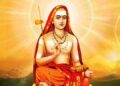
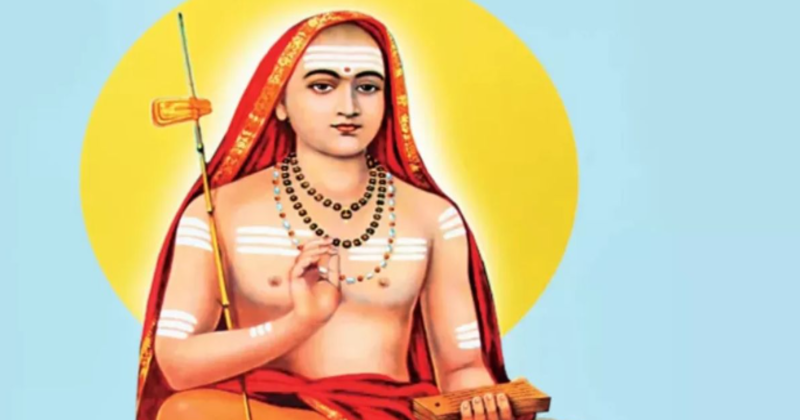
Representative Image of Adi Shankracharya

Representative Image of Adi Shankracharya

FacebookTwitterWhatsAppTelegramEmail

Veda Vyasa, Sri Buddha and Adi Sankara among others stand foremost among the greatest geniuses in the world. The famous French writer and thinker Andre Malraux places Sankara above Aristotle. Adi Sankaracharya could only live up to the age of 32, but his thoughts and contributions went beyond the axis of time. His contribution to Advaita Darsana can be considered the pinnacle of human thought and philosophy. Advaita darsana was not an invention of Sankara; it is there in the Upanishads, but he brought it into prominence, says Swami Vivekananda. When ideas of probabilities in Einsteinian physics replaced determinism in Newtonian physics, modern physics moved towards a sort of neo-Vedanta.

In ancient India, we hear only about two prominent Sannyasis who directly embraced sannyasa in their early life without passing through the garhastya phase viz., Rishi Suka and then Sankara. It was Buddha who, after discarding worldly life, prescribed lifelong celibacy for his disciple-Sannyasins. This was subsequently adopted by many of the Hindu Sannyasins. The Hindu concept of “sannyasa” has been beautifully described in Sankara’s ‘Yati Panchaka’ as having a loin cloth is the most fortunate possession for a Sannyasi.

While touring the entire country, Sankara found diverse and contradictory forms of worship, Gods and monks. Many of them did not conform to the Hindu culture. He found innumerable Gods prevalent in Hindu society, with various modes of their worship. He consolidated different deities into five Panchayatana deities viz., Shiva, Vishnu, Shakti, Surya and Ganesha. He classified the methods of worship for six religions as Shanmatha Aradhana (with the addition of Kumara worship) viz., Shaivam, Vaishnavam, Shaakteyam, Sauram, Gaanapathyam and Kaumaaram. Thus, master of nirguna Advaita cared about Saguna Upasana also. Sankara stopped Vamachari and Kapalika poojas as well as opposed the Kaula religion and worship of Siva in the form of a dog.

Despite all these, at the height of spirituality, he said, “nirishvaroham” (I am beyond God). He says about the difference between intellectuals and devotees: “For the philosophers, Moksha or Mukti (liberation) is the highest end. But for Bhaktas, bhakti is the highest goal and Mukti is supplementary.” Sankara sarcastically comments on rituals by seeking apologies for three doshas (triads of vices): meditation (attributing forms to the formless), hymns (describing the indescribable), and pilgrimages (denying omnipresence). He does not deny rituals but says liberation can be attained only through realisation (aparokshanubhuti). Systematising the Sannyasi groups, he formulated the Dasanami system giving ten names denoting different geographical differentiations. They are Giri, Puri, Bharati, Ban, Aranya, Sagar, Ashram, Saraswati, Tirtha and Parvat. Even today, all the Sannyasis belong to one or another in the Dasanami system.

He raised Advaita to prominence in human thought. Sankara developed Advaita as a system and explained it through commentaries, stotras, and prakarana grandhas. In Vivekachudamani, he says that the individual soul and the universal soul are not different. At the same time, he beautifully synchronises the other two prominent views viz. Dwaita and Visishta Advaita into an integrated thought. The last sloka in his ‘Maneesha Panchakam’ and ‘Hanumat pancharatna stotraat’ says: “When I consider myself as a mere body it is Dvaita; when I consider myself as this personal soul (jeeva) it is Visishta advaita; and when I realise myself as this Supreme Atma then it is Advaita. This the essence of all scriptures.” The Western world can never think of such a harmonious blending of apparently conflicting philosophies.

Sankara insisted on the connection with practical ideas. He said that the success of Yoga and others is determined only by the results. In Prasnottara Manimala, his definition of truth is result-oriented i.e., the welfare of all beings. For him, like Vyasa, violence and hatred were non-truths. Shankara’s pragmatic theory accepts experience at the worldly level (vyavaharika satyam) and rejects experience at the reality level (paramarthik mithya).

Maya is a Vedic concept which Sri Buddha propagated and Sankara explained. Stephen Hawking’s theory that “the sum of the physical universe is zero” goes back to the theory of Maya. Sankara says that a world different from Brahma is a myth- “Brahma Satyam, Jagad Mithya”. In ‘Dakshinamurti Stotram’, he says the universe is only an outward projection of the inner consciousness. The cessation of avidya (ignorance) and maya is a path towards true happiness. According to him, ‘dualism’ is due to delusion (mithya jnana). It can be removed very well through samyag or correct knowledge.

In Viveka Chudamani, Sankara proposes the human spiritual practices in a nutshell, as “Sadhana Chatushtayam” viz., 1. Nithya anitya Vastu Vivekam (distinguishing between permanent and non-permanent), 2. Iha Para Phala Bhoga Viragam (detachment from enjoying the fruits of actions in this world and the other world), 3. Shamadi Shad Sampati (Six prosperities are- Shama, Dama, Shraddha, santi, Uparati, Thitiksha), 4. Mumuksha (longing for liberation). To intellectuals, he distinguished the real intelligence as Viveka in his ideas “nitya anitya vivekam” and “tyajya grahya vivekam” (distinguishing between what is to be accepted and what to be rejected). Sankara says, there is no like or dislike in me: “na me dvesha ragau”. He also says he has no feeling of caste discrimination- “na me jatibhedah”. He accepted a teacher who was knowledgeable whether he was of a low or high caste.

Sankara’s global perspective is that the whole world is spiritual- ‘Varanasi Medini’ (The whole earth is sacred Varanasi). His famous definition of culture in the Vedanta Sutra is the process of creating good qualities and removing the bad ones. Freudian psychology has reached only three states of mind. Sankara in Dasa Sloki explains the three states of mind as Jagrat, Swapna, and Sushupti and reaches the fourth state as Turiyam. Sankara also contributed to Vedantic textual tradition and methodology.

While the Buddha rebelled against the Vedic authority by leaving orthodoxy, Sankara questioned orthodox views by remaining with them. Even though Sankara questioned many ideas of Sri Buddha, he did so with utmost respect and called Sri Buddha “Yoginam Chakravarti” i.e., emperor of Yogis. Sankara gave a new face to Hindutva by combining Upanishad Advaita with the essentials of Buddhism. This is in dire contrast with the history of Christianity and Jews. This is why Vivekananda advocated the new face of Hindutva as the combination of the heart of Buddha and the mind of Shankara. Swami Vivekananda says this is a “fatherly embrace” since Buddhism ceased to exist separately from Hindutva, and the present Hindutva is a mix of both.

 

Topics: Adi ShankaracharyaBirth Anniversary Adi Shankaracharya
C K Saji Narayanan
C K Saji Narayanan
The writer is National President of Bharatiya Mazdoor Sangh [Read more]
Share1TweetSendShareSend
✮ Subscribe Organiser YouTube Channel. ✮
✮ Join Organiser's WhatsApp channel for Nationalist views beyond the news. ✮
Previous News

Bifurcation issues deserve strong voice at parliament: Nallari Kiran Kumar Reddy, BJP candidate from Rajampet

Next News

Andhra Pradesh: Church issues official letter supporting YS Jagan for CM, merely for being Christian

Related News

The Aim of Human Life: An evening discourse on Adi Shankaracharya’s teachings

Vice President Jagdeep Dhankhar, Kerala Governor Arif Mohammad khan and others during Rajanaka Purashkar

Kashmir’s Shaiva Tantra Resonates in Kerala

Chennai Lit Fest 2024: Celebrating the Sanatan Connect with Ram Naam

Jordy Moore, embarks on a 6,400 km pilgrimage across India, tracing the trail of Adi Shankaracharya (The Hindu)

Australian Yogini embarks on spiritual pilgrimage to trace Adi Shankaracharya’s trail

Adi Shankaracharya teachings and tradition form the basis of Smartism and have influenced Sant Mat lineages

Remembering Sri Adi Shankaracharya, who re-established geo-cultural unity of Bharat through ‘four mathas’

Leftists desecrate Adi Shankaracharya statue in Sree Sankara University on the pretext of protest against Governor

Load More

Comments

The comments posted here/below/in the given space are not on behalf of Organiser. The person posting the comment will be in sole ownership of its responsibility. According to the central government's IT rules, obscene or offensive statement made against a person, religion, community or nation is a punishable offense, and legal action would be taken against people who indulge in such activities.

Latest News

PM Modi presents Putin with Bhagavad Gita, chess set, and silver horse

Cultural ties strengthened: PM Modi presents Putin with Bhagavad Gita, chess set, and silver horse

Image for representational purpose only, Courtesy Vocal Media

Bihar to get ‘Special Economic Zones’ in Buxar and West Champaran

Thirupparankundram Karthigai Deepam utsav

Andhra Pradesh: AP Dy CM Pawan Kalyan reacts to Thirupparankundram row, flags concern over religious rights of Hindus

23rd India-Russia Annual Summit

India-Russia Summit heralds new chapter in time-tested ties: Inks MoUs in economic, defence, tourism & education

DGCA orders probe into IndiGo flight disruptions; Committee to report in 15 days

BJYM leader Shyamraj with Janaki

Kerala: Widow of BJP worker murdered in 1995 steps into electoral battle after three decades at Valancherry

Russian Sber bank has unveiled access to its retail investors to the Indian stock market by etching its mutual fund to Nifty50

Scripting economic bonhomie: Russian investors gain access to Indian stocks, Sber unveils Nifty50 pegged mutual funds

Petitioner S Vignesh Shishir speaking to the reporters about the Rahul Gandhi UK citizenship case outside the Raebareli court

Rahul Gandhi UK Citizenship Case: Congress supporters create ruckus in court; Foreign visit details shared with judge

(L) Kerala High Court (R) Bouncers in Trippoonithura temple

Kerala: HC slams CPM-controlled Kochi Devaswom Board for deploying bouncers for crowd management during festival

Fact Check: Rahul Gandhi false claim about govt blocking his meet with Russian President Putin exposed; MEA clears air

Load More
  • Privacy
  • Terms
  • Cookie Policy
  • Refund and Cancellation
  • Delivery and Shipping

© Bharat Prakashan (Delhi) Limited.
Tech-enabled by Ananthapuri Technologies

  • Home
  • Search Organiser
  • Bharat
    • Assam
    • Bihar
    • Chhattisgarh
    • Jharkhand
    • Maharashtra
    • View All States
  • World
    • Asia
    • Africa
    • North America
    • South America
    • Europe
    • Australia
  • Editorial
  • Operation Sindoor
  • Opinion
  • Analysis
  • Defence
  • Culture
  • Sports
  • Business
  • RSS @ 100
  • Entertainment
  • More ..
    • Sci & Tech
    • Vocal4Local
    • Special Report
    • Education
    • Employment
    • Books
    • Interviews
    • Travel
    • Health
    • Politics
    • Law
    • Economy
    • Obituary
  • Subscribe Magazine
  • Read Ecopy
  • Advertise
  • Circulation
  • Careers
  • About Us
  • Contact Us
  • Policies & Terms
    • Privacy Policy
    • Cookie Policy
    • Refund and Cancellation
    • Terms of Use

© Bharat Prakashan (Delhi) Limited.
Tech-enabled by Ananthapuri Technologies