






Swami Vivekananda, the sage of national consciousness, had said, “If we have to awaken the spirit of living with pride, if we want to make the seed of patriotism flourish in our hearts, then we will have to take shelter of Hindu national calendar dates. Whoever relies on the dates of strangers becomes a slave and loses self-esteem.”
Bharat’s First Panchang
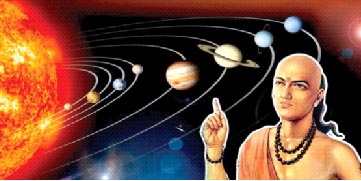
On this auspicious day, renowned mathematician Bhaskaracharya established the first Bharatiya Panchang by calculating the day, month, and year from sunrise to sunset. While the basis for celebrating New Year in other countries is linked to a person, event, or place, and foreigners celebrate according to their country’s social and religious traditions and beliefs, our Bharatiya New Year is linked to the eternal elements of the universe. Our New Year, which is based on the movements of planets and stars, is the most distinctive and scientific.

Bharatiya culture or Sanatan Sanskriti is a beautiful, logical, historical, spiritual and scientific civilisation. According to Mahatma Gandhiji, a nation’s culture is in its people’s hearts and souls. It’s totally accurate since there are so many things or practices that we’ve been following for centuries.
Aryabhatta’s Seminal Role
As we celebrate Hindu New Year, let’s look at the science behind the Hindu calendar. Bharat has a long astronomy tradition, although it is difficult to trace its evolution due to a lack of regular historical documents. Astronomical references found in ancient writings must be interpreted. Indian astronomy flourished before 1400 BC, far older than Babylonian astronomy (which prospered in the fifth century). Tithis (dates) and Nakshatras (stars, star clusters, or asterisms) were concepts in early Vedic astronomy. Many astronomers, including Aryabhatta in the fifth century, created and refined the current Panchangs (calendars).
Based on Lunisolar Calendar
The Hindu New Year is based on the Lunisolar calendar, which is directly related to how the human body is built. The Indian calendar is significant not only culturally, but also scientifically, because it connects you to the planet’s movements. The spring season begins with Pratipada, which is filled with joy, enthusiasm and happiness, as well as the scent of flowers all around. This is also the time when the crop begins to ripen, allowing the farmer to reap the benefits of his labour. The Nakshatras are in a favourable position. That is, there is a favourable time to begin any work. The Northern Hemisphere receives the majority of the Sun’s energy during the 21-day period beginning with Hindu New Year due to the tilt of the Earth. Though the high temperatures may be uncomfortable for humans, this is when the Earth’s batteries are charged. The first day of the waxing Moon, following the first new moon after the equinox, marks the start of a New Year.
Twelve Hindu mas (māsa, lunar month) are equal to approximately 354 days, while the length of a sidereal (solar) year is about 365 days. This creates a difference of about eleven days, which is offset every (29.53/10.63) = 2.71 years, or approximately every 32.5 months. Purushottam Maas or Adhik Maas is an extra month which is inserted to keep the lunar and solar calendars aligned. The 12 months are subdivided into six lunar seasons timed with the agriculture cycles, blooming of natural flowers, fall of leaves, and weather. To account for the mismatch between lunar and solar calendar, the Hindu scholars adopted intercalary months, where a particular month just repeated. The choice of this month was not random, but timed to sync back the two calendars to the cycle of agriculture and nature.
There is some relevance to Ugadi being the New Year rather than the first of January in terms of what is happening on the globe and in human physiology and psyche on this day. Ugadi adheres to the Lunisolar calendar, which is inextricably linked to the structure of the human body. It would be interesting to know that the scholars of Bharatiya astrology had predicted in the Vedic era that the solar eclipse would occur on a certain day and at a certain time. This time calculation is proving to be completely accurate even after ages.
The New Year begins with sunrise. New Year is not greeted in the dead of night. The New Year is welcomed by welcoming the first rays of sunlight. The English calendar considers New Year to begin at 12 midnight, which is not scientific. A day can only be completed by combining day and night. The day begins with sunrise and continues till the following sunrise. Sunset is regarded as the transition point between day and night.
Nature’s New Year occurs in March, when nature and the earth complete one cycle. Nature’s cycle does not end in January. The New Year begins when the Earth rotates on its axis and revolves around the Sun for the second cycle. The New Year marks a new beginning for life in nature. Spring arrives. Chaitra happens between March and April on the English calendar. On March 21, the Earth completes one revolution around the Sun, and the lengths of day and night are equal. Scientists believe that the natural New Year on Earth begins on this day.
The spring season begins with Pratipada, which is filled with joy, enthusiasm and happiness, as well as the scent of flowers all around. This is also the time when the crop begins to ripen
Our scriptures plainly state that the pace of time varies across different regions of the universe. You can see that the renowned physicist Albert Einstein discovered the same thing in his theory of ‘Time and Space’.
Relevance of Hindu New Year Festivals
Gudi Padwa, also known as Samvatsar Padvo (among Hindu Konkanis in Goa), is celebrated by Maharashtrians on the Chaitra Shukla Pratipada day. This is the first day of Chaitra Navratri, also known as Ghatasthapana or Kalash Sthapana. The name Padwa comes from the Sanskrit word Pratipada, which refers to the first day of the lunar month.
On this day, an adorned Gudi is hoisted and worshipped, which is how the event gets its name. This event occurs at the very end of the Rabi season. It is one of the three and a half blessed days on the Hindu Lunar Calendar. Other related Muhurta days include Akshaya Tritiya, Vijayadashami (or Dussehra), and Balipratipada.
Significance of Ugadi
According to the Telugu and Kannada Hindu calendars, Ugadi, Yugadi or Samvatsara is observed on the first day of the Moon’s waxing phase in the month of Chaitra. This day is also known as Chitra Shukla Paksha Padyami, and it falls in March or April on the Gregorian calendar. In reality, this day is regarded as New Year’s Day among Hindus residing in the Vindhya-Kaveri belt.
The term Ugadi or Yugadi is derived from the Sanskrit roots of Yuga or “age” and Adi, which means “beginning”; when combined, these words imply “the beginning of a new age.” The name Yugadi specifically relates to the beginning of the current period, or Yuga, known as the Kaliyuga.

Ugadi represents accepting and appreciating life in the coming year, which will be a diverse combination of good and bad experiences, including happiness, sadness, wrath, fear, disgust, and surprise. Neem is used to represent grief since it has a bitter flavour. Jaggery and ripe bananas represent delicious contentment. Green chilli and pepper are hot, which indicates fury. Salt symbolises fear, while sour tamarind juice represents disgust. Unripe mango is frequently used for its tartness, which adds a sense of surprise.
Chandramana Ugadi marks the start of a new year according to the Lunisolar calendar, which has been widely used in India for millennia. The calendar, like everything else from the East, is based on how it affects human physiology and cognition. There is a science behind Ugadi which enhances human wellbeing in many different ways.
In tropical latitudes, it is customary to begin the warmest season of the year with an extensive application of cooling oils such as castor. Unlike the current calendars of the day, which neglect human experience in relation to the planetary movement, the Lunisolar calendar (Chandramana – Souramana Panchanga) addresses the experience and influence that is happening to the human being and so, the calendar being adjusted to latitudes.
Baisakhi: Bounty of Harvest
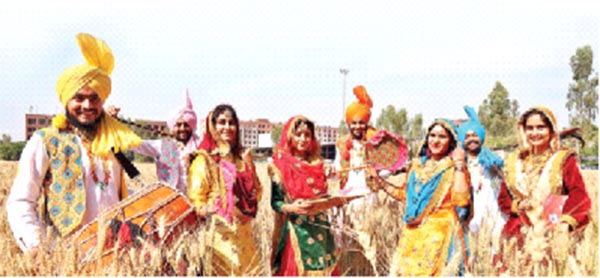
Vaisakhi, also known as Baisakhi, is a Punjabi harvest festival observed on the first day of the month of Vaisakhi (according to the Punjab solar calendar). Punjab’s Sikh community commemorates the day when Guru Gobind Singh established Khalsa.
Vishu Down South
The lush green land of Kerala celebrates its new year in April. The day begins with Vishu Kani’s first darshan, in which fruits, vegetables, and flowers are uncovered with a mirror.
Tamil Nadu Welcomes Puthandu
The traditional Tamil New Year begins on April 13 or 14, in the middle of the month, or April 1. During this event, people greet each other with “Puthandu Vazthukal,” which means Happy New Year. Mangai Pachadi, prepared with raw mangoes, neem, and jaggery, is the festival’s signature dish.
Celebrating Navreh in the Valley
This New Year in Kashmir begins on the first day of Chaitra Navratri, which is equally important as Shivaratri. Gudi Parva, Ugadi, and other events are celebrated with tremendous excitement and purity as a New Year begins.














Comments