





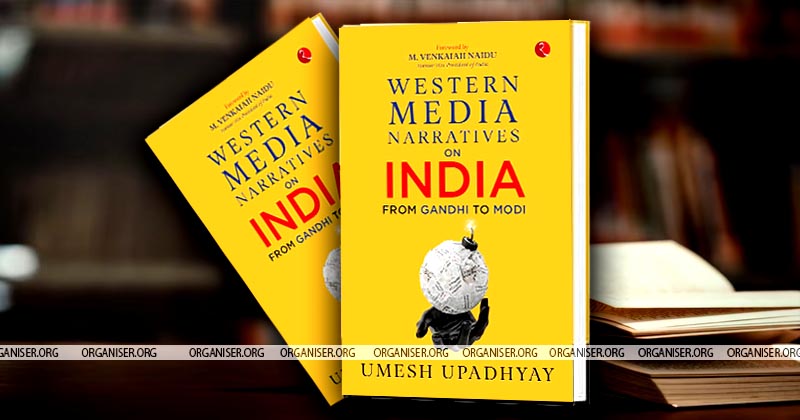
Media, along with academic theories, play a critical role in building narrations – the perceptions based on half-truths or falsehoods – about specific issues, personalities or societies. The colonisation process and justification for the same was essentially based on the same art of narrative building by the colonisers. Hence, when these days when various think tanks come out with reports on India about the state of democracy or unduly target Prime Minister Narendra Modi and his Government for pro-India policies, many people think t that it is the antipathy of the West towards Hindutva movement or Bharatiya Janata Party (BJP) that is the only guiding factor behind the same. Contrary to this perception, there is a deep-rooted bias of the Western media and academia about the erstwhile colonies. The book by Shri Umesh Upadhyaya systematically exposes those biases that have existed since the pre-independence period,
The book locates the problem of media narratives on India in the larger prism of colonisation. Starting with the absence of coverage of Surinam’s Independence in 1975 in the leading newspapers of Latin America and whatever little coverage it had subsequently was peddling the American aspersions about the newly independent country’s ability to govern itself, the book identifies the root problem of such bias – “the origin of the news, the training of journalists and the larger ecosystem of information that has been built over the years”. The first chapter also beautifully exemplifies how the entire media and journalism business went to Asia and Africa as a part of the colonisation project – in which commerce and evangelisation went hand in hand. The case of Henry Morton Stanley, a Welsh-born American journalist who worked for the imperial powers as a special correspondent for the New York Herald, is exemplary enough to understand the way Western media’s motives behind covering African and Asian societies. The way an entire ecosystem of International agencies was built to depict the entire ‘conquered world’ as ‘primitive’ and promote Western values through capitalist ventures is heart-wrenching. Even though the countries created respective national news agencies after Independence, narrations of the West-controlled international ecosystem continued to dominate the new world. The book systematically captures this entire evolution.
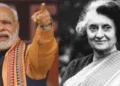
The way Indira Gandhi was hounded for stepping ahead to deal with the humanitarian crisis in erstwhile East Pakistan, which led to Bangladesh and the way Atal Bihari Vajpayee was targeted for his firm stand on terrorism are two case studies of the third chapter
The tussle between Reuters, which represented the British interests and Press Trust of India (PTI) over the coverage of various issues, the way Hyderabad liberation and the role of Sardar Patel were depicted in the British media – which ultimately led to a discussion in the British Parliament and the UK taking the issue to UNSC, rumour mongering over Gandhi and Patel’s sojourn to Pilani in Rajasthan to show them as tired leaders, misquoting Dr Ambedkar’s speech at the Scheduled Caste Federation as a plot against the Nehru Government and the ‘social justice icon’ breaching the collective responsibility expected in the parliamentary democracy, playing soft on Pakistan’s misadventures right from the partition etc. are the concrete case studies discussed in the next chapter of the book. The colonial mindset and project did not end with the Independence. The so-called ‘independent and objective’ media played a critical role in perpetuating colonial constructs like ‘India could make progress because of the British’. The second chapter demonstrates how news stories are used to pressurise the policymaking in India and the role of a ‘well-oiled ecosystem of academic circles, NGOs, international institutions, non-governmental think tanks, among others’ in those pressure tactics. This well-orchestrated machinery has been playing this game for decades.
The way Indira Gandhi was hounded for stepping ahead to deal with the humanitarian crisis in erstwhile East Pakistan, which led to Bangladesh and the way Atal Bihari Vajpayee was targeted for his firm stand on terrorism are two case studies of the third chapter. The way Western media conveniently shifted the entire narration on terrorism following the 9/11 attack on the World Trade Centre is presented with enough evidence in the book.
India has made remarkable progress in the field of space technology despite the Western strategies of monopolisation. The coverage of the remarkable feat in the form of the Mangalyaan and Chandrayaan missions by Indian scientists and research organisations is another case where biased media houses in the West could not digest this achievement. Such missions were either mocked with derogatory cartoons or were questioned in the name of ‘poor countries should not invest in technology’. The premier space research organisation ISRO has been targeted, and India’s efforts to reduce poverty remarkably have been undermined only to show the colonial agenda of protecting ‘commercial interest’ and reinforcing the ‘poor India’ perception systematically. The author convincingly exposes this agenda-driven journalism.
As explained by the author, the real triggering point of this book was how American and British media covered and depicted the COVID-19 scenario in India. Though the question of such a biased, agenda-driven coverage of India in the West was pinching the author since his student days, when he was studying International Politics at Jawaharlal Nehru University, it was inhuman and irresponsible coverage of the way India tackled the entire pandemic period prompted Shri Upadhyaya to write his first book, after a journalistic career of more than four decades. For the book, the author undertook painstaking efforts of ‘studying some 230 articles and news items published by major UK and US English publications from March 2020 to June 2021. Naturally, the way Western media turned COVID-19 coverage into a Modi-bashing event is the main chapter of this book. Though India’s handling of the global pandemic was much better than most of the Western countries, and the Government certainly played an important role in the same, along with the societal efforts, the way Western media made irresponsible and unscientific predictions about deaths created suspicion about the government numbers, brought in religious overtones by adding communal dimensions to the international scale health crisis, systematic efforts to question the Indian vaccines to further the economic interests of Global Pharma giants, calling the delta variant as ‘Indian Variant’ and complete absence of courage and sacrifice shown by ordinary Indians in mitigating the crisis etc. has been strongly argued and analysed in the book. The case study of New York Times coverage is an eye-opener.
The new form of imperialism is rooted in the colonisation of minds, and the media industry, including advertisement, represents the same psyche
Interestingly, the author brings in the Spanish flu story to substantiate the point. The rumour that Gandhiji was also infected with the virus in 1918 was such a prevalent story in the Western media that many Indian newspapers also started publishing. The author has proved with Gandhiji’s writings that it was a stomach upset and exertion that resulted in the prolonged illness which turned into a Spanish Flu infection by a British health journalist in 2017, which was used and reused during the COVID-19 pandemic by other journalists.
The new form of imperialism is rooted in the colonisation of minds, and the media industry, including advertisement, represents the same psyche. The last two chapters of the book explain how colonial stereotypes are reinforced in the present cultural space to showcase the binary of ‘cultured’ and ‘barbaric’. The new big techs and ‘international digital media conglomerates’ continue to do the same.
“In their efforts to somehow paint Modi government black, they often forgot their essential and fundamental obligations towards their readers, which was to provide them the correct, factual information”. This is perhaps the most intriguing statement by the author about which every media person must ponder. The foreword by Shri M Venkaiah Naidu, Former Vice-President of India, in which he stated, “media is used to strengthen the existing geopolitical power balance in the world”, is icing on the cake.
In short, if you are intrigued by the way Western media and academia represent India, why Indian democracy ranks poorly in Western indices, and why internal matters of India become matters of scrutiny for the Western world, understanding the role of media in colonisation is critical. The book by Shri Umesh Upadhyaya is a must-read for a historical and political perspective on the same, using COVID-19 as a case study.











Comments