





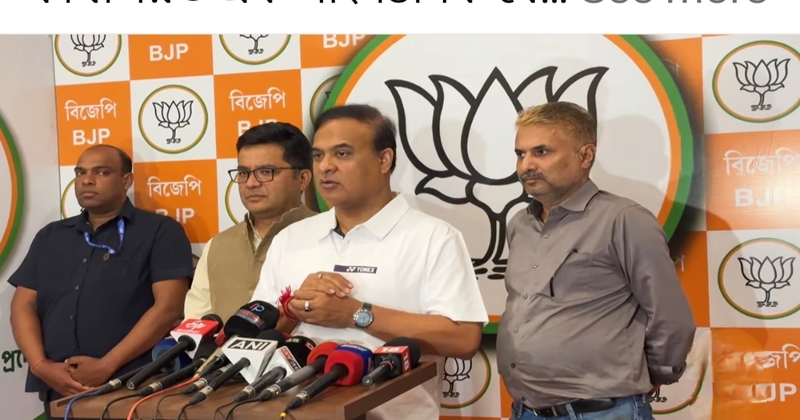
Guwahati: Assam Chief Minister Himanta Biswa Sarma has ignited a contentious debate by imposing stringent conditions on migrant Bangladesh-origin Bengali-speaking Muslims, colloquially known as “Miya,” who aspire to attain recognition as indigenous inhabitants of the state. His recent statements, made during a meeting at the BJP state headquarters in Guwahati, have underscored the intricate interplay between cultural identity, demographic dynamics, and political narratives in Assam. Addressing concerns over the assertion of indigenous status by migrant Muslims, CM Sarma delineated specific cultural norms and practices that individuals must adhere to in order to be recognised as indigenous to Assam. He remarked, “Leave the practice of marrying 2-3 women before you claim yourself as native to Assam,” highlighting the significance of conforming to Assamese societal values.
Central to CM Sarma’s conditions is the imperative to limit family size, refrain from polygamy, and prevent the marriage of minor daughters. By emphasising these requirements, CM Sarma seeks to ensure that the recognition of indigenous status is contingent upon the adoption of cultural practices intrinsic to Assamese society. He said, “ stop giving birth to more than 2 children, stop marrying your daughters at the age of 12-13 years and give your daughters equal rights in her father’s property before claiming you as a native to this land.”
Furthermore, CM Sarma underscored the importance of respecting Assamese cultural icons, particularly Srimanta Sankardev, the revered founder of Assamese society and culture. Expressing concern over encroachments on ‘satras’ (Vaishnavite monasteries) land, CM Sarma urged migrant Muslims to pay homage to Sankardev by refraining from land encroachments on Satras established by him and his disciples. CM Sarma said, “ Even if you don’t follow Srimanta Sankardev, start giving him due respect as he is the founder of Assamese society and culture. Stop encroaching the land of Satras established by Sankardev and his disciple before you claim yourself as native to the state.”
Also Read: Sandeshkhali victim Rekha Patra to contest Lok Sabha elections on BJP ticket from Basirhat
Education emerged as another cornerstone of Sarma’s discourse, as he advocated for a shift away from madrassas towards fields like medicine and engineering. He stressed the importance of educating daughters and granting them inheritance rights over paternal property, thereby challenging traditional gender norms within the community. CM Sarma said, “send your children to normal schools instead of sending them to madrassas, make them doctor-engineer instead of Jonab (Muslim religious priest) and send your daughters also to school.”
CM Sarma’s statements come in response to a provocative remark by AIUDF MLA and Lok Sabha election candidate from Nagaon constituency, Aminul Islam. Islam’s assertion, questioning the eligibility criteria for claiming indigenous status, invoked comparisons to cultural icons like Kalaguru Bishu Rabha, who was born in Dhaka city of undivided India, highlighting the complexity of identity politics in Assam.
The discourse surrounding migrant Muslims’ assertion of indigenous status in Assam reflects broader tensions within the state’s socio-political landscape. The Assamese Muslim community, distinct from migrant Muslims, maintains a separate cultural identity. In 2022, the Assam cabinet officially recognised approximately 40 lakh Assamese-speaking Muslims as “indigenous Assamese Muslims,” distinguishing them from Bangladesh-origin migrants. This recognition, which includes specific groups such as Goria, Moria, Jolah (only those in tea gardens), Desi, and Syed (only Assamese-speaking), signifies the state’s attempt to address the complexities of identity and inclusion.
However, the distinction between indigenous and migrant Muslims remains a contentious issue, with implications for demographic representation, political representation, and resource allocation in Assam. As the state grapples with these challenges, CM Sarma’s delineation of conditions for indigenous recognition sets a precedent for defining the parameters of identity and belonging in Assam.
CM Sarma’s conditions, while sparking debate and controversy, reflect the state’s ongoing efforts to reconcile cultural diversity with notions of belonging and inclusion. As Assam navigates these complexities, the discourse on indigenous recognition serves as a critical juncture in shaping the state’s socio-political landscape for years to come.
















Comments