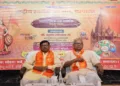
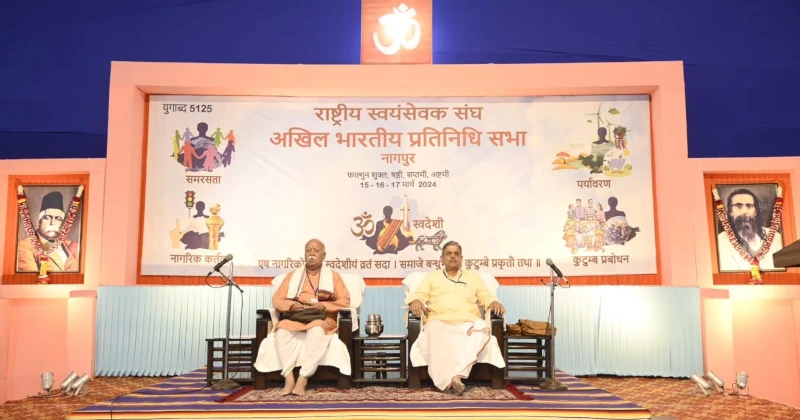
The Akhil Bharatiya Pratinidhi Sabha (ABPS) of the Rashtriya Swayamsevak Sangh (RSS) will hold its annual meeting March 15-17, 2024 at Nagpur, Maharashtra. The historic Reshim Bagh ground, adjacent to Smriti Mandir – the memorial of the RSS founder Dr Keshav Baliram Hedgewar, will host the annual meet. As the present Sarkaryavah Shri Dattatreya Hosabale has completed his three years tenure, this is also the election year for the RSS.
The three-day meeting would discuss Karyakarta Nirman and training, as well as planning and organisation of RSS Shiksha Vargs (annual camps). The meeting would discuss the current situation of the country, and pass resolutions on important issues.
RSS Sarsanghchalak Dr Mohan Bhagwat ji, Sarkaryavah Dattatreya Hosabale ji, and all Sah-Karyavahs will grace the meeting. About 1,400 Karyakartas from all states across the nation are expected to participate in the meeting. The ABPS will firm up programmes and policies for 2024-25 based on the review and experiences of 2023-24. As the Sangh will complete 100 years of its formation in 2025, chalking out strategies for the RSS’s centenary-year expansion work will naturally be a point of reference.
Though Sunil Ambekar, Akhil Bharatiya Prachar Pramukh of RSS (National Convenor, Media Relations) has already explained the nature and broad agenda of this year’s ABPS, media generally gets into political speculations. ‘Deliberations for the election year’ would be a natural tone of the news items. For a better understanding of the RSS and its functioning, we need to understand the nature of ABPS, its constitution and role in the voluntary organisation’s scheme of things.
Who are the members of Pratinidhi Sabha?
ABPS can be loosely translated as All India Representative Council. It is the highest decision making body of the world’s largest voluntary organisation, the RSS. Since 1950, barring the emergency period, the annual meeting of the Pratinidhi Sabha has been taking place regularly every year. In March 1950, the first ABPS meeting was held at Nagpur and Shri Bhaiyyaji Dani was elected Sarkaryavah (General Secretary).
In the same meeting, the idea to constitute the Vastuhara Sahayata Samiti, a committee to help out the Hindu refugees from East and West Pakistan was deliberated upon and approved. Relief operations for the flood affected Assam of 1949-50 were also finalised in this meeting. Sangh Swayamsevaks swung into action after this programme and made their mark through selfless and meticulous relief and rehabilitation activities. The planning and discussion that had taken place in the Pratinidhi Sabha was instrumental in this execution of humanitarian initiative with the sense of nationalist voluntarism.
During the Corona Pandemic crisis, the Sabha was organised online in 2020 and in a hybrid mode in 2021. As per Article 15 of the RSS Constitution, the ABPS is elected by Prantiya Pratinidhi Sabhas – elected representatives of the regional bodies.
 “The elected members of a Prantiya Pratinidhi Sabha elect from among themselves one-eighth of their number as representatives of the Province on the ABPS”, says the article. The Prantiya Sabhas are elected by Swayamsevaks right from the Shakha level (local unit level), on an average of 1 representative behind 50 active Swayamsevaks. These elected members at the provincial further elect one-eighth numbers of delegates for the national level representatives.
Besides these elected members representatives of the delegates, Sanghachalaks (Presidents) and Pracharaks (full-timers) of divisions, provinces and provincial centres are also expected in the Pratinidhi Sabha. For the functional purpose, RSS units are divided into 11 zones and 45 provinces. For instance, the political state of Uttar Pradesh is divided in 6 provinces, while states like West Bengal and Gujarat are divided in 3 and 2 functional units each.
All members of the Akhil Bharatiya Karyakari Mandal (All India Executive Committee comprising of national and zonal level office bearers and invited members) are de-facto members of the Pratinidhi Sabha, as per the Constitution. The Sarkaryavah (General Secretary, who is the the elected executive authority of the organisation) presides over the proceedings. Generally, for Sarkaryavah elections, the Pratinidhi Sabha takes place every third year in Nagpur, at the Reshimbagh premises to facilitate the process of election.
The Sarsanghachalak, who is considered as the guide and philosopher of the RSS, is consulted in all the proceedings.
The Sarkaryavah can also invite members from various RSS inspired organisations working for the national reconstruction. These invitees can deliberate and participate in the discussion but do not have voting rights in the election process. This is how representatives, generally Presidents and Organising Secretaries, of the RSS inspired organisations like Rashtra Sevika Samiti (women’s organisation), Bharatiya Mazdoor Sangh (BMS), Sanskar Bharati, Sahkar Bharati, Akhil Bharatiya Vidyarthi Parishad (ABVP), and Seema Jagran Manch etc. take part in the annual meeting.
The entire national level leadership of the Sevika Samiti is also present in the meeting. Other organisations also can send their women representatives in the ABPS. The Sarkaryavah is elected by the elected delegates after every three years. As per the RSS Constitution, the Pratinidhi Sabha has to meet at least once in a year to review the annual activities of the organisation.
Besides the Pratinidhi Sabha, the highest level decision making body, other important meetings of the RSS that take place throughout the year are: Akhil Bharatiya Karyakari Mandal which meets twice, once in October / November around Diwali) and then just before the Pratinidhi Sabha at the same venue, Pracharak Baithak (meeting of the full-timers) that is called upon in June-July and Samnvay Baithak (coordination meeting) of all-India-level inspired organisations that happens in September.
So, contrary to the perception and narration by critiques, the RSS functioning is democratic, participatory and collective.
What does Pratinidhi Sabha do?
After the formal inauguration with the prayer in front of Bharat Mata, the ceremony generally covered by media, Sanghtan Mantra (3 stanzas from Rigveda) is chanted. These 3 Shlokas, generally invoked before each RSS meeting, constitute a resolve to speak out independently and with a conscientious mind to reach collective decisions.
The minutes of the last year’s Pratinidhi Sabha are read out for the approval of the delegates. Then, the Sarkaryavah reads out his annual report, highlighting the important activities, outreach programmes and impact initiatives for social transformation undertaken by the organisation, besides paying tribute to the deceased personalities from different walks of national life.
Special initiatives to strengthen the organisational structure and spreading the Shakha level activities are also presented by the representatives from various zones and provinces. Discussion takes place on each of the presentation so that the success stories can be replicated in other regions.
Other social initiatives and experiments for rural development, samrasta – to eradicate caste-based discrimination, healthcare and education are also discussed by the delegates. Overall review of the organisational status, spread of Shakha (daily), Saptahik Milan (weekly) and Sangh mandala (Monthly) congregation of swayamvsevaks and the organisation of regular training programmes (Primary – 7 days and then first, second and third year training programmes for the Swayamsevaks) is the primary job of the Pratinidhi Sabha.
Each of the Karya Vibhags (can be broadly considered as functional departments) also present annual reports. So, the initiatives taken by Sharirik (physical), Bauddhik (intellectual), Sewa (service), Sampark (public relations), Prachar (Media) etc. verticals are also shared with the representatives.
The impact of Shakhas and training process is realised through the inspired organisations started by Swayamsevaks in various fields. There are around 35 all-India level national organisations inspired by the RSS. Each of those organisations presents their annual reports to the representative council.
Besides the spread and increase in strength in comparison to last year, real participatory social initiatives are also deliberated upon. Some common themes or issues are also picked up by these organisations; their collective impact is also analysed. For instance, 75 years of India’s independence was the common theme that was discussed in the last Pratinidhi Sabha.
Various programmes, research and other participatory activities throughout the year and their collective impact will be discussed in this year’s Pratinidhi Sabha. Again, all organisations that work independently with their own Constitutions and decision making framework discuss and share common issues of national importance and do not take orders from the elected delegates of the RSS.
RSS Resolutions
Discussion and passing of a Prastav (resolution) is an important dimension of the Pratinidhi sabha. These resolutions are also outcome of deliberations and discussions that have taken place before the Pratinidhi Sabha at the Executive Committee level. Once the Karyakari Mandal approves certain issues for resolution, a committee is constituted to draft the resolution on the approved issue of national importance to present the RSS point of view.
Now, getting a resolution passed in the Pratinidhi Sabha is not an easy task. Each and every word or line is discussed and debated by the delegates. Constructive suggestions are made; accordingly, the drafting committee makes necessary changes and only after consensus is built the resolution is passed unanimously. If there is no consensus, then there are instances of putting the resolution on hold or backburner.
If we go by history, social reforms and national integration are two important aspects that RSS Pratinidhi Sabhas have focussed on over the years. As Ratan Sharda, an author who has done his doctoral research on the RSS resolutions pointed out in one of his articles in the Organiser, “RSS has consistently followed a reformist agenda but not aggressive hard push for reforms. It criticised the caste system. Its influence resulted in Hindu saints and savants passing a resolution in Vishwa Hindu Parishad (VHP) in 1966 declaring that no Hindu is fallen and all Hindus are children of the same mother, thus brothers”.
When organising the entire society, taking inspiration from civilisational ethos and striving to take the nation to the pinnacle of glory is the objective, consistent churning on the social situation and coming up with collective solutions is inevitable. As Ratan Sharda observed, “To promote unity and harmony within Dharma fold, the RSS has promoted the celebration of national icons like Dr Ambedkar, Narayan Guru, Veer Savarkar, Guru Gobind Singh Ji, Bhagwan Mahavir, Bhagwan Buddha, anniversary of Aurobindo, Mahamana Malaviya, Maharaja Krishna Devaraya, Rabindranath Thakur. The call to celebrate the 550th Prakashotsav of Shri Guru Nanak Dev ji was in the same vein”.
Jammu-Kashmir, Northeast and Punjab related issues found place in various RSS resolutions time and again to raise awareness across the nation and for finding amicable solutions in the conciliatory ways. According to Shri Sharda, “RSS has consistently raised issues that were overlooked by mainstream political parties and institutions. Of 270+ resolutions passed by the RSS since 1950, 29 were dedicated to Hindu religious and cultural issues”.
Naturally, resolutions passed by the Pratinidhi Sabha are the most important historical documents, not just to understand the thinking of the largest voluntary organisation but also overview the issues of national importance faced by Bharat since Independence.
Besides this, the Sarkaryavah can also issue a statement on various issues or commemorating some important events of history. Again it is presented to the delegates before making it public. Conventionally, based on the deliberations and annual reports that are presented, the Sarsanghachalak makes his concluding remarks which are considered as the Pathey (inspirational message that becomes a guide for the future course of action) for the delegates and the entire organisation through them.
Thus, the ABPS of the RSS is not important because either some Swayamsevaks are in power positions or General elections are due next year. It is a democratic exercise evolved and inspired by the ancient concept of Sabha (council) and Samiti (committee).
Most of the elections and deliberations are made consensually, though heated discussions and deliberations take place among the representatives from various regions. Along with the growing strength of the organisation, the social, economic, cultural and political issues of national importance get due diligence with a civilisational perspective and participatory approach.
Societal solutions are also discussed and strategy is worked upon to involve various social groups to address the issues. Future challenges to the society and organisation are dwelled upon in the ABPS.
If one has to find answers to questions like why is the RSS flourishing as an organisation for 100 years without any split, and how it could create so much influence in national life with a strong national reformist agenda for the society, one has to grasp the institutional mechanism like ABPS that the RSS has evolved, taking inspiration from the civilisational wisdom.
Self-supporting organisation
Interestingly, all the delegates reach to the ABPS venue with their own expense and also pay a minimum contribution for the organisation of the meeting. The local organising committee makes arrangement for the hospitality with the local contributions. Autonomy of the Sangh work, purely based on the Swayamsevaks contribution, without any dependence on the state support is ensured even in organising the biggest annual congregation of RSS.