





On February 26, 2019, less than a fortnight after the Pulwama attack where 40 jawans of the CRPF (Central Reserve Police Force) had been martyred, the nation woke up to the news of the Balakot strikes.
As per the early reports that morning, the Indian Air Force had taken out a training camp of the Jaish-e-Mohammed, eliminating as many as 300 terrorists. While, in the early hours of February 26, there was little clarity on the numbers of terrorists eliminated and the region attacked, it was clear as daylight that the Indian forces had struck deep inside Pakistani territory.
Until the return of Abhinandan Varthaman on March 1, the situation was tense. The Indian Government had done the unthinkable. The Narendra Modi regime had gone beyond dossiers and diplomatic channels, and responded to Pakistan in the language they understood best.
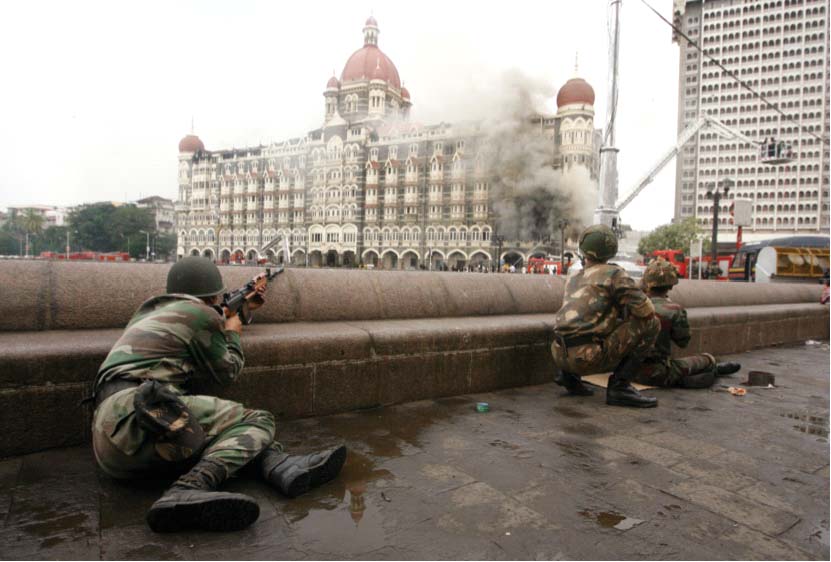
The domestic politics continued unabated, with some parties demanding the evidence of the surgical strikes. For the voters, however, the news of the Balakot strikes was about finding a closure they had been looking for more than a decade, since the attacks on India’s financial capital on November 26, 2008.
The Mumbai terrorist attack of 26/11 was a national event, but the pain for more than a billion Indians was personal. In this era of social media and instant messages, it could be hard to gauge the helplessness of the long wait that followed back then, but each day, Indians looked forward to a response from the Congress government under then Prime Minister Manmohan Singh.
Days became weeks, weeks became months, and months became years. Both the dossiers and the wait only got longer. Eventually, Kasab, the only terrorist who was captured alive, was executed in November 2012, merely five days before the fourth anniversary of the attack.
Pro-Pakistan slogans in Karnataka Assembly
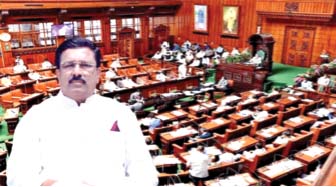
In a shocking incident within the premises of the Karnataka Assembly, Congress members raised pro-Pakistan slogans, triggering condemnation from the Bharatiya Janata Party (BJP) and nationalist groups. The incident, which occurred on February 29, has ignited a fierce political debate and raised concerns about national security and minority appeasement politics. The incident unfolded shortly after the declaration of Rajya Sabha member Syed Naseer Hussain’s victory, alongside two other Congress candidates, Ajay Makhen and GC Chandrasekar. Following the announcement, Hussain’s supporters began chanting “Pakistan Zindabad” in a high decibel while cheering for him, prompting the BJP to file a complaint at the Vidhana Soudha police station.
In the complaint, the BJP accused Hussain and his supporters of brazenly shouting pro-Pakistan slogans within the legislative premises, equating the act to an allegiance to the Pakistani state. The BJP leaders condemned the incident as a reflection of Congress’s minority appeasement politics and compromising national security for political gains.
However, Kasab was merely a pawn, and Congress failed to respond to Pakistan. Instead, it engaged in diplomacy that peaked around March 2011, when the two countries met for the World Cup semi-final in Mohali. Meanwhile, a Congress leader, also a former Chief Minister of Madhya Pradesh, was unapologetic, politically, in attributing the attack to the RSS (Rashtriya Swayamsevak Sangh).
Therefore, when the news of the Balakot strikes came, the people of India felt the closure that had alienated them for a decade. The surgical strikes of September 2016 in Pakistan Occupied Kashmir (PoK) were now mere a teaser, for the Modi government had demonstrated that they could hit terrorists inside Pakistan. This one newsbreak imparted to a billion Indians the confidence they could not afford under the UPA regime of Dr Singh.
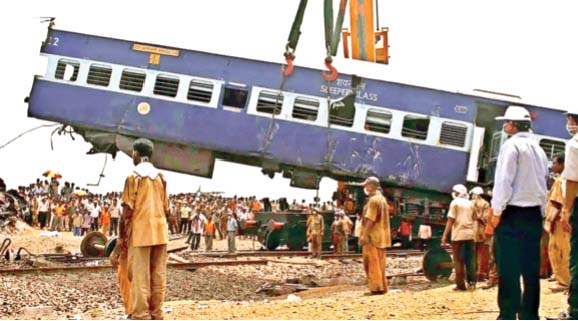
In 2005, two days before Diwali, the national capital was rocked by a series of blasts, killing 62 people and injuring over 200. For the next ten years, amongst the population, a new fear plagued itself, that of blasts around festivals. People started completing their festive shopping days, often weeks, in advance, for the crowded markets were an opportunity for the terrorists, and a threat for the common citizens, rendered helpless and hapless by the inaction of the Congress government.
On July 11 2006, Mumbai was rocked by seven bomb blasts within eleven minutes, killing 209 people and injuring more than 700. This was the age without the internet and, social media, and a few private news channels. The evening news was consumed by the lives that were lost, reports of missing people, and endless search for terrorists. The response, however, against the terror state of Pakistan, never made news, because there was never one.
Unfortunately, when the next day, the people of the city went back to resume their lives, their compulsion was mistaken as resilience and celebrated as the infamous ‘Mumbai spirit’. We were not celebrating the resilience of the people, however, but merely getting accustomed to the idea of being killed on any random day, by any random blast, being reduced to a statistic that would not warrant government response against the state fueling these attacks.
In 2007, 70 people were killed in the Samjhauta Express bombings, 42 were killed in Hyderabad after two blasts rocked the city, and another 16 people were killed after six consecutive serial blasts rocked Lucknow, Varanasi and Faizabad courts in Uttar Pradesh, all inside twenty-five minutes. In Jaipur May 2008, nine bomb blasts in Jaipur killed 71 people, injuring 200. In July 2008, Ahmedabad suffered the loss of over 50 lives when twenty-one bomb blasts rocked the city, injuring more than 200. In September 2008, Delhi markets were under attack ahead of Diwali, as five bomb blasts killed 33 people. One of the worst attacks that year, before Mumbai, was in Guwahati, Assam, where as many as eighteen bomb blasts killed over 80 people and injured close to 500.
Today, these events may appear to be a few scattered dark pages of Indian history, but back in the day, they were the norm. People witnessed them, lost their temper for an evening, prayed for a response for a week, and then moved on before the news of the next blast hit them. It would not be an exaggeration, therefore, to say that after the silence of the Indian government, in the wake of the Mumbai attacks, the people gave up, first on the Congress, and then on their government in 2014.
Inaction in diplomacy was not the only crime of the Congress against the people of India, for their tales of inefficiency, when the country was under attack, are now public knowledge. While the attack in Mumbai began around 7:30 PM in the evening, the NSG commandos, plagued by both bureaucracy and logistics, took close to ten hours to get to Mumbai. The delay was caused by Home Minister Shivraj Patil choosing to travel with the commandos. Those ten hours were the difference between the lives saved and the lives lost, souls the government of the day was accountable for.
In the last ten years, the norms have reversed. Meaningless deaths of Indian citizens, on Indian soil, by terrorists from foreign soil are now avenged, and this change is visible to the Indian voters when they compare the national security record of Congress and the Modi government under the BJP (Bharatiya Janata Party).
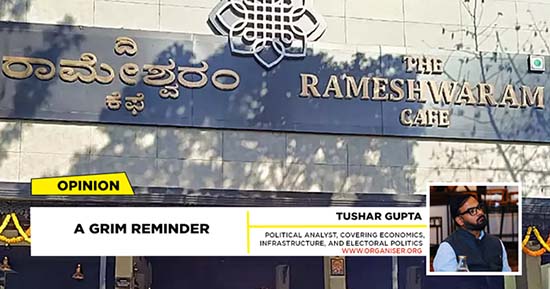
Therefore, when the news of an IED (Improvised Explosive Device) blast from Rameshwaram Cafe in Bengaluru surfaced, people were worried. First, for the lives lost, which fortunately were none, and with minor injuries, and two, of the dark days they lived through between 2004 and 2014. As the elections draw closer, a billion voters must realise the difference between the two decades. The new generation voters, ones born in the late 1990s or early 2000s, may not know, but under this government, heading to the markets around festivals is no longer a fear, but a celebration.
















Comments